






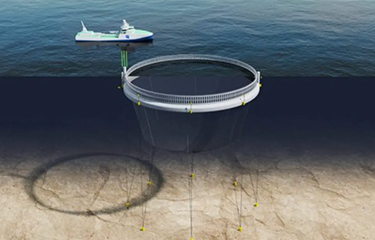
Bergen, Norway-headquartered Grieg Seafood has put its offshore project Blu Farm on hold in response to the Norwegian government’s proposed rent resource tax for salmon farming.
With an investment framework of NOK 750 million (USD 73.7 million, EUR 71.7 million), Grieg was planning to build the offshore farm in the Rogaland area, having earned approval for it from the Norwegian government in 2017.
The project is based on the award of 4.5 development licenses, which the company felt would reduce the risk of developing the new technology. But it said it now believes the tax proposal has significantly reduced the value of development concessions, and has therefore halted the Blu Farm project.
“Sustainable aquaculture at sea offers great opportunities for Rogaland and Norway. With Blu Farm, we have wanted to help develop the industry in this direction, but it will require a lot of capital and has a very high risk,” Grieg Seafood Rogaland Regional Director Nina Willumsen Grieg said. “Development concessions have provided important risk relief for carrying out this type of uncertain project. With the rent proposal, the development concessions will be less valuable, and we will also have less capital left in the company for investment and development. That is why Blue Farm is now unfortunately put on hold.”
Still in the planning stage, with an estimated two-year timeline for construction, the Blu Farm concept incorporates a tension-anchored concrete cage, based on technology used by the oil and gas industries.
“There are many challenges to solve in the aquaculture industry and the development concessions have meant that many new innovations in open, semi-closed, closed, and offshore farming technology could be tested,” Grieg said. “If the current proposal for ground rent tax remains in place, unfortunately, many of these projects will not be carried out. It's a shame for everyone who wants sustainable development in the aquaculture industry.”
In October, Grieg also halted the development of its at-sea closed aquaculture technology. Together with aquaculture technology business FishGLOBE, the company was to develop a large food fish version of the FishGLOBE facility, which currently produces post-smolt.
Grieg said even though Norway’s salmon-farming industry pays more taxes and fees than many industries, it is willing to contribute more if necessary – but not the proposed 40 percent tax rate.
“We understand that these are challenging times in Europe and in Norway, and we must contribute more and pay more in tax than today,” Grieg said. “But it should happen in a way that does not compromise investments, activity in the rural areas, and Norway's position and potential as a world-leading producer of food from the sea. Industry and politicians should work together to find a solution that takes care of these considerations better than the current proposal.”
Photo courtesy of Grieg Seafood
