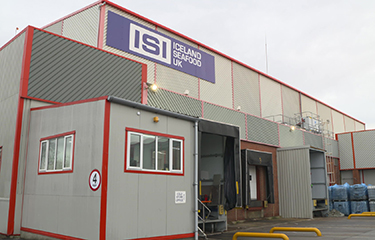
Iceland Seafood International (ISI) has agreed to sell 100 percent of its share capital in its U.K. subsidiary to Danish value-added producer Espersen.
In a statement, ISI CEO Bjarni Ármannsson said Espersen had finalized its due diligence process and that transaction documents were nearing completion. According to the agreement, the total sales price was just GBP 1,000 (USD 1,271, EUR 1,170). The Reykjavik, Iceland-headquartered company has been trying to unload its U.K. assets since late 2022 after enduring significant losses for years.
“After four challenging years in the U.K., we have decided to divest the IS U.K. business with a substantial loss. We are confident that this is the right decision for Iceland Seafood as a business,” Ármannsson said. “This investment has been a great cost for the company and its shareholders. It’s been a very tough market during these years, and we have tried with immense effort to turn this around without success.”
The deal will see Esperson lease the property, machinery, and equipment from ISI, with ownership of the machinery transferring at the end of the lease period, and Esperson having an option to buy the property at that time as well.
“I’m confident that the interests of our employees and customers are well served within Espersen and I wish Espersen all the best in this market. And I believe they can use the assets better than we have been able due to their strong position in the UK value-added seafood market.”
ISI said the negative impact of running its U.K. division amounted to an estimated GBP 15 million (USD 19.1 million, EUR 17.6 million) thus far in 2023 alone. This amount includes the impairment of fixed assets of GBP 7.1 million (USD 9 million, EUR 8.3 million), GBP 1.32 million (USD 1.7 million, EUR 1.5 million) of inventory write-offs, and a sales loss of share capital of GBP 300,000 (USD 381,000, EUR 351,000).
ISI’s total assets will be reduced by EUR 22 million (USD 20.3 million) following the consummation of the transaction, but its equity ratio will rise to 27 to 28 percent.
In its H1 2023 results, reported 30 August, the company reported its sales in the first half of 2023 increased 7 percent year over year to reach EUR 222.3 million (USD 241.5 million), but high raw material costs coupled with falling market prices and demand negatively affected the group’s results for the period, particularly in the second quarter.
For the six months that ended 30 June, 2023, ISI reported a normalized loss before tax (LBT) of EUR 800,000 (USD 869,000), a downturn of EUR 4.2 million (USD 4.6 million) compared to the same period last year. Its bottom-line losses stood at EUR 15.3 million (USD 16.6 million), a much steeper drop into the red than its losses of EUR 2.9 million (USD 3.1 million) in H1 2022.
Ármannsson said Q2 2023 had been another period impacted by high input costs, especially for salmon, with continued low prices for whitefish and shellfish. He said that salmon prices also dropped in the period, following usual seasonal production trends.
“All this amplifies the reduced demand at high prices among European consumers, who have been heavily impacted by worsened economic conditions, [such as] still relatively high inflation levels, volatile input factors, and significantly higher financial costs,” Ármannsson said.
ISI’s Argentinian operations didn’t contribute much to the group’s profitability, as was the case in Q1 2023.
“With adjustments in our inventories, we are loss-making and have reduced our outlook bracket for the year significantly,” he said.
For 2023 as a whole, ISI is forecasting a profit before tax range of EUR 2 million to EUR 5 million (USD 2.2 million to USD 5.4 million).
Current price adjustments are likely to continually affect margins, especially in Q3 2023, but should positively impact demand in the long term, ISI said. It said Q4 2023 will be a key trading period, with Christmas sales of smoked salmon both in Ireland and within its Spanish Ahumados Dominguez business, alongside the summer season for Argentinian shrimp that starts in December and a seasonal peak in cod sales in October and November, expected to help the group’s bottom line for the fiscal year.
“We believe we’ll start to see an increase in demand during winter as prices have adjusted. We still have a positive attitude toward our Christmas season – our most important sales season. We believe our brands and position will deliver good margins and results, especially in Q4,” Ármannsson said.
Sales for ISI’s value-added Southern Europe division totaled EUR 113.5 million (USD 123.3 million) in H1 2023, up 4 percent from last year, but the division saw its Q2 sales decline 13 percent.
This year, the winter season for Argentinian shrimp started at the end of June, four weeks later than the opening date last year, and this impacted both sales and profitability in the period, according to ISI. Price decreases have also impacted the margins of subsidiary IS Ibérica – an Iceland Seafood operation in the Mediterranean Sea that serves Spanish, Italian, Portuguese, and Greek markets – especially in relation to some shellfish species that the operation had in stock.
Ahumados Dominguez’s sales were up 13 percent year over year in H1 2023, driven by price increases, and while high salmon prices impacted results in the period, the leveling-off of these prices thus far in Q3 2023 have improved the division’s performance, with profits before tax for the six-month period totaling EUR 100,000 (USD 109,000), down EUR 4.3 million (USD 4.7 million) compared to H1 2022.
ISI’s sales and distribution division had an “excellent start” to the year, Ármannsson said, citing strong sales of pelagics out of Iceland and a solid capelin season. Sales of land-frozen and sea-frozen products also increased year over year. Its profit before tax of EUR 1.4 million (USD 1.5 million) was EUR 300,000 (USD 326,000) lower than H1 2022 totals but still represented the second-strongest first half the division has ever delivered.
With Iceland Seafood U.K. (IS UK) classified as an asset held for sale during the reporting period, the value-added Northern Europe division consisted solely of ISI’s Oceanpath operation in Ireland. Its sales of EUR 26.4 million (USD 28.7 million) in H1 2023 were slightly up on H1 2022, but high salmon prices negatively impacted sales and results in the period. The division was at break-even for the first half of the year, representing a EUR 1.5 million (USD 1.6 million) improvement on H1 2022. ISI said company diminishing consumer purchasing power has seemed to have less impact on salmon sales than sales of various other seafood categories.
Photo courtesy of Iceland Seafood International