



The impact of the COVID-19 pandemic on the global fishing industry has resulted in an erosion of performance for many seafood companies in Africa, with South Africa-based Premier Fishing & Brands Ltd. reporting a drop in its revenues and gross profit.
Premier, which is one of the largest black-owned and -managed fishing companies in South Africa, reported a decline in revenues from ZAR 287 million (USD 16.1 million EUR 14.65 million) to ZAR 215 million (USD 12 million EUR 10.9 million) over the six months ending 29 February, 2020, according to unaudited interim results released on 12 May.
Although Premier CEO Rushaan Isaacs said she was satisfied with the results “despite the incredible challenges Premier has faced over the past six-months,” the company posted a 38 percent decline in its gross profit to ZAR 80 million (USD 4.49 million EUR 4 million) from ZAR 130 million (USD 7.3 million EUR 6.63 million) previously.
Premier, which deals in harvesting, processing, marketing, sales, and distribution of various fishing products – such as South Coast and West Coast lobster, wild and farmed abalone, octopus, squid, swordfish, and more – also reported a decline in its profit after tax to ZAR 20 million (USD 1.1 million EUR 1 million) down from the previous ZAR 55 million (USD 3 million EUR 2.8 million).
The performance was hugely influenced by the socio-political unrest in the Far East, a key market for Premier’s farmed and wild abalone, and West Coast rock lobster.
Furthermore, the debilitating COVID-19 crisis has hit some of Premier’s export markets hard – such as Italy and Spain, where it sells its squid, and also the U.S., a key market for the South Coast rock lobster.
“Our results are satisfactory and better than expected, given that we are still facing these challenges,” Isaacs said.
Isaacs said she predicts the company will be able to weather the difficulties thanks to its “financially stable position.”
“Premier has no debt, is cash-positive, and we have put strategies in place to mitigate some of the losses the Group has suffered because of the pandemic,” Isaacs said.
In South Africa, the company has singled out the decrease in total allowable catch of West Coast rock lobster, which “persisted since the previous financial year.”
“The group experienced other exogenous factors, with the most significant one being the low catch rates industry wide in the squid division, which has led to decline in revenue and in turn profitability,” group chief financial officer Brent Robertson said. “Furthermore, the group has put cost containment measures in place to preserve as much cash as possible, so that once the pandemic is under control, the group can continue to focus on its growth strategies for the abalone farm expansion and to pursue any other potential acquisitions."
The fishing industry, which earns South Africa more than USD 598 million (EUR 528 million) in exports, was rated “essential service” under the country’s COVID-19 induced national lockdown, but Premier indicates some of its industry-related projects could not proceed because of the pandemic.
The company has put on hold its eagerly awaited expansion of its abalone farm during the lockdown period, a project which is critical in Premier’s target to ramp up its annual production capacity from 120 metric tons to around 300 to 350 metric tons.
“In the short-term, we are constantly revising our mitigating strategies and plans to address the impacts of the pandemic by compiling and understanding scientific data to rebuild Premier’s position in the markets,” Isaacs said.
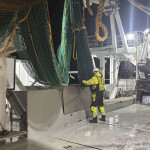
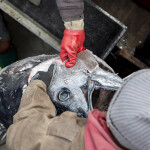
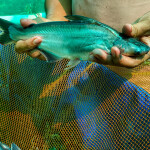
Photo courtesy of Premier Fishing & Brands Ltd.
