






Thai Union saw a decline in its total profits in the first quarter of 2023, despite a surprise boost from Red Lobster.
Profits fell mainly due to the lower sales combined with high tuna and salmon prices resulting in softer demand, according to Thai Union’s quarterly report, released 3 May.
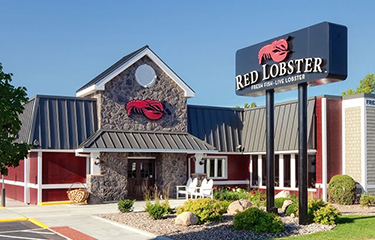
Red Lobster, which Thai Union acquired in 2020, contributed a profit of THB 20 million (USD 590,700, EUR 535,120) to Thai Union’s bottom linein Q1 2023, “thanks to [the] seasonality and success of Lobsterfest campaign” compared to its THB 335 million (USD 9.9 million, EUR 8.9 million) loss in Q1 2022. Thai Union is considering an exit from Red Lobster after multiple years of losses, the Bangkok Post reported in March 2023.
In an effort to turn around lagging sales, in February, Red Lobster launched a new frozen line, a core piece of the restaurant chain’s multi-pronged turnaround plan. The launch included packaged retail products now available in 5,200 stores and online in the U.S. Thai Union said the profit earned by Red Lobster proves its turnaround business plan for the seafood restaurant chain has “shown positive progress.”
Red Lobster’s recovery was not enough to save Thai Union from a disappointing quarterly result, however. Its gross profit in the period dropped 22.6 percent year-on-year to THB 4.9 billion (USD 144.7 million, EUR 131 million) due to “lower sales volume across all categories, which results in higher production cost per unit, negative category and product mix, and impact from falling freight prices,” it said. Rising costs for raw materials also impacted Thai Union’s gross profit in the first three months.
Thai Union quarterly net profit tumbled 41.5 percent year-on-year to THB 1.02 billion (USD 30.2 million, EUR 27.3 million). Its first-quarter sales fell 10 percent from Q1 2022’s “high baseline” to THB 32.7 billion (USD 965.8 million, EUR 874.7 million) in Q1 2023, due to lower demand, high inventory in global markets, high fish prices.
Thai Union’s ambient seafood sales edged down 1.9 percent year-over-year due to higher inventory levels and rising fish prices creating a “wait-and-see attitude” for its customers. Thai Union’s ambient seafood category includes shelf-stable products including tuna, sardines, salmon, mackerel, and herring primarily sold through retail channels, and sometimes wholesalers.
Its frozen and chilled seafood sales contracted 15.3 percent year-on-year due to a normalization in seafood market prices and lower demand in its key markets, especially for shrimp and lobster. Its sales of pet-care products shrank by 21.9 percent, driven by soft demand in the U.S. and Europe, a negative product mix and falling freight rates, it said.
Thai Union’s Q1 2023 sales dropped in every one of its major markets, including North America (down 14 percent year-on-year), Europe (4 percent lower year-on-year), Thailand (down 3.6 percent), and Japan (down 8.2 percent).
“We expect the first quarter to be the softest period of this year as a result of a high sales baseline from the first quarter of 2022 together with high inventory level at our customers, and logistic normalization,” Thai Union CEO Thiraphong Chansiri said. “However, we remain optimistic about 2023 growth, as we have already seen signs of improvement in the second quarter and expect normalization in the latter half of the year as the trend towards the consumption of seafood and healthier proteins continues to rise globally.”
The prices of key raw materials surged in Q1 2023, triggering product price increases, Thai Union said. The average price of tuna grew 6 percent year-on-year to USD 1,820 (EUR 1,648) per metric ton (MT) while the price of salmon was NOK 104 (USD 9.70, EUR 8.80) per kilogram, up 32.7 percent from the previous year. The sole exception was shrimp, with its average price falling 7.9 percent year-on-year to THB 168 (USD 4.9, EUR 4.5) per kilogram.
Separately, in an update to its share-buyback scheme announced in December 2022, Thai Union said it has paid THB 712.45 million (USD 21 million, EUR 19 million) to repurchase 49.38 million Thai Union shares on the Stock Exchange of Thailand as of 3 May. The company had intended to buy back 200 million of its shares by 30 June, 2023, in an effort to use up excess liquidity and raise its return on its equity and earnings- per-share ratios.
Moving forward, Thai Union will benefit from a recent decision from the U.S. Department of Commerce not to impose any antidumping duties on Thai Union’s shrimp imports. And Thai Union is counting on a payoff from a bet it has made on alternative proteins through its OMG Meat brand and through vegan tuna analogs sold under its flagship John West brand.
According to Thai Union Alternative Protein Managing Director Maarten Gereats, Thai Union’s ambition “is to become a powerhouse in Asian plant-based manufacturing.”
“We are focused on insight-driven innovation – this is what drives our business, and the entire seafood industry, forward,” he told Green Queen. “We know that consumer tastes are changing, and we want to provide them with the choices they seek. At Thai Union, we are leveraging our capabilities as an original equipment manufacturer (OEM) partner, as well as the innovation capabilities of the wider Group and our industry-leading GIC and our open innovation partnership via our Bangkok-based SPACE-F incubator and accelerator program.”
Gereats said the company has learned a lot from its initial foray into the plant-based space.
“The question we need to ask ourselves is: do we mimic what’s out there now or do we create new? I think we should be creating new product formats and not always be comparing these to the conventional [or] existing ones,” he said. “In the future, I think we will have a broad spectrum of solutions: real tuna, plant tuna, cultivated tuna, and hybrid tuna on the shelf, a multitude of alternatives will be available to consumers. Each will have its own space – depending on application, use, and price. As an industry, we need to think differently. What matters is that it needs to be a good eating experience, it doesn’t need to be a one-to-one equivalent. And then you get away from always comparing on price, taste, texture or nutrition.”
Photo courtesy of Red Lobster
