






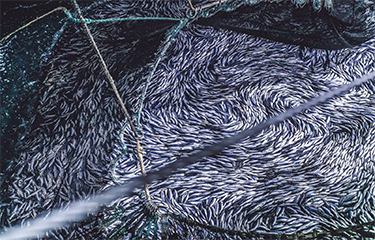
Multiple members of the North Atlantic Pelagic Advocacy Group (NAPA) including Skretting, Asda, Biomar, and Young’s have vowed to stop buying pelagic species sourced from the Northeast Atlantic if coastal states can’t reach an agreement on sustainable total allowable catches.
NAPA, a collective of 50 retailers and supply chain businesses including wholesalers, foodservice businesses, aquaculture producers, feed companies, and more, recently launched its 2023 Coastal States Campaign in a bid to drive political will for cooperative decision making on sustainable pelagic total allowable catches. NAPA was formed in 2019 in response to the ongoing dispute over quota allocations, which have led to downgrades of species sustainability metrics and the loss of Marine Stewardship Council certifications for North Atlantic mackerel, Northeast Atlantic spring spawning herring, and blue whiting.
“Coastal States, the future of Northeast Atlantic fish stocks is in your hands. What will it take for you to back the drive for sustainable seafood and well-managed fisheries, and land solutions?” NAPA said in a joint letter to policymakers in the U.K., E.U., Norway, Iceland, the Faroe Islands, Greenland, and Russia.
The International Council for the Exploration of the Seas (ICES) recently released its advisory total allowable catch for the Northeast Atlantic spring spawning herring stock, advising big cuts to keep the stock sustainable. According to ICES, the quota needs to be cut at least 44 percent compared to the allowable catch it advised in 2023.
ICES has advised such cuts in the past, but failed negotiations between coastal states that share access to the stock has continually pushed the total catch well above the scientific advice.
Multiple companies signed on to the latest NAPA letter, saying that if the mismanagement of the stock continues, they would no longer purchase from the fisheries.
“We would stop purchasing this material as we work to high responsible sourcing standards,” Biomar, a NAPA member, said.
“Young’s branded products would cease sourcing from these fisheries,” Young’s Seafood said.
NAPA laid the blame for the continued unsustainable fishing practices squarely on the respective coastal states who have continually been unable to come to an agreement that matches ICES advice. Organizations like the MSC have urged the states to take action and establish harvest control rules, rather than setting total allowable catches in line with their own national interests.
The total allowable catch set for many of the species, NAPA said, has consistently been 30 to 40 percent above the sustainable levels advised by ICES, a “serious and sad reflection of the Coastal States’ inability to manage the fishery in line with scientific advice.”
The NAPA letter pointed out that the coastal states have already managed to reach agreement on some of the total allowable catches in the past, proving it isn’t impossible. A bilateral deal made in July between the U.K. and Norway, the letter said, shows that there is “will to collaborate and forge agreements.”
“Now, we want to see all seven Coastal States unite in the spirit of common sense and consensus,” the letter said. “The sustainable future of Northeast Atlantic fish stocks hangs in the balance awaiting your agreement. Atlanto-scandian herring, mackerel and blue whiting are being overexploited because you, the key fishing nations of the Northeast Atlantic, are unable to agree on total quotas that are in line with the evidence-based advice of international scientists’ – advice that is drafted with the specific aim of making your decisions easier.”
Photo courtesy of iStock/Paolo Cipriani
