
In a move aimed at bolstering bilateral cooperation against illegal, unreported, and unregulated (IUU) fishing, Ecuador’s Ministry of Foreign Affairs received a delegation of senior officials from Canada’s Department of Fisheries and Oceans.
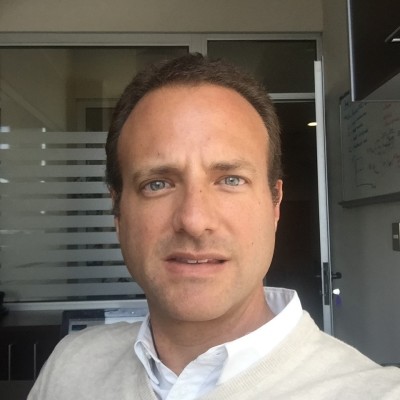
The Canadian delegation consisted of DFO Implementation Program National Director Brent Napier; the DFO Head of International Affairs Sean Wheeler; and Federal Fisheries Agent Dustin De Gane. They were joined by the Canadian ambassador to Ecuador, Sylvie Bedard, and the military attaché, Marc Delisle, Ecuador’s Ministry of Foreign Affairs reported on its website.
The meeting looked to advance on an agreement signed between the two countries at the end of 2020, which aims to employ cutting-edge technology and satellite data to locate and track dark vessels – ships whose location devices are switched off to evade monitoring, control, and surveillance by authorities – in real time. The technology was donated by Canada to Ecuador in a bid to contribute to the preservation of the Galapagos Marine Reserve, one of the richest areas for marine life and a hotbed of life for the entire planet, and its surrounding areas.
Ecuador has historically had issues with IUU fleets, which particularly came to a head in July 2020, when around 300 mostly Chinese-flagged ships began fishing near the exclusive economic zone around the Galapagos. For several months, the fleet continued to fish in the seas around South America, affecting countries including Peru, Chile, and Argentina.
Ecuador’s cooperation with Canada takes place within the Ecuadorian Foreign Ministry’s strategy that contains “goals and actions in the short-, medium-, and long-term, in the bilateral, regional, and multilateral sphere, designed to safeguard national sovereignty, marine resources and the unique ecosystem of the Galapagos through the search for durable solutions to the problem of IUU fishing,” Ecuador Foreign Minister Mauricio Montalvo said during the meeting, the Ministry of Foreign Affairs reported on its website. Montalvo expressed hope that the bilateral cooperation agreement could be expanded to other areas of interest, such as aquaculture and biotechnology.
Illegal fishing constitutes the sixth-most lucrative criminal endeavor globally, with estimated annual revenues of USD 15 billion to USD 36 billion (EUR 12.3 billion to EUR 29.6 billion), according to a 2017 report by Global Financial Integrity. International observers have identified the Chinese fishing fleet – estimated at 15,000 vessels by the Overseas Development Institute – as the largest in the world by far, and China is the country with the worst rating for contribution to global illegal fishing in a 2019 Global Initiative report.
Beijing has made distant-water fishing a geopolitical priority, employing state-subsidized private Chinese fishing fleets as a means to extend its power to distant areas around the globe.
Photo courtesy of Ecuador Ministry of Foreign Relations
