






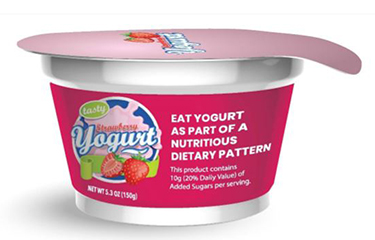
New food-labeling draft guidance from the U.S. Food and Drug Administration (FDA) aiming to further clarify the nutritional value of food products to consumers is coming into effect in 2024.
The draft guidance provides food manufacturers with recommendations on how and when to use dietary guidance statements on food product labels “to ensure the label statements promote good nutrition, provide greater consistency in labeling, and assist consumers in making informed choices,” the FDA said in a press release.
“Diet-related chronic diseases are the leading causes of death and disability in the U.S. and disproportionately impact communities of color and people living in rural areas,” FDA Commissioner Robert M. Califf said. “The FDA is committed to being a part of the solution to improve the health of millions of Americans. Today’s action is another step towards helping consumers make informed choices about the foods they eat.”
The FDA noted that Americans’ current eating patterns do not often align with updated federal dietary recommendations, which focus on the entirety of one’s diet and how foods and beverages combine to affect health. Dietary Guidance Statements are declarations on food labels based on key recommendations from consensus reports, such as the Dietary Guidelines for Americans 2020-2025, that focus on how a food or food group can be a part of a nutritious dietary pattern.
Now, according to the draft guidance, seafood companies will be able to place a statement like, “Seafood, including [seafood species], is part of a nutritious dietary pattern” on front-of-pack labeling, Seafood Nutrition Partnership (SNP) Nutrition Communications Manager Jessica Miller told SeafoodSource.
“Seafood is a food group that can contribute to nutritious dietary patterns as outlined in the 2020-2025 Dietary Guidelines for Americans,” Miller said. “These Dietary Guidance Statements will encourage consumers to choose seafood and will help guide them toward foods that align with healthy eating patterns.”
The National Fisheries Institute, which represents the U.S. seafood industry, also supports the draft guidance.
“We are always pleased to see clarification and specification about voluntary statements on the labels, especially when they are designed to help emphasize the healthfulness of a product to consumers,” NFI Vice President of Communications Gavin Gibbons told SeafoodSource. “Seafood is inherently part of a healthy nutritional dietary pattern and the more consumers know that the better.”
In addition to the new FDA draft guidance, SNP is supporting several other scientific nutrition policies impacting seafood and health. SNP’s two-pronged focus when analyzing and guiding food labeling practices includes outreach to consumers and working on strengthening the science around seafood via communication with policymakers and educators.
“The goal is to get more awareness on the public health benefits of seafood,” SNP Founder and President Linda Lai Cornish told SeafoodSource.
The nonprofit is asking for USD 100,000 (EUR 91,000) in additional resources to “track and respond to key nutrition policy opportunities effectively,” Cornish said.
“The funding we are requesting is to help consumers understand the strength around seafood and nutrition, such as it is good for the brain and health and wellness,” Cornish said.
The SNP and its Scientific Nutrition Advisory Council (SNAC), a voluntary group of scientific advisors, are working on several key policy efforts in the U.S. and globally, including the development of the next round of the USDA Dietary Guidelines for Americans 2025-2030. SNP representatives are attending every meeting on the development of the guidelines, according to Cornish, who said the guidelines are of vital importance to the seafood industry because they support recommendations made for federal nutrition programs that impact around 80 million Americans.
“This includes the National School Lunch Program, the Supplemental Nutrition Assistance Program (SNAP) … and anything the U.S. government oversees in terms of food, including all the branches of the military,” she said “The group of scientists that puts together the Dietary Guidelines for Americans is going to come up with questions on whether a food has health and wellness benefits. When those questions come up, SNP will pull together information on seafood and nutrition.”
Other important policy efforts that SNP is encouraging the industry to support include the FDA’s Closer to Zero Initiative; The National Academies of Sciences, Engineering, and Medicine initiative on The Role of Seafood in Child Growth and Development; and the joint FAO/WHO expert consultation on the Risks and Benefits of Fish Consumption; Cornish said.
Simultaneously, the Seafood Nutrition Partnership (SNP) is warning the industry that U.S. seafood nutrition policies and guidelines are “under attack,” SNP Founder and President Linda Lai Cornish said in an email to the seafood industry.
“I am sounding the alarm because the volume of policies that are reexamining the sound science around the health and nutritional benefits of eating seafood has increased exponentially,” Cornish said, asking the industry to help fund the fight to strengthen policies that encourage seafood in Americans’ diets.
Photo courtesy of U.S. Food and Drug Administration
