






The rate of grocery inflation in the U.K. continued to fall in June, but retailers are still urging suppliers to lower prices so consumers, fatigued by 15 months of overall inflation hovering just under a hefty 10 percent, can start to realize some savings.
After a two-month review into “historically high levels” of food inflation, the Competition and Markets Authority (CMA) said on 19 July that high food prices are not the fault of supermarkets, per JustFood. At the same time, the authority suggested that rules on unit pricing “should be tightened, and retailers must comply to help shoppers compare prices easily,” CMA said.
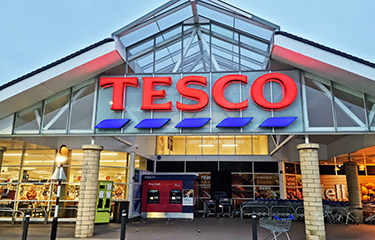
Tesco is one retailer calling on its suppliers to lower prices so it can pass savings on to shoppers, executives said in a recent presentation, per The Guardian. The massive grocery chain said the market is moving from “inflation to deflation,” and it wants to get out in front of rival supermarkets by cutting prices more aggressively.
The U.K. government is also getting involved in the matter.
In May, U.K. Finance Minister Jeremy Hunt met with food manufacturers to discuss the increases in food prices, and the Environment, Food, and Rural Affairs (EFRA) Committee also said in mid-May that it would investigate fairness in food prices and the supply chain as a whole.
“During these times of high food price inflation, when many people are struggling to give their families good food at a reasonable price, it’s our job as a committee to get to the bottom of what’s going on,” EFRA Chair and MP Robert Goodwill said. “We know that consumers are paying higher prices, but the question is – are the other parts of the supply chain unduly benefiting from that, or are some of them also feeling the squeeze?”
Food and non-alcoholic beverage prices rose by 0.4 percent between May and June 2023, compared with an incline of 1.2 percent between the same two months a year ago. This led to annual food and beverage inflation falling from 18.4 percent in May to 17.4 percent in June, down from a recent high of 19.2 percent in March 2023 – the highest rate seen for over 45 years, the Office of National Statistics (ONS) said.
There has been some respite, however. Grocery price inflation has slowed since it peaked in March this year, falling 1.6 percent to 14.9 percent in the four weeks leading up to 9 July 2023, according to research from data, insights, and consulting company Kantar. As a result, take-home grocery sales over the same period grew by 10.4 percent compared to the same period a year ago.
“Grocery price inflation has now been falling for four months in a row. That will be good news for many households, [but] of course, the rate is still incredibly high,” Kantar Head of Retail and Consumer Insight Fraser McKevitt said in a press release.
A promotional spending increase – which rose for the first time in two years – also helped ease inflation. According to Kantar, the increase is now accounting for just over a quarter of the total market at 25.2 percent.
“One of the biggest shifts we’ve seen in this area is retailers ramping up loyalty card deals like Tesco’s Clubcard Prices and Sainsbury’s Nectar Prices,” McKevitt said. “This could signal a change in focus by grocers who had been concentrating their efforts on everyday low pricing, particularly by offering more value own-label lines.”
Some chains, in addition to offering loyalty deals, are also choosing to cut prices on a wide range of products.
The supermarket chain Iceland is the latest food retailer to slash prices to remain competitive, announcing it would lower prices on 500 essential products, per the Independent.
One of the many items Iceland is cutting prices on is a 15-pack of Youngs Fish Fingers, which it lowered from GBP 3.50 (USD 4.50, EUR 4.05) to GBP 2.50 (USD 3.21, EUR 2.89).
“Families are struggling more than ever as the cost-of-living crisis worsens,” Iceland Foods Executive Chair Richard Walker said. “That’s why we’ve invested millions – and will continue to do so – to keep prices low across key weekly shop items.”
In late June, Tesco also announced it slashed prices on more than 500 household essential items after implementing other similar cost-cutting initiatives earlier this year.
The new price decreases include items like Tesco-brand tinned tuna and Tesco frozen cod fillets.
“We know that more than ever, our customers are looking for great value, and this huge round of price cuts on 500 key household essentials will help their budgets go a little further.” Tesco Chief Product Officer Ashwin Prasad said. “With price cuts on products like grapes, peppers, rice, and tuna, customers will find it’s even cheaper to eat healthily with Tesco this summer.”
In mid-June, Asda and Waitrose, Britain's third- and eighth-largest supermarket chains, respectively, announced price freezes on hundreds of products.
Asda froze the prices of over 500 products on mainly “cupboard essentials,” including cereals, pasta, and tea, as well as “summer favorites” such as salads, burgers, and ice cream.
Additionally, Waitrose announced it was cutting prices on 200 items “in every aisle,” including sugar, sausage, salads, and ice cream. The cuts follow previous price decreases of 300 other items made in February 2023.
“Efforts by retailers to curb price rises and reduce inflation appear to be paying off,” British Retail Consortium Chief Executive Helen Dickinson said. “Prices for cheese, fruit, and fish all dropped as lower commodity costs and cheaper energy prices filtered through to customers.”
Photo courtesy of Alastair Wallace/Shutterstock
