






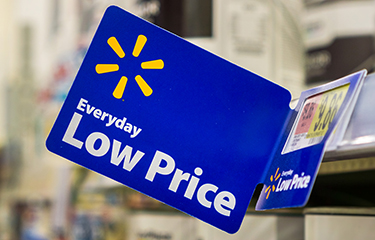
Consumers are adapting in response to strained economic conditions, even as inflation has started slowing down.
Eating at home more often remained the norm for the first half of the year among U.S. consumers, but unlike during the pandemic, shoppers lately have been branching out to different grocery locales in search of deals to reduce their food expenses. FMI – The Food Industry Association has observed shoppers’ migration to mass retail channels as they search for deals and value.
“To address higher prices, shoppers are visiting more stores and seeking deals to stretch their dollars, but are now less likely to cut back on the number of items purchased compared to six months or a year ago. This is an opportunity for our industry to continue connecting with shoppers on food-inflation-mitigating solutions,” FMI President and CEO Leslie G. Sarasin said in April.
Demographic-wise, baby boomers were the most concerned about rising food prices (80 percent) as of February 2023, FMI found, with millennials also showcasing elevated levels of cost-wariness (76 percent). On average, consumers spent USD 164 (EUR 153) per week on groceries as of February, up from the USD 148 (EUR 138) weekly spending rate documented by FMI in both February and October of last year.
Sarasin noted in late May that the meaning of “good value” is experiencing a complex metamorphosis for modern consumers at retail. Quality, relevance, experience, and convenience are expanding what constitutes a valuable purchase for shoppers. According to Sarasin and FMI, the “long-held definition of value being measured by a simple equation of higher quantity at a lower price” is transforming.
“Understanding how dramatically grocery shoppers are expanding their definition of value is imperative for the food industry as consumers adjust their purchasing patterns and habits amid continued economic uncertainty,” Sarasin said, adding that “price is not necessarily the be-all-end-all when it comes to shopper perceptions of value and also that the notion of value itself has become an increasingly more complex, subjective, and even personal calculation.”
Younger generations of shoppers are championing a more holistic measurement of value and are incorporating themes of sustainability, ease, and positive experience into what they consider to be a worthwhile grocery purchase. In particular, 62 percent of millennials are looking to minimize food waste by buying only what they need, “a strategy that speaks to relevance,” FMI said. Moreover, 47 percent of millennials have also expressed a willingness to spend more money to avoid shopping at multiple stores, with 50 percent saying they would spend more to shop at more pleasant outlets, per FMI’s recent figures. Comparatively, just 16 percent of baby boomers expressed similar sentiments.
FMI discovered that younger consumers are also more willing to buy the highest-quality items regardless of price, with 52 percent of millennials and 42 percent of Generation Z shoppers subscribing to that notion, compared to 22 percent of baby boomers.
Category Partners found that most consumers (53 percent) are on the hunt for sales and discounts to counteract inflation pains in 2023, with 40 percent checking store ads to see what’s on sale. More consumers are purchasing store brands (35 percent), while others are shopping at lower-cost stores (24 percent) and looking for lower-cost substitutes (32 percent).
Wellness and sustainability, even in a hyper price-conscious climate, are still highly influential trends, according to FMI’s Power of Seafood 2023 report. Sixty-six percent of consumer respondents for the report said that at least one aspect of sustainability tends to impact their seafood choices/purchases. Limiting food waste is one sustainability component currently resonating strongly with American seafood eaters, according to FMI Vice President of Research and Insights Steve Markenson, who pointed out that 39 percent of Power of Seafood 2023 report respondents felt that frozen seafood helped them avoid food waste.
Heading deeper into the second half of 2023, seafood providers are up against a demoralized consumer-base: A University of Michigan survey reported a six-month low in U.S. consumer sentiment for April, due largely to inflation and worries with respect to the federal government raising the borrowing cap.
Photo courtesy of Sundry Photography/Shutterstock
