






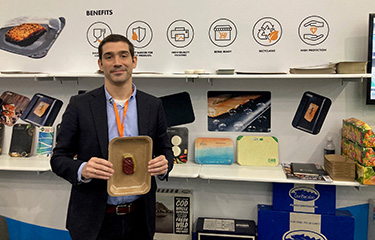
It may be impossible to phase out the use of all plastics in food delivery, according to Netherlands-based Solidus Solutions Sales Manager Joaquín Sucunza. But it is possible – even practical – to reduce the use of plastics in many products, including seafood items.
Based in the Netherlands, Solidus operates 17 plants and five paper mills across Europe, including a large presence in Spain and the U.K. It produces packaging solutions for food companies operating globally, including for meat, fruit, and “for all kinds of fish and seafood.”
“In the U.S.A., we sell a lot of salmon boards for smoked salmon and skinpack boxes for pelagic fish,” Sucunza said at the 2023 Seafood Expo North America.
The U.S. represents 30 to 40 percent of Solidus’s total sales, and it’s the top supplier of many specialty items, including solid boards and trays for modified-atmosphere packaged goods.
“There are many opportunities in the U.S., but we’re selective,” he told SeafoodSource. “We go to niches. Where corrugated carton works, we don’t go there, because corrugated is cheaper than us. But where there are issues with water moisture, that is what we target. We go to where we can replace something that is not working.”
Skin-pack wrapping, which is enjoying a rapid rise in its use in the seafood industry, is a company specialty, he said. Plastic skin-pack, compared with a standard plastic tray, uses 90 percent less material, according to Sucunza.
“It’s very visual, and it removes the oxygen in a way that increases the shelf-life of the product,” he said. “We’re definitely seeing more demand for sustainable products. Many supermarket chains contact us because they need to meet targets to replace a percentage of their plastic with more-sustainable materials.”
Prices for materials rose during the height of the supply-chain crunch of the past two years, but are now coming back down, Sucunza said.
“Right now, the trend is paper prices are going down, plastic prices are coming down, and freight prices have dropped a lot,” he said. “We have reduced some prices, in Europe the raw material prices was the energy costs, to produce paper need huge quantity of gas yes produced but not to the levels as before.
Sucunza said Solidus is also benefitting from a new law in the European Union banning single-use plastic.
“It’s impossible to phase out plastic entirely, but it’s going to become more expensive to use,” Sucunza said. “There’s going to be new taxes, and added costs to make it more sustainable. But plastic will always be there.”
Photo courtesy of Cliff White/SeafoodSource
