






Seafood is piling up in Japan after China instituted a ban on Japanese imports following the release of wastewater from the damaged Fukushima Daiichi nuclear power plant.
Japanese seafood exports to China crashed 67.6 percent in August 2023 year over year, according to Chinese customs data. While some of that was destined for China’s domestic market, a significant portion of it was headed to Chinese factories for processing and reexport. That business is now dried up, according to the Japan Times.
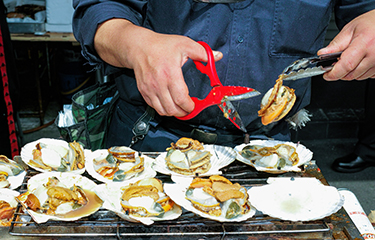
In Hokkaido, Japan, a center of the country’s scallop trade, cold storage facilities are filling up with frozen product. Hokkaido exported an estimated 30,000 to 40,000 metric tons of shell-on scallops to China in 2022 that were processed there and then shipped on to the United States. Without China and Hong Kong – which also instituted a ban – as markets, Hokkaido scallop companies are struggling with mounting bills for storage, or transportation to domestic processing facilities, plus higher costs for that work.
Companies like Tokyo-based seafood trading house Housen Co. are scrambling to find buyers interested in shell-on scallops, but without much luck. Housen Co. President Gen Komori said he has only received lowball offers thus far.
“I feel like [Japanese businesses] are getting ripped off,” Komori said.
A Hokkaido government report found prices for local scallops have plunged between up to 27 percent since China’s ban.
Monbetsu-based Maru Uroko Sanwa Suisan, which processes up to 50 metric tons of scallops daily during the season, said 20 percent of its products eventually wound up in China before the ban, but now, they’re ending up in storage. The company is trying to find buyers who prefer peeled scallops, but the carrying through of higher processing costs in Japan has not landed well in the market.
“There are a lot of production processes, such as peeling, cleaning, freezing, sorting, packing, and so on, which takes time and manpower,” the company’s president, Kazuya Yamazaki, told the Japan Times.
Yamazaki said buyers are mostly waiting for prices to stabilize and the implementation of a promised government subsidy.
Japan Agriculture and Fisheries Minister Ichiro Miyashita has promised a package of policy measures to help Hokkaido’s scallop industry, including efforts to grow domestic consumption, help with finding new export markets, and a financial aid package that could include funding for buying processing machinery.
But machines that remove abductor mussels from scallops sold by Nikko Co., a food machinery maker based in Kushiro, Hokkaido, cost JPY 100 million (USD 636,000, EUR 668,000), and companies would still have to pay around JPY 30 million (USD 200,000, EUR 191,000) even with the proposed subsidy, not to mention having to wait up to a year to have it delivered and installed.
Other sectors of the Japanese seafood industry are likewise struggling. Around 70 percent of China-bound exports of seasonings containing scallops have been nixed, according to the prefecture’s report, and exports of Japanese sea cucumbers have also bottomed out. In 2022, Japan’s seafood exports to China were valued at JPY 83.6 billion (USD 562.9 million, EUR 558.7 million), with scallops accounting for JPY 48.9 billion (USD 326.8 million, EUR 311.1 million), followed by sea cucumbers at JPY 9.8 billion (USD 65.5 million, EUR 62.3 million).
Having already backed Japan’s decision to release the wastewater, the U.S. government is now looking to more directly assist Japan’s seafood industry. The U.S. Embassy in Japan is working to facilitate the processing of Japanese seafood in Taiwan, Thailand, Vietnam, and other countries that meet the U.S. food safety standards, according to the Asahi Shimbun. U.S. government officials have been traveling to meet with executives of Japanese seafood firms to make personal introductions to alternative seafood processing operations as part of a two-pronged diplomatic strategy of showcasing U.S. unity with Japan while aiming to mitigate the economic impact on American importers and consumers, expressing concern about a potential shortage and subsequent rise in seafood prices as a result of China’s ban.
However, the plan could be complicated by growing public concern across Asia over the import of seafood believed to be tainted with radioactivity. Food safety checks by Thailand’s customs agency have increased, according to the prefecture’s report, and the Thai Food and Drug Administration recently issued a public announcement offering reassurance seafood imported from Japan remains safe for consumption, according to The Bangkok Post.
Thailand FDA Deputy Secretary-General Lertchai Lertvut said initial tests of 75 samples of imported seafood all returned negative, but if any subsequent samples are be found contaminated with radioactivity, imports will be suspended “immediately.”
Lertvut acknowledged his agency has “taken comprehensive measures to ensure that all imported seafood remains free of radioactive contamination.”
“We have put strict safety measures in place since the Fukushima plant started releasing treated radioactive water into the Pacific Ocean,” he said.
Photo courtesy of OceanicWanderer/Shutterstock
