
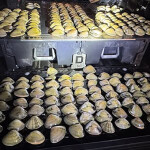
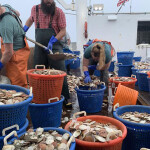

The latest surveys of scallop biomass in the Northeast United States indicates that biomass of the lucrative fishery remains high, but recruitment of new scallops remains relatively low.
The New England Fishery Management Council received the full details of the scallop survey, as well as a progress report on potential management options for the 2020 season, from the Scallop Plan Development Team at a regular meeting last week. One of the most valuable fisheries in the U.S., Atlantic scallops represent hundreds of millions of dollars in revenue.
The latest data indicates that biomass remains high, resulting in a number of different alternatives for the fishery that all see the industry landing between 50 and 55 million pounds of scallops. While that number is short of the 60 million pounds predicted for the end of the ongoing 2019 season, it still represents some of the largest projected landings in the fishery’s history.
The highest biomass was found in areas that benefitted from the 2012 and 2013 year classes – which had the highest recruitment event in the fishery’s history. The highest density of the scallops was found in the Nantucket Lightship South area, estimates have 35,000 metric tons – or more than three billion animals – sitting in the south-deep area.
The high-density scallops are now mature enough to harvest, but remain at a smaller size for unknown reasons. Dubbed “peter pan” scallops due to their slow growth, the high densities should enable commercial dredges with four-inch rings to retain catch, according to the NEFMC.
“Industry members informed the council that market opportunities could be made available for these smaller scallops, and many fishermen expressed concerned that the scallops would die of old age or complications associated with their density before they ever reached the 10- to 20-count range,” a NEFMC release states.
Overall, according to the data, the fishery has not seen an incoming year class since the monumental 2012-2013 event. While there are signs of recruitment in Georges Bank’s “Closed Area II,” Stellwagen Bank, and the Elephant Trunk Area, the signs point to lower recruitment in several areas.
The scallop survey is performed by combining data from multiple different sources, including scallop dredges, drop cameras, a towed camera system called the HabCam, and more. The Virginia Institute of Marine Science, School for Marine Science And Technology at UMass Dartmouth, Coonamessett Farm Foundation, Northeast Fisheries Science Center, and the Maine Department of Marine Resources along with the University of Maine all assist on performing the survey.
The next step for the council, and the Scallop Plan Development Team, is to develop a number of alternatives for the fishery over the next two months. Final action on the season, which will decide the number of access-area trips among other things, will be taken in December.
Photo courtesy of the Virginis Institute of Marine Science.
