





A new report by the Juneau, Alaska-based McKinley Research Group – formerly the McDowell Group – outlined the difficulties encountered this season by Alaska’s seafood industry, with lower stocks complicated by a massive COVID-19 bill.
Presented by McKinley consultant Dan Lesh at Alaska Seafood Marketing Institute’s annual All Hands conference on Tuesday, 10 November, the report found export volumes over the summer fishing season were far below four-year averages, and while some of that was the result of the pandemic and trade wars, it was mostly because of low stocks.
“Those are not really tied to COVID. They are salmon run failure, poor cod fishing, and slower pollock fishing,” Lesh said.
Export volumes for salmon were down 48 percent in September of this year, while Pacific cod dropped 35 percent and pollock was down 18 percent. The salmon fishery came in at around 113 million fish, well short of the projected 133 million for the fifth-worst even-year harvest since 1975. Meanwhile, a tough pollock B season saw the Bering Sea fleet leave some 77,000 metric tons of TAC in water, which McKinley estimates at a value of USD 72 million (EUR 61 million).
These declines, of course, have been complicated by increased costs and market and supply chain chaos from the pandemic, Lesh said. On the processing side alone, McKinley estimates this year’s COVID-19 bill somewhere around USD 50 million to USD 60 million (EUR 43 million to 51 million). A 13 percent reduction in employment for processors, mostly in salmon, also functioned as a drag on the industry, particularly in Bristol Bay, where a compressed run of 39 million sockeye taxed plants.
Lesh said that while the COVID bill is far more difficult to calculate for the 8,700 skippers who fish Alaska’s various fisheries, they too accrued significant expenses this season. Coastal communities, he added, will feel the pandemic as well.
“Across the state, we also saw communities and support sector businesses equally hit by increased costs, and we’re likely to see less of the upside as well, due to lower tax revenue and less spending, because harvesters weren’t supposed to be out in these communities spending money,” Lesh said.
On the market side, pandemic spending on seafood in retail went up 25 to 30 percent, the largest increase of all categories. The largest rise came in frozen seafood, but fresh sales were up as well. Overall, however, more spending on groceries did not make up for the drop-off in foodservice.
“When you combine the two categories, grocery stores and foodservice, you still see a drop in spending of 8 percent, or USD 60 billion [EUR 51 billion],” Lesh said, citing figures from the U.S. Bureau of Economic Analysis.
Two-thirds of Alaska’s seafood is exported, and last year Alaska sent seafood to 107 countries, with major markets in China, Japan, South Korea, and the European Union.
“In total, we’ve surpassed USD 3 billion [EUR 2.5 billion] in export value for the last 10 years. We’ve declined about 4 percent in the last couple years and expect a bigger decline this year,” Lesh said.
Part of this, Lesh said, is because of a 38 percent drop in exports to China since 2017, despite China’s seafood imports doubling over the same period.
“On the positive side, exports to Europe are up, and some of the decline on the export side is due to a strong domestic market and an increased focus on marketing domestically,” Lesh said.
According to the McKinley report, Alaska fishermen produce an average USD 2 billion (EUR 1.7 billion) in harvest value every year, which processors turn into USD 4.5 billion (EUR 3.8 billion) in first wholesale value. The Alaska seafood industry accounts for 60,000 direct jobs, with more than 9,000 vessels and over 200 processing plants.
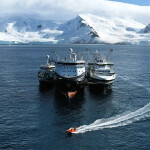
Photo courtesy of photomatz/Shutterstock
