






2022 landings of pelagic species in Russia are exceeding year-over-year catch totals.
The total catch of pelagic species this year, through 1 August, is 70,600 metric tons (MT), 10 percent higher than it was at the same time last year, according to data from the Russian Federal Agency for Fisheries.
Russia's sardine catch reached 45,600 MT as of 1 August, including 10,382 MT caught in the exclusive economic zone of Japan, within quotas allocated by interstate agreements, up 14 percent from 2021. The catch has been good enough that some daily catch totals for vessels exceeded 250 MT, and the average daily catch per ship has been 73.2 MT.
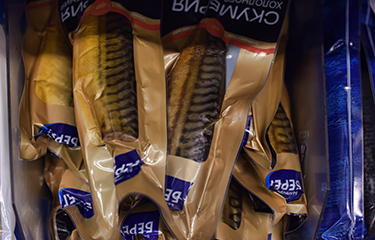
Landings of mackerel reached 25,000 MT, an increase of 4 percent over the corresponding period of 2021, with 24,474 MT of that total caught in Japan’s waters.
High catches of sardine (iwashi) and mackerel in Russia have helped the country keep retail prices for the species relatively low, an issue of enhanced importance for the Russian government.
Good weather allowed the fishery to get started in late May – considerably earlier than the average. By 1 June, 13,000 MT of sardine had already been caught, when that total was still zero on the same date a year ago.
Good pelagic harvests tend to follow in line with good landings of other species in Russia’s Far East. Russia's pollock catch is at 879,900 MT thus far in 2022, 1.5 percent more than in 2021, and its herring catch has reached 230,000 MT, up 37 percent. Its salmon harvest tough early August was 126,800 MT, more than twice as much as 2021.
Russia's Federal Agency for Fisheries recently released an upbeat outlook for the remainder season, saying the 2022 catch will be higher than that in 2021 provided sufficient vessels are available to fish.
The recommended catch in 2022 for sardine and mackerel – a sort of analog for total allowable catch, as neither species is under strict regulation – is 515,000 MT and 260,000 MT, respectively. According to the Russian Research Institute of Fisheries and Oceanography (VNIRO), hydrological conditions will remain favorable for the accumulation of stocks and for fishing.
Last year, Russia's total mackerel catch hit nearly 63,000 MT – up significantly from the 41,000 MT caught in 2020. Its catch of sardine iwashi in 2021 was 253,000 MT, down from the historic high of 315,000 MT caught in 2020. But his season could match or even surpass 2020's total, but according to VNIRO’s evaluations, Russian fishing companies are not fishing the species to full capacity.
Russian Federal Agency for Fisheries Head Ilya Shestakov said that processing plants now have sufficient raw material to operate at full capacity. Shestakov said his office is working to ensure Russian consumers are able to access sufficient Russian-sourced sardine and mackerel at affordable prices, potentially through the expandsion of subsidies for rail transportation of these species.
Photo courtesy of Anna Kirvitskaya/Shutterstock
