






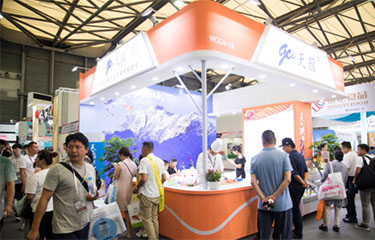
A deal between two Chinese seafood firms has been flagged by a risk compliance consultancy for potentially coming under the U.S. Uyghur Forced Labor Prevention Act.
The law, which was signed in December 2021, bars entry to the U.S. market of any goods connected to Uyghur forced labor, an ethnic minority group in China. It was enacted in response to China’s suppression of the local Uyghur population, which includes allegations of forced labor.
Los Angeles, California, U.S.A.-based risk analysis and compliance advisory firm Kharon, which earlier this year issued a report detailing the potential exposure of China’s seafood industry to the law’s impact, has issued a separate brief calling out a deal between trout producer Xinjiang Tianyun Organic Agriculture Co. and seafood processor Dalian Rich Enterprise Group Co. The USD 140 million (EUR 130 million) deal, signed at the 7th China-Eurasia Expo in Urumqi, China, will give Xinjiang access to Dalian Rich’s distribution network.
“Dalian Rich mainly takes orders from foreign [companies]. Through this deal, Xinjiang salmon will reach many more customers.” a Xinjiang Tianyun spokesperson told a local television news station covering the event.
But Xinjiang Tianyun “has participated in so-called ‘poverty alleviation programs’ – a key indicator of potential forced labor of Uyghurs and Muslim minority groups, per the U.S. government’s Xinjiang Supply Chain Business Advisory,” Kharon said. Xinjiang Tianyun has been named a poverty alleviation base by the Chinese government, and its business has been cited for its contributions to poverty alleviation, Kharon said.
Dalian Rich declined a request from SeafoodSource for comment, but Xinjiang Tianyun CEO Zhang Yuru told SeafoodSource her company doesn’t sell to the U.S. and has done much good work in assisting impoverished locals in Xinjiang, helping them renovate their houses, buying them daily necessities, and subsidizing the cost of school for local youth.
“We share our company's profits with them,” she said.
The Kharon report “slanders” her company, according to Zhang.
“I am very sad to see this news,” Zhang said. “We have never exported products to European and American countries. Our own country and the surrounding Southeast Asian countries are enough to digest our products ... I don’t know what the intentions of these people who wrote this report are. I really hope that the United States can be kinder.”
Yuru told SeafoodSource in January 2021 her firm aimed to export rainbow trout to Kazakhstan and other central Asian states, as well as to Eastern Europe, but that has not yet been achieved, she said.
Jessica Rifkin, an attorney at Glen Burnie, Maryland, U.S.A.-based Benjamin L. England and Associates, warned the new law presents a credible risk to U.S. seafood importers. She told SeafoodSource the new deal raises questions due to its connection to the Xinjiang region, home to the majority of China’s Uyghurs.
“Importers of seafood or seafood products may assume that simply avoiding purchasing products produced in Xinjiang will insulate them from UFLPA exposure. However, the Kharon report shows that that’s not a safe assumption,” Rifkin said. “It’s critical for importers to map their entire supply chain back to the source of production. Importers should also address potential UFLPA liability in their commercial documentation, including provisions requiring their suppliers to conduct their own due diligence and prohibiting them from fulfilling the importers’ orders with goods produced wholly or in part in Xinjiang.”
Photo courtesy of Xinjiang Tianyun Organic Agriculture
