






China has maintained its ban on Japanese seafood following the controversial release of wastewater from the Fukushima Daiichi Nuclear Power Plant, despite recent promises of a review, but some products that fall under the broad category of “marine products” are still entering the country.
Following the ban, which went into effect in August, Japan’s seafood exports to China plunged 90.8 percent year over year dipping substantially to JPY 800 million (USD 5.3 million, EUR 4.8 million) in the month following the ban. Despite the drop, total exports didn’t fall to zero.
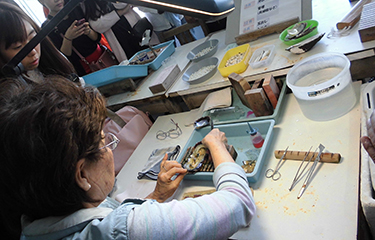
The marine products that can still enter China from Japan mainly comprise pearls, coral, and koi, and exports of these products actually grew in September.
Japan is the world’s largest exporter of cultured pearls, ahead of Indonesia. The product’s export value in 2022 totaled JPY 23.75 billion (USD 158.7 million, EUR 145.5 million), making it the country’s second-largest marine product export after scallops.
Hong Kong is by far the world’s largest importer of the product and is Japan’s biggest customer, buying around 70 percent of its total exports. Pearls sold in Hong Kong mostly go to Chinese customers who take advantage of the port’s lack of tariffs.
The special administrative region of China also imposed stricter measures on Japanese seafood imports, but did not go as far as the mainland. Instead of banning all seafood imports, it widened its ban from five prefectures near the Fukushima plant to 10.
Prefectures that are unaffected by the Hong Kong ban, such as Hokkaido and Aomori, produce several of the country’s lucrative exports such as scallops, resulting in seafood exports to Hong Kong not suffering serious damage as of now. Japanese marine product exports to Hong Kong rose 86.9 percent in September to JPY 12.6 billion (USD 84.8 million, EUR 77.6 million)
Macau – another special autonomous district of China – ranks fourth in cultured pearl import purchases, following the U.S., and Thailand.
The supply route for coral is similar to pearls, with Hong Kong buying about 74 percent of Japan’s exports. China, meanwhile, purchases just under 4 percent.
Exports of Japanese koi fish have experienced a boom over the last decade, and China has traditionally been the top destination, followed by the U.S. and Indonesia. China took 19 percent of Japan’s JPY 6.3 billion (USD 42.4 million, EUR 38.7 million) in koi exports last year.
However, since an outbreak of herpes hit Japan’s koi in the 2000s, the country quarantines the species for seven to 10 days before export.
China approved 15 growers to perform the quarantine, but as the the last remaining pre-export quarantine deal expired on 30 October, and Chinese officials declined to renew certifications, the flow of the product to China has effectively stopped, making koi likely to become another casualty of the diplomatic tension between the countries.
While some seafood products are still making it into China, The country’s ban on Japanese seafood, given its status as the world’s largest seafood importer, will continue to affect the seafood industry. Though China claims that the ban is solely due to the health risks the wastewater release poses, some experts believe it’s also a play to drum up business for its domestic carp industry.
Nevertheless, Japan has continued to adapt in the wake of its neighbors’ bans, with the U.S. stepping in to buy products in an attempt to alleviate the pressure the bans have caused.
Photo courtesy of Anastasia Wheni/Shutterstock
