



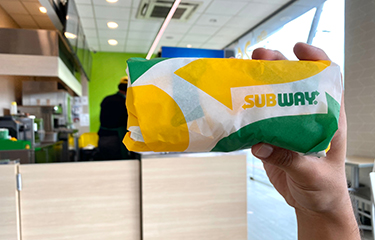
Subway is asking a federal judge to issue sanctions of nearly USD 618,000 (EUR 563,000) against the attorneys in a lawsuit alleging it sold “fake” tuna.
In documents filed in the U.S. District Court for the Northern District of California, Subway called the lawsuit “unmeritorious” and contended the attorneys for plaintiffs Nilima Amin and Karen Dhanowa knew the claims were false prior to filing suit.
The plaintiffs originally filed the lawsuit in January 2021, contending that Subway was selling tuna wraps and sandwiches that do not contain any actual tuna fish, Instead, the “‘tuna’ is a mixture of various concoctions that do not constitute tuna yet have been blended together by [Subway] to imitate the appearance of tuna,” the complaint stated.
“Defendants have engaged in economic adulteration by selling a food product that partially or wholly lacked the valuable constituents of tuna and that had been substituted in part or whole,” the lawsuit alleged. “Defendants have further committed unlawful adulteration by concealing the inferiority of the products.”
Then, in an amended complaint filed in June 2021, the plaintiffs stated that Subway’s marketing and advertising claims that its tuna is 100 percent sustainably caught skipjack and yellowfin tuna and that its tuna does not contain “tuna species that come from anything less than healthy stocks” are false. That complaint still included the allegation that the tuna is not 100 percent real tuna.
U.S. District Judge Jon S. Tigar dismissed those claims in October 2021. The plaintiffs were not able to state with particularity the circumstances constituting fraud or mistake, and their allegations of fraud were not specific enough “to give defendants notice of the particular misconduct which is alleged to constitute the fraud charged,” Judge Tigar wrote in the order dismissing the complaint.
In November 2021, the plaintiffs submitted a revised class-action lawsuit against Subway claiming the Bridgeport, Connecticut-based restaurant chain’s tuna sandwiches contain other animal proteins such as chicken and pork, instead of “100 percent tuna,” as advertised.
Amin asked U.S. District Judge Jon S. Tigar to dismiss the case late last week, stating that her severe morning sickness due to pregnancy renders her unable to continue.
“At various times, my morning sickness was so severe that I needed to lie down, which made attempting to read documents and/or participate in litigation extremely difficult if not out of the question. The adverse medical impact of my pregnancy caused me to face undue delay in meeting litigation deadlines,” she wrote.
Tigar has not yet ruled on the sanctions request or plaintiffs’ motion to dismiss, In a statement, Subway lambasted the lawsuit and the lawyers who filed it.
“Subway serves 100 percent real, wild-caught tuna. The baseless lawsuit and the plaintiff’s meritless claims, which have always lacked any supporting evidence, resulted in the spread of harmful misinformation and caused substantial damage to Subway franchisees and the brand,” a Subway spokesperson told SeafoodSource on 10 May. “While Subway agrees with the plaintiff’s motion to dismiss this reckless lawsuit, it has asked the court to order the plaintiff’s attorneys to reimburse the company for the legal fees and costs spent fighting these unfounded allegations.”
Subway is asking for sanctions of USD 617,995.49 (EUR 563,160) against Shalini Dogra of the Dogra Law Group, Mark Lanier and Jonathan Wilkerson of the Lanier Law Firm, Patrick McNicholas and Jeffrey Lamb of McNicholas & McNicholas, and Richard Kellner of Kellner Law Group.
Additionally, the restaurant chain wants compensation of “additional amounts incurred in connection with bringing this motion and opposing the plaintiff’s motion for voluntary dismissal, which represents the defendants’ reasonable attorneys’ fees and costs incurred in its defense of the plaintiff’s meritless lawsuit.”
“Plaintiff’s counsel should be subject to sanctions for filing this frivolous lawsuit, continuing to prolong litigation despite having clear evidence for over two years that their claims were unmeritorious, and forcing Subway to incur completely unnecessary costs and fees,” Subway wrote in court documents. “The timing of their sudden request to dismiss this lawsuit shows that lack of merit and is a transparent [attempt] to try to avoid imminent adverse rulings and events if the case were to proceed.”
The Subway lawsuit is just one of several class-action lawsuits brought against seafood suppliers, restaurants, and retailers in recent years. Other lawsuits have focused on seafood sustainability claims.
A class-action complaint brought against Red Lobster alleged that the restaurant chain’s farmed shrimp and Maine lobster do not originate from sustainable sources, as the company has claimed. Filed by a consumer in U.S. District Court in California, the complaint claims Red Lobster’s shrimp originates from “industrial shrimp farms that do not employ the highest environmental or animal welfare standards” and its Maine lobster comes from suppliers who use “environmentally destructive practices that threaten endangered populations of North American right whales.”
ALDI was the target of a false-labeling lawsuit filed by advocacy group GMO/Toxin Free USA, challenging ALDI’s claim the salmon it sells is sustainably sourced.
In 2021, Mowi agreed to settle a similar lawsuit for USD 1.3 million (EUR 1.1 million). The complaint alleged the sustainability claims printed on packages of its Ducktrap River of Maine smoked salmon were false.
Photo courtesy of Prachana Thong-on/Shutterstock
