






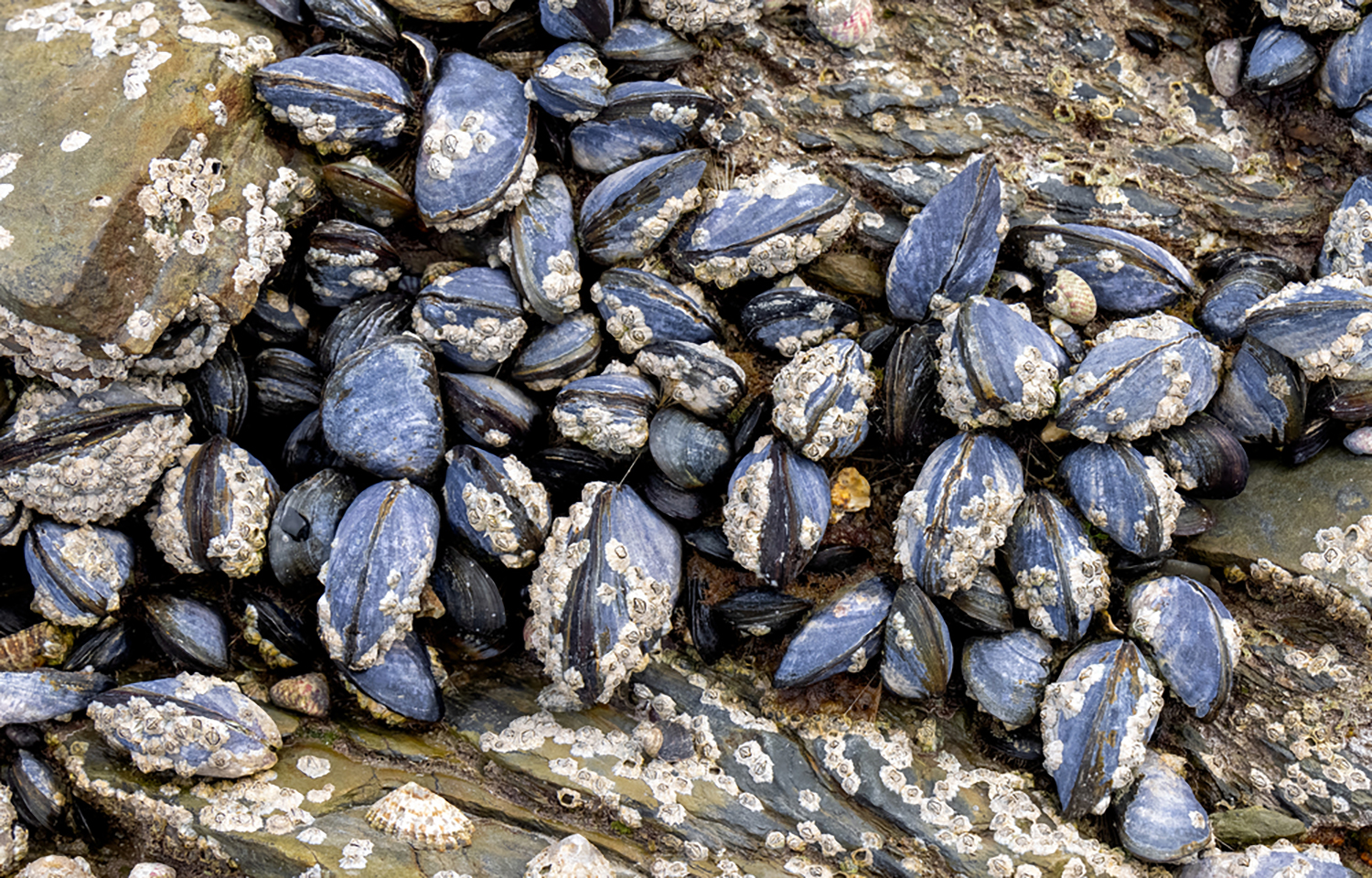
Post-Brexit export regulations implemented by the E.U. and domestic red tape have rattled the U.K. shellfish industry, which is scrambling for solutions to lock down a reliable export market, according to the Shellfish Association of Great Britain (SAGB).
U.K. shellfish exporters have been hit hard by an E.U. policy to only allow entry to imported bivalves – such as mussels, oysters, cockles, clams, and scallops – produced E.U.-designated Class-A waters, or purified or depurated prior to shipment.
Most U.K. waters don’t have Class-A designation, with most ranked as Class-B waters, and the country doesn’t have any large depuration facilities. Moreover, E.U. buyers prefer to conduct their own depuration in close proximity to the markets and consumers to whom they sell.
Therefore, despite promises the impacts of leaving the E.U. would be minimal and temporary, U.K. mussel exports have tumbled to just a few metric tons (MT) annually.
SAGB CEO David Jarrad said U.K. authorities are undermining the industry by continuing to impose unfavorable rules on shellfish businesses, which he said are even stricter than those implemented by the E.U. and export markets farther afield.
Progress to address the issue has been “painfully slow,” Jarrad told SeafoodSource. Many mussel-production operations decimated by their B-Class rating would have a higher rating if they were within E.U. territory, he said.
“If the Menai Straits was located in the Netherlands or anywhere else in Europe for that matter, I think it would be A-Class and, therefore, have no issues. But our classification system and the way it’s implemented is fundamentally flawed and not fit for purpose,” he said. “It doesn't protect public health, and it’s based on a very inaccurate test – conducted once a month – of what are very often huge areas. The fact is as a shellfish business, you have the big risk of being downgraded in three months’ time because of one single reading. If it doesn't protect public health, it doesn't do what it says on the tin, and the industry pays the price.”
Another major challenge facing the shellfish industry is the U.K. Department for Environment, Food, and Rural Affairs’ (Defra) policy seeking to limit Pacific oyster (Crassostrea gigas) production due to its classification as a non-native species, with particular areas pushing for production of native species. This is despite the gigas species accounting for more than 99 percent of the country’s oyster production and the potential for much more production and economic growth, Jarrad said.
The irony of this situation, according to Jarrad, is that due to climate change, there are now probably many more wild Pacific oysters in certain U.K. rivers than farmed ones, and according to scientific studies, there will be breeding populations of the oysters as far north as the Faroe Islands by 2050.
“They’re going to be there anyway, so why are we shutting our industry now? It's a crazy move,” he said. “Nevertheless, Pacific oyster farmers are worried they’re going to be shut down or thrown off their land.”
Jarrad said what’s needed is a direct policy change that nationalizes the species and supports its production.
“Until that happens, nothing is going to change," he said.
Jarrad said the U.K.'s mussel shellfish industry is limited in its ability to avert disaster without immediate government help.
“What really winds this industry up is the government saying it wants to see and support industry-led growth, but the things constraining this industry are not in the power of the industry to fix,” he said. “It’s hamstrung by classifications and the loss of certain trades with Europe. These are problems the industry has been dealt and which it cannot change. Overall, it’s having a very hard time.”
Photo courtesy of Philip Bird LRPS CPAGB/Shutterstock
