




China’s tuna-canning industry has signaled intentions to build up processing capacity domestically, which may dash the hopes of Pacific Island nations that have sought to grow their canning operations with China’s help.
Several tuna industry executives told SeafoodSource they believe Chinese cities are better located for tuna-canning expansion plans than the Pacific Islands, as their remoteness makes them far less attractive. China's vast industrial capacity and logistical connections, on the other hand, make it competitive as a processing location, not only for exports sent abroad but also for domestic consumption.
A European tuna executive with extensive experience in the Pacific Islands, who preferred not to be named, told SeafoodSource China has long-term plans “focused on Shenzhen and a few other Chinese cities becoming tuna hubs [and this is] reflected in large investments in boats, cold storages, and processing facilities.”
“It does not include building substantial processing overseas in Pacific Islands, which might be close to the resource, but often lack landmass, water, ports, and, importantly in tuna processing, low-cost and highly efficient labor,” they said.
Though Pacific Island nations like Papua New Guinea have set ambitious plans to build up their processing capacity, Joe Murphy, who consults for Hong Kong, China-based tuna-fishing company Liancheng Ocean Fisheries Group, said China is making the smart play to invest back home.
“I can’t see [Pacific Island expansion] is needed,” he said. “I think China taking a realistic approach in not promoting processing in the islands. The islands just cannot compete on cost.”
China’s cost competitiveness was also highlighted by another European tuna industry stakeholder who said China often undercuts other players to grab market share, resulting in more tuna headed to Chinese canneries and processing plants, making canneries elsewhere unviable.
Francisco Blaha, a fisheries consultant with 40 years of experience in the Pacific Islands as a fisherman and advisor, said China’s growing tuna-canning sector is aiming to fill in the gap left by historical U.S. tuna-canning capacity and will face sharp competition from Thailand and Vietnam as it matures.
“China is a relatively new entrant in the purse-seine trawling and canning world and is slowly catching up, taking the space the U.S., the original power in the canned tuna world, left behind,” he told SeafoodSource.
He also said he sees little hope of Pacific Islands competing.
“The only advantage Pacific Islands have in processing is their proximity to the fishery, yet that alone is not enough to compensate for the disadvantages they face, which stem from two intractable realities of the region: economies of scale and geographical isolation,” Blaha said while also citing such difficulties as high electricity prices, flimsy port landing facilities, and the absence of an industrial sector to service canning factories and vessels. “Very little can be done to compensate for such realities.”
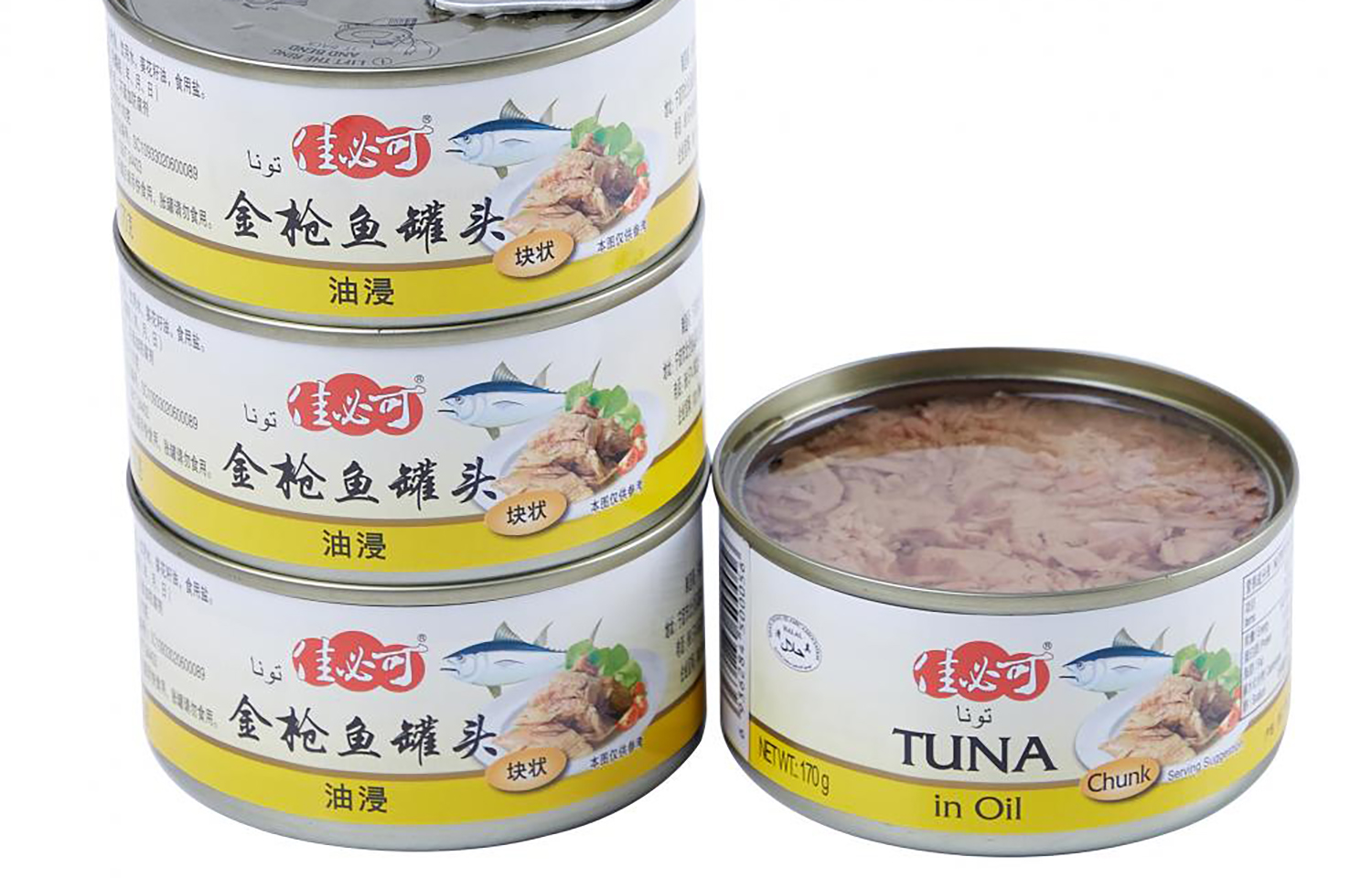
Ambitions to expand canning capacity domestically come at a time of rising consumption growth rates of canned tuna in China.
Market research agency Deep Market Insights predicted in a report that the Chinese canned tuna market will grow to USD 3.02 billion (EUR 2.62 billion) in 2033, up from USD 2.1 billion (EUR 1.82 billion) in 2024, with an average annual growth of 4.1 percent between 2026 and 2033.
The China Canned Food Industry Association said that there is also vast room for growth, providing data to SeafoodSource that showed the average annual per-capita consumption of canned food in China stands at 6 kilograms, which is far lower than the 50 to 100 kilograms per-capita annual consumption in Europe and the U.S.
