





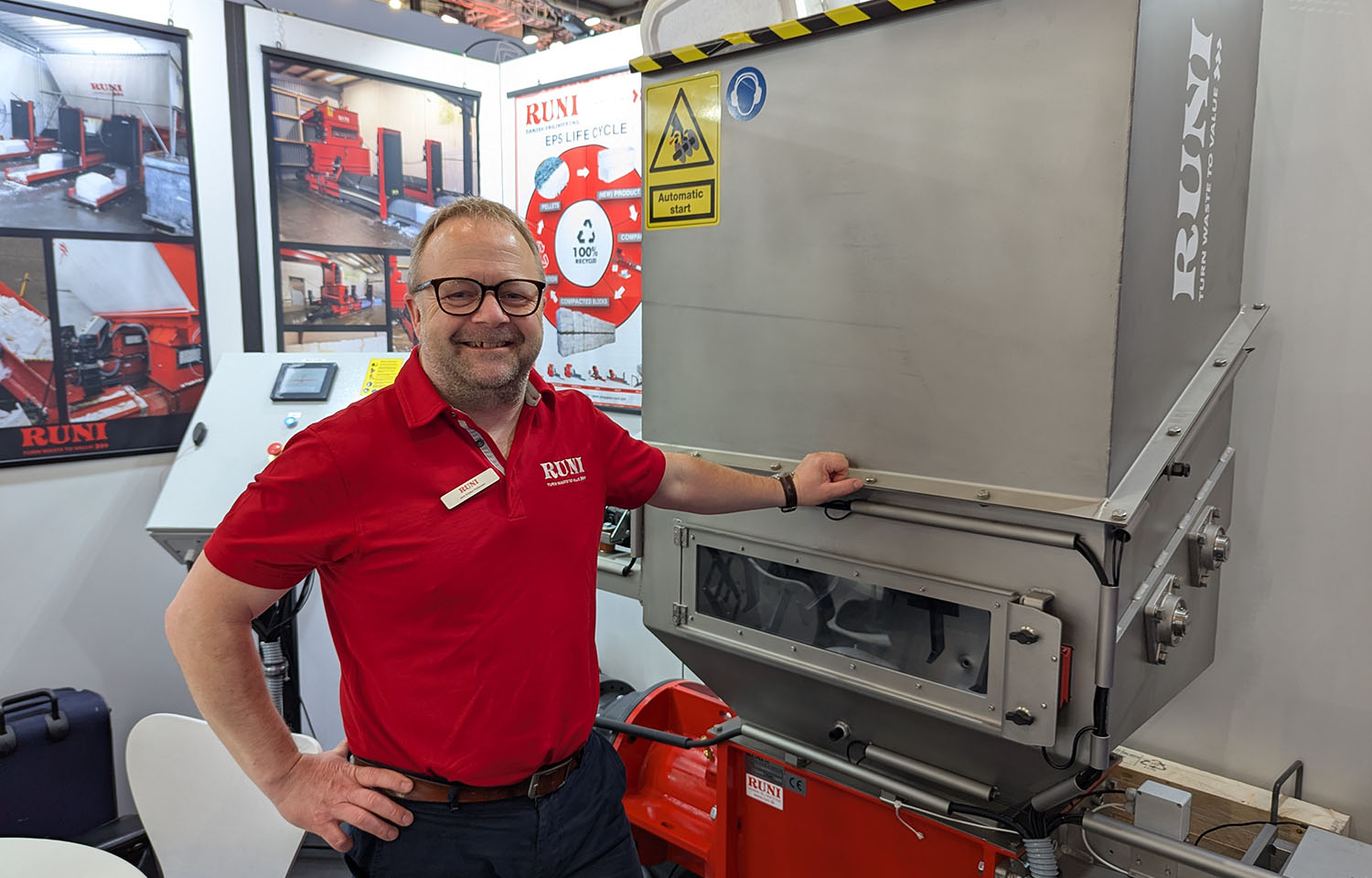
Tarm, Denmark-based Runi is continuing to see adoption of its compacting machines which provide a solution for expanded polystyrene (EPS).
Runi has been manufacturing compaction equipment for EPS – also known by the brand name Styrofoam – since the mid-1990s. Runi Sales Manager Jens Kristian Kristensen told SeafoodSource during Seafood Processing Global, which ran from 21 to 23 April in Barcelona, Spain, the seafood industry has been utilizing its products as a means of both improving environmental impacts and saving money.
“The point with compacting EPS is you transfer a high disposal cost into a valuable resource,” Kristensen said. “With our technology, you can save up to 50 truckloads when you compact EPS, and typically our customers will load up to 20 tons of EPS on a truckload.”
EPS is an extremely effective insulating material that is low cost, water resistant, and light weight – making it perfect for transporting products like seafood that need to be banned. However there’s been increasing concerns about EPS, with some places implementing bans out of concern for its environmental impact.
Kristensen said that EPS is entirely recyclable, and compacting it is an effective way of reducing those impacts, saving money on disposal costs, and simultaneously creating a sellable product.
“With the savings, and the income, many of the machines we sell are paid back within 6 to 12 months,” Kristensen said. “That helps a lot on the bottom line of the companies.”
Runi has a range of different machines, from a small one that can handle a max of 18 kilograms, or 27 boxes, of EPS per hour, up to a larger industrialized solution that can handle 300 boxes on its own. Its machines can also be combined into a larger one to continue expanding capacity as needed.
“There are many ways to scale it up, as companies get bigger and bigger,” Kristensen said.
He said they typically serve customers like value-added seafood producers that use large volumes of EPS in their manufacturing, but it has also worked with small fish companies and even fish auctions and markets that need just one small machine.
Competition has been increasing in the space since Runi first got its start in the industry, but Kristensen said there is still huge demand for its products.
“We still meet companies who haven’t heard of this solution,” he said.
