




Singapore-headquartered alternative protein startup Full Circle Biotechnology announced plans to build an insect protein plant in Thailand capable of producing 7,000 metric tons of product per year.
Full Circle said the new plant will be built thanks to investments from a successful funding round which included Windsor, U.K.-based ocean impact investment firm Rypples. Though the company has not disclosed the details of the funding round, founder Felix Collins told AgFunderNews that "investors include Rypples, family offices, and high net worth individuals” and that the funds include a blend of equity and non-dilutive funding.
Full Circle’s protein meal is made from a combination of black soldier fly larvae and microbial protein produced through solid state fermentation, in which microbes feed on low moisture substrate – in this case organic waste – rather than traditional liquid mediums.
The company upcycles its solid waste substrates from agriculture and food and beverage industry byproducts, further reducing the resources used in the production process.
While a number of feed producers are commercializing feeds which include black soldier fly, Full Circle claims that its mixed black soldier fly and microbial protein meal can even more drastically reduce the use of fishmeal in aquaculture, producing carbon emissions almost 100 times lower than soymeal, and 700 times lower than fishmeal.
Collins has previously said that the goal of Full Circle Biotechnology is to address the pressing need for sustainable proteins.
“Every year, businesses spend hundreds of billions of dollars to transport and dispose of nutrient-rich food waste, generating an estimated 380 million metric tons of greenhouse gas emissions annually. By combining food waste with black soldier fly larvae and microbes, Full Circle Biotechnology has developed a waste-to-protein production system that offers animal farmers the chance to cut both emissions and cost, without compromising on quality,” Collins said in 2023.
Work will be complete on the Kanchanaburi plant, north-west of Bangkok, Thailand, by the end of November, and Collins said that its production capacity will be required by existing customers.
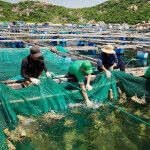
“They are farmers across Thailand mostly working in aquaculture in the east, central and southern regions,” Collins told AgFunderNews. “The volume skews towards shrimp, snakehead and tilapia, but we work with some niche species too such as swamp eel and butter catfish.”
