






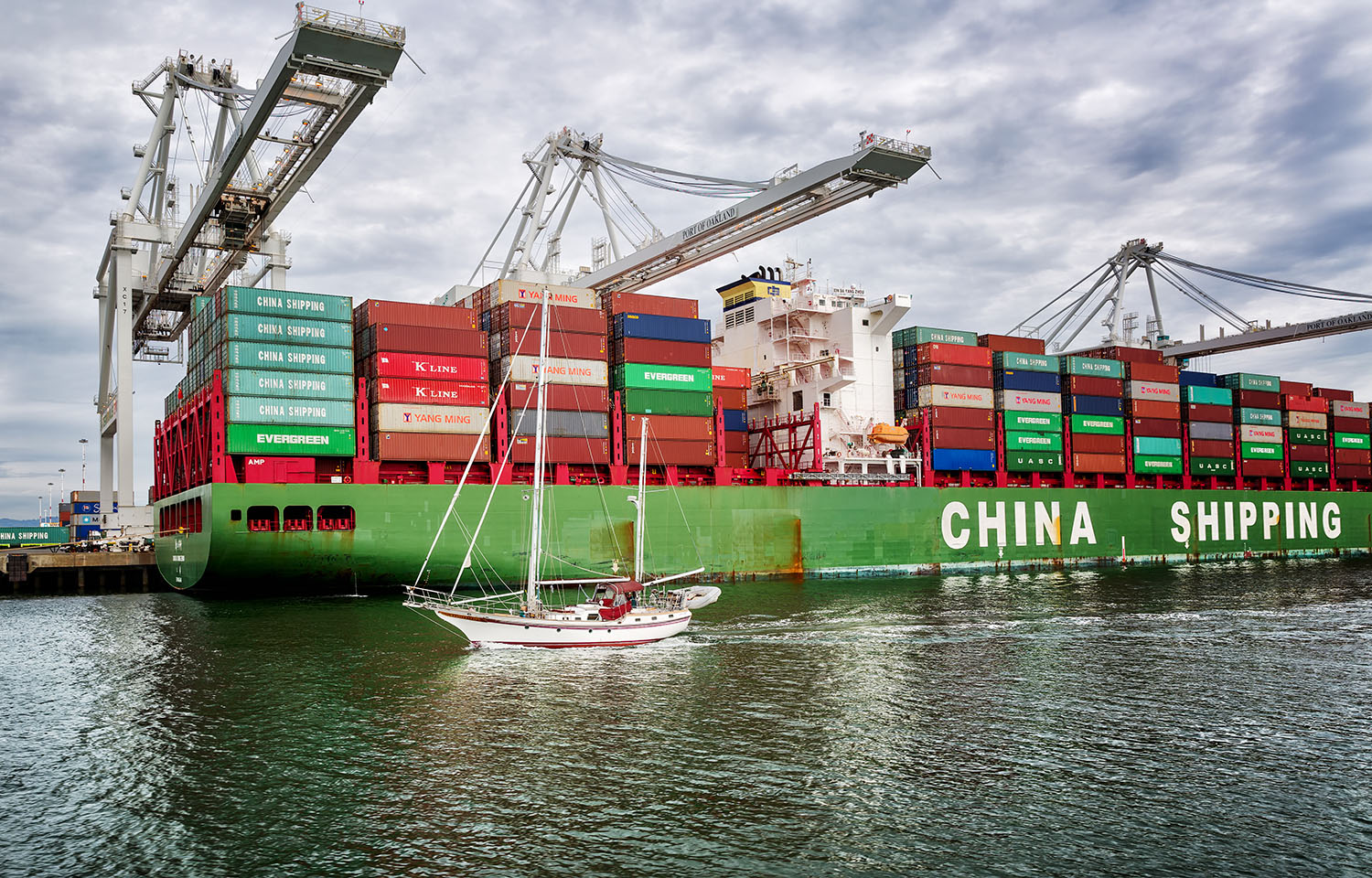
Though the U.S.-China tariff pause has provided U.S. import businesses with a reprieve, many are still struggling to create long-term growth strategies in the current environment, experts say.
Reed Smith Global Regulatory Enforcement Group Chair Michael Lowell told SeafoodSource that the current situation is “just a lesser-of-two-evils scenario.”
“Importers of Chinese-origin goods have faced 7.5 percent to 25 percent tariffs – and sometimes higher – since the first Trump administration,” Lowell said. “Then, the president added on a 20 percent tariff on all Chinese-origin imports, plus the reciprocal tariffs announced in April. These additional tariffs are still creating challenges for U.S. businesses.”
A tariff pause, Lowell said, still represents “another shift in policy that businesses have to account for when determining how to source and price their products.”
Justin Angotti, an associate in the Reed Smith Global Regulatory Investigations and Enforcement Group, added that he has seen members of nearly every U.S. import sector struggle to develop long-term strategies to cope with, or even capitalize on, the new tariff policy.
Like Lowell, he said that since the first Trump administration, his clients have been focused on diversifying their supply chains. Now, most of his clients whose supply chains run through China are considering big changes, but he said supply chain shifts take time for businesses of all sizes to implement.
“I don't know that we've seen any major supply chain shifts because there continues to be uncertainty about what country is most advantageous ... and it's hard if you're going to pick up operations and move to another country [as] that usually involves ... some capital investment on the front end," he said. "You’re going to want some certainty that that move in the long term is beneficial. I don't know that anybody has yet decided that they have a high degree of confidence in what exactly [the right] move would be."
Right now, Angotti said, most of his clients are trying to take better stock of their supply chains
“All of a sudden, everybody is very concerned about country of origin, about valuation, [and], in some cases, classification of goods. [They want to know] what changes they can make in their supply chain to mitigate the tariff impact [based on these factors],” he said.
Both Angotti and Lowell said that importers should focus on what they can control: setting up contractual protections to mitigate the tariffs’ impact on their businesses.
“Who bears the risk of the tariff?,” Angotti said, describing the questions he asks his clients to think through. “How do you account for that in long-term supply contracts with vendors? How do you fairly negotiate tariff increases when they occur?”
The challenges intensify in the seafood sector, where many products are sourced only from specific regions and most are highly perishable, Angotti said.
“Ultimately, the unusually dynamic and big swings on the tariff policies are creating significant inefficiencies borne by all parties and potentially stunting continuation of both the status quo and achievement of the [U.S.] administration’s goals,” Lowell said.
Lowell said he was somewhat optimistic, however, that relations between the U.S. and China could improve.
“One of the things that struck me about the U.S.-China joint statement [announcing the tariff pause] was that the negotiated language acknowledged ‘the importance of a sustainable, long-term, and mutually beneficial economic trade relationship’ between the two countries,” he said. “That’s a shift from the type of de-coupling rhetoric we’ve come to expect when U.S. leaders talk about China. It doesn’t mean we’re normalizing our trade relations with China, but it could signal a less strident approach to addressing issues between the two countries.”
