






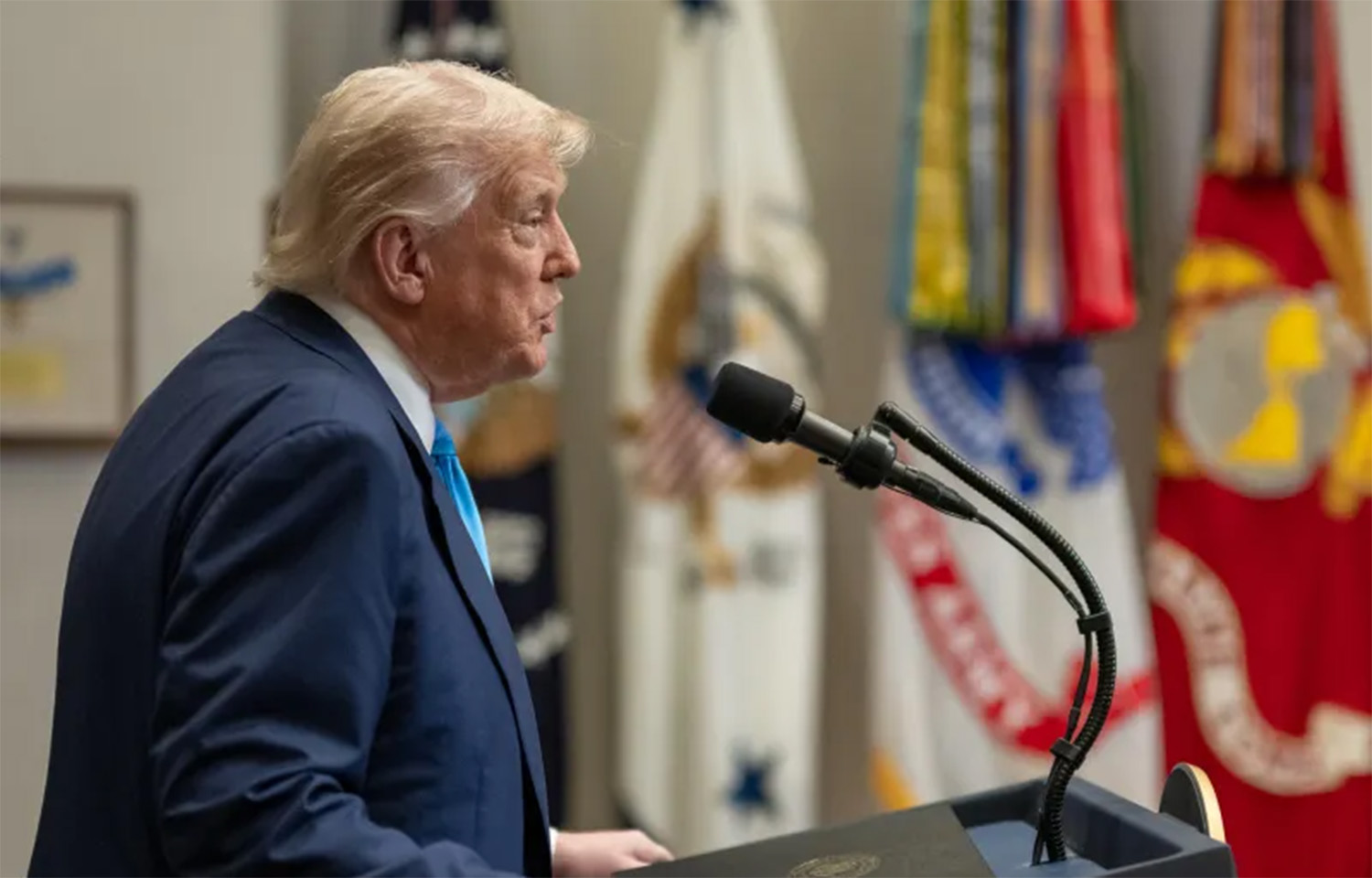
U.S. President Donald Trump has signed an executive order further delaying a proposed tariff increase for another 90 days.
The latest order, “Further Modifying Reciprocal Tariff Rates to Reflect Ongoing Discussions with the People’s Republic of China,” cites ongoing trade talks between U.S. and Chinese officials as a reason for the delay. With the new order, the existing suspension on tariffs will now last until 12:01 a.m. Eastern Standard Time on 10 November.
“The United States continues to have discussions with the PRC to address the lack of trade reciprocity in our economic relationship and our resulting national and economic security concerns,” the executive order states. “Through these discussions, the PRC continues to take significant steps toward remedying non-reciprocal trade arrangements and addressing the concerns of the United States relating to economic and national security matters.”
U.S. Treasury Secretary Scott Bessent hinted at a potential delay on the tariffs in July amid trade talks between the U.S. and China in Stockholm, Sweden.
“I think we’ve moved to a new level with China, where it’s very constructive, and we’re going to be able to get a lot of things done now that trade has settled in at a good level,” Bessent said in July.
The new order confirming the pause is the latest chapter in a series of escalations and subsequent agreements between China and the U.S. that started just days after Trump took office in January. Trump first signed an order implementing 10 percent tariffs on China in February and then followed it up with another 10 percent tariff in early March.
Following those two tariff increases, Trump went on to announce an additional 34 percent tariff on 2 April – which meant certain Chinese goods were subject to a tariff rate above 70 percent. After China responded with a 34 percent tariff of its own on U.S. goods in early April, that rate was increased to 50 percent.
Soon after, tariffs between the two countries rapidly escalated and quickly reached over 100 percent. Then, in early May, the U.S. and China announced a 90-day suspension on tariffs – which was set to expire on 12 August until the latest executive order.
With the latest decision, current tariffs on Chinese goods stand at 30 percent. Many Chinese goods are still subject to previous Section 301 tariffs of 25 percent, which have remained in place since Trump implemented them during his first term.
Even with the lengthy pauses, tariffs have already been disrupting markets between the U.S. and China as the existing 55 percent rate makes trade difficult.
China is the seventh-largest source of seafood in the U.S. by value, and the country sent USD 1.52 billion (EUR 1.3 billion) worth of seafood to the U.S. in 2024. The U.S., in turn, exported over USD 1 billion (EUR 856 million) worth of edible and non-edible seafood products to China in 2024 – making it the second-highest export destination by value.
