

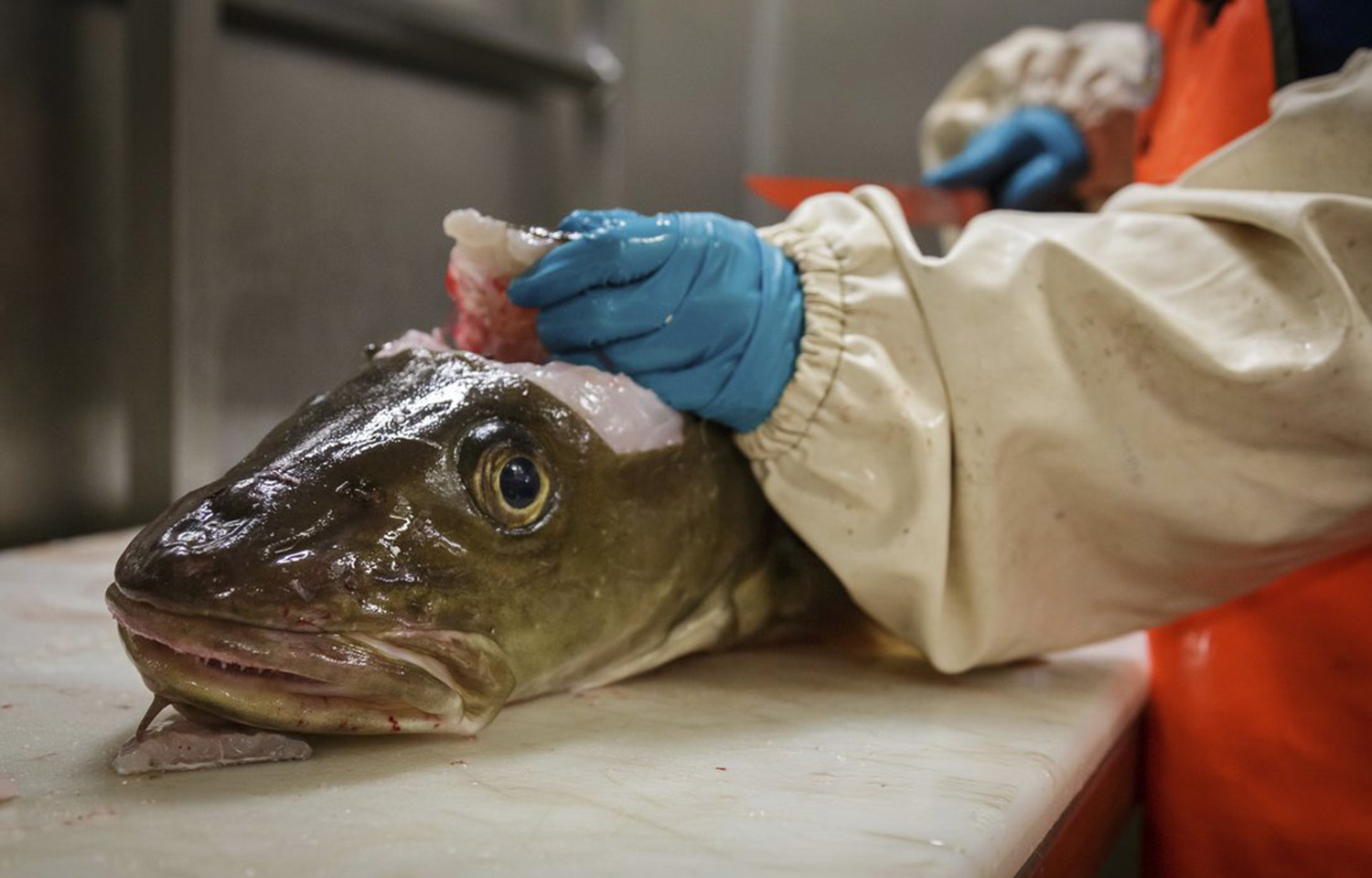
The Russian-Norwegian Arctic Fisheries Working Group is recommending an increase to the Barents Sea cod quota in 2027.
The working group said the total catch of Northeast Arctic cod in the Barents Sea should be no more than 312,667 metric tons (MT) in 2027. That total is a 16 percent increase over the advice it gave for 2026 and 10 percent higher than the amount Norway and Russia agreed to fish.
“The council is raising the quota because the 2021 year class is on its way into the fishable stock,” Norway Institute of Marine Research researcher Bjarte Bogstad said. “This year class is moderately strong and stronger than the previous year classes.”
While the quota is higher than it was in 2026, it is still at a historical low for the species, as the suggested total allowable catch was at its lowest since 1991.
The scientists said that the 2021 year's class may be stronger, but overall, the cod stock is seeing little success in recruiting new juvenile fish. While the 2021 year class was average, the 2020, 2023, and 2024 year classes are weak and the 2022 year class was below average.
“The 2025 class is also below average,” Bogstad said.
The weaker classes also spell low recruitment for the longer term, he added.
“Since the average age of cod that spawns for the first time is 7 years, this means that there will be little replenishment of the spawning stock until 2028,” Bogstad said. “Fishing in the coming years will largely depend on the moderately strong 2021 year class.”
Negotiators described the process to set the quota between the two countries in 2026 as difficult due to tensions between Norway and Russia, including Norway setting sanctions on major Russian fishing companies Norebo and Murman Seafood Company. Meeting minutes showed Russia was strongly opposed to the sanctions, but ultimately, the two parties reached a quota agreement.
Alongside the cod quota, the working group recommended increases for haddock and Greenland halibut in 2027.
It said the quota for Northeast Arctic haddock should not exceed 180,336 MT in 2027, 18 percent higher than the advice for 2026.
“The 2021-2025 year classes are average or above average. These are now entering the fishery and allow us to recommend slightly higher catches than in previous years,” Bogstad said. “But, it is important not to fish these year classes too early and let them exploit their growth potential.”
They recommended a total quota of 19,610 MT for Greenland halibut, an increase of 3 percent over the quota that the two countries set and 32 percent higher than the quota advice set in 2026.
“Good year classes are on their way into the fishable stock,” Bogstad said.
