






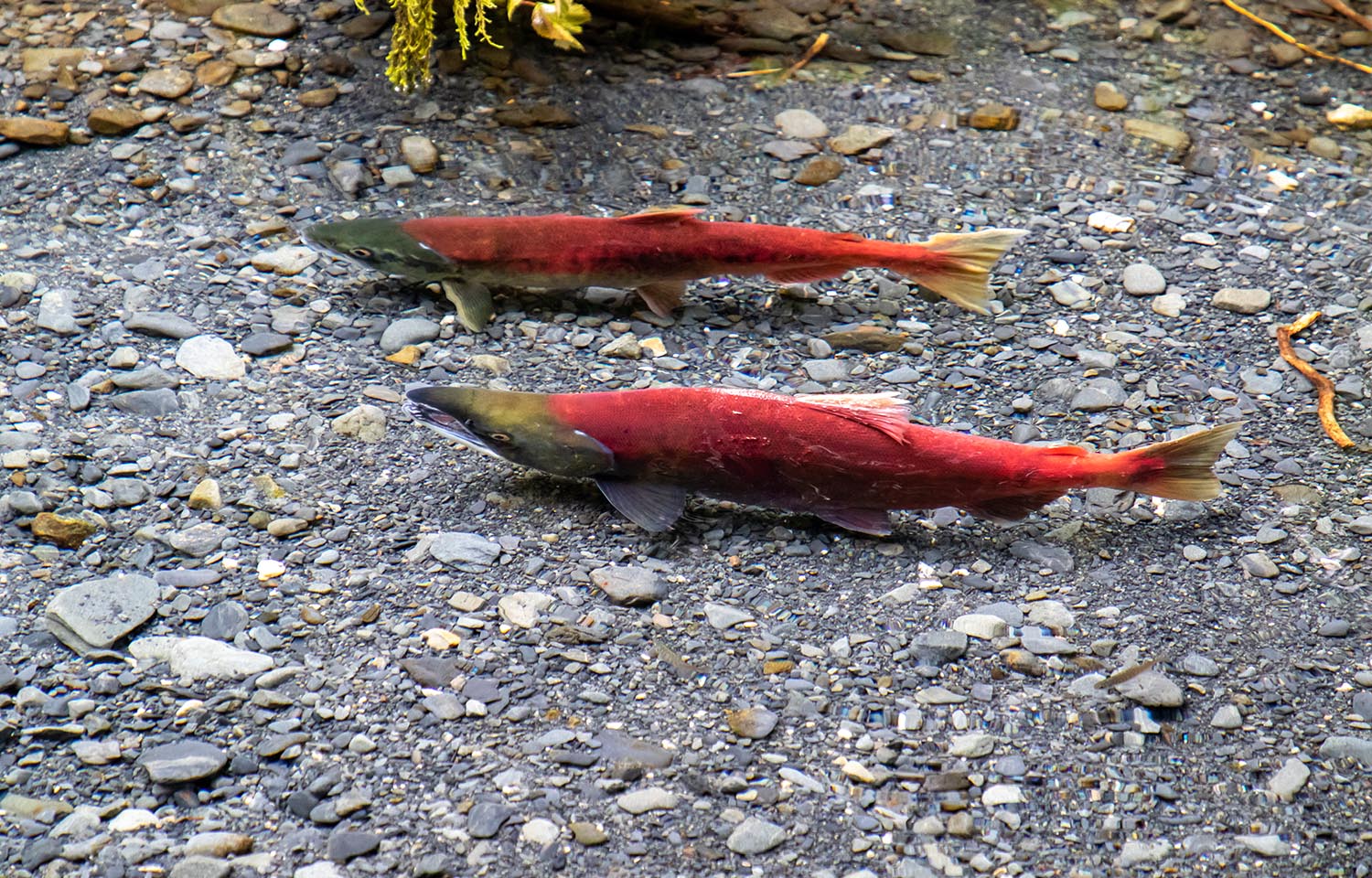
Commercial salmon fishers in Bristol Bay, Alaska, U.S.A. had a boom season, with landings far outpacing early season expectations.
A 24 September summary of the 2025 commercial season released by the Alaska Department of Fish and Game’s Division of Commercial Fisheries reported an ex-vessel value of USD 215.3 million (EUR 183.1 million) for the year. That’s 7 percent higher than the 20-year average.
Sockeye have in recent years made up the bulk of the Bristol Bay commercial harvest, and 2025 was another banner year for the species. The ADF&G reported an inshore sockeye salmon run of 56.7 million fish – 14 percent higher than the preseason forecast and 16 percent higher than the 20-year average. Those preliminary numbers would make 2025 the 7th largest inshore sockeye run in 20 years.
Commercial fishers in Bristol Bay landed roughly 41.2 million sockeye salmon – 18 percent higher than expected and 23 percent higher than the two-decade average.
Landings of other salmon species were far lower. The state reported a commercial harvest of 6,148 Chinook salmon, 589,433 chum salmon, 25,788 coho salmon, and 256 pink salmon.
However, the Chinook numbers were particularly low, with the state reporting the 2025 harvest as “82 percent below the most recent 20-year average of 33,469 fish, and the lowest in the last 20 years.”
Daniel Schindler, a researcher with the University of Washington’s Alaska Salmon Program, said the continued dominance of sockeye salmon is correlated with warming temperatures in Alaska.
“People up here have known that the climate has changed substantially in the last few decades, and we’re seeing warmer temperatures – which is having a bunch of impacts on different parts of the ecosystem, including on salmon,” Schindler said during a 10 September presentation to the United Tribes of Bristol Bay.
Earlier ice breakups and warmer springs have changed the ecosystem, with sockeye salmon seeming to benefit over other salmon species.
“Sockeye salmon the last 25, 30 years – in fact more than 50 years – have really boomed in concert with this warming climate trajectory,” Schindler said, slowly becoming the most dominant salmon species returning to the Kuskokwim River. “Sockeye seem to be responding in a positive way to that warming trend.”
That boom in sockeye salmon has largely stabilized in recent years. As the Department of Fish and Game report noted, the 2025 season was “the 11th year in a row that the total inshore run was larger than 50 million fish.”
“The returns this year were above what they have been over the last ten years,” Shindler said. “When we look at the data going back to about 2015, not only have we basically set new records for how many sockeye are being produced in Bristol Bay rivers, but it’s been very stable.”
Schindler predicted that there will likely be another good run in 2026, even if it is not as high as it was in 2025.
“Based on the returns we’ve seen this year so far, there’s reasons to be relatively optimistic that there will be a good return next year,” Schindler said.
