






An ongoing labor dispute that resulted in the Argentine red shrimp fishery grinding to a halt has been resolved.
The United Maritime Worker Union (SOMU) and multiple organizations representing fishing companies like the Cámara Argentina Patagónica de Industrias Pesqueras (CAPIP) and Cámara de Armadores de Pesqueros y Congeladores de la Argentina (CAPeCA) spent months in a conflict over a proposed 22 percent wage cut. The conflict recently came to a head as CAPIP President Agustin de la Fuente told media the freezer fleet would no longer participate in the Argentine red shrimp fishery in 2025 due to the ongoing dispute.
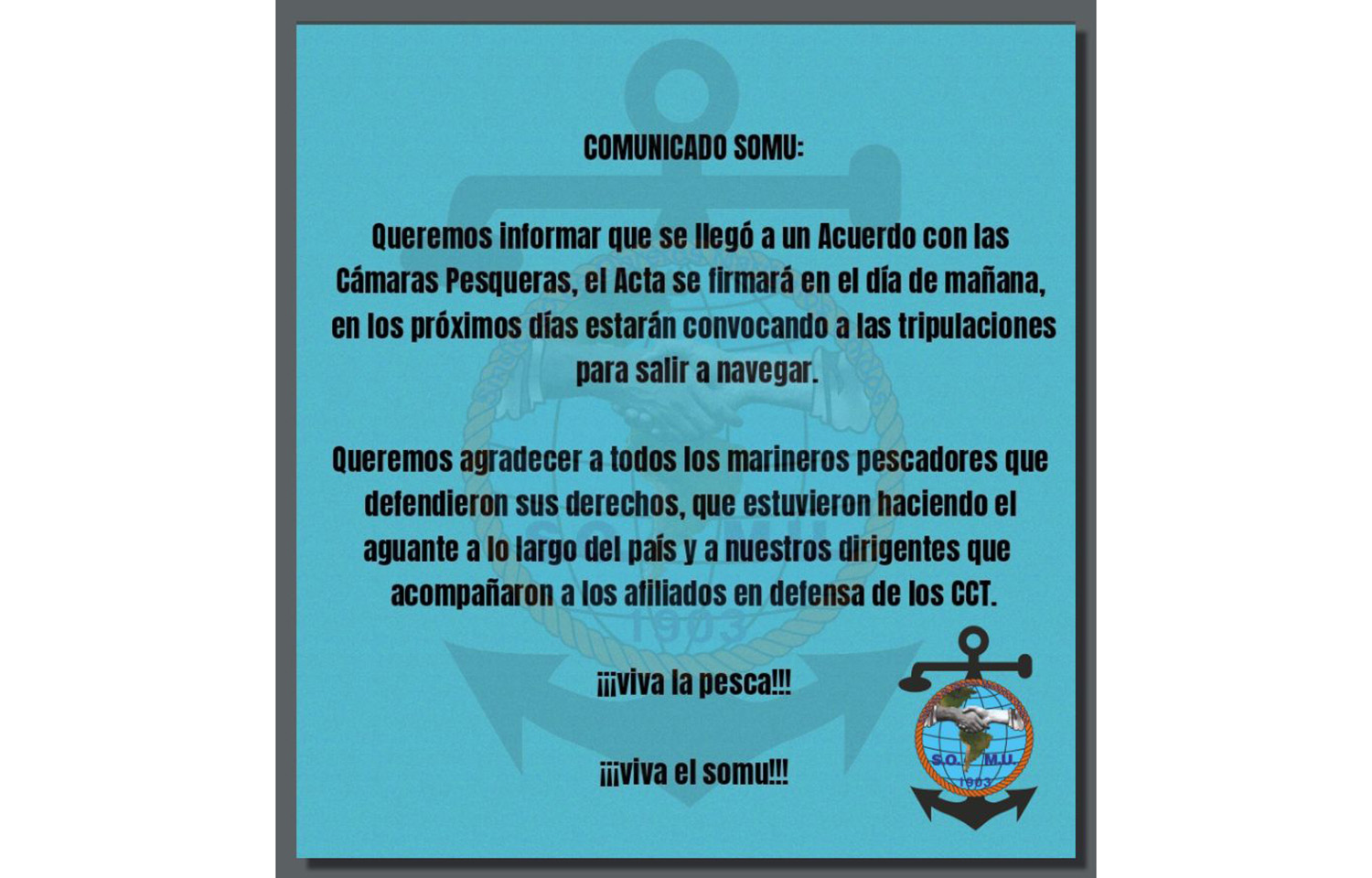
“We want to inform you that an agreement was reached with the fishing chambers,” SOMU announced on its Facebook page on 31 July. “The agreement will be signed tomorrow. In the next few days, they will be calling the crews to go sailing.”
SOMU Secretary General César Zapata told media that the conflict reached an agreement after a key meeting that was mediated by both provincial and national authorities, La Voz de Madryn reported.
“We managed to protect the Collective Bargaining Agreement and ensure that production is not affected,” Zapata said.
The fishing companies and SOMU agreed to a 9 percent deduction on fixed salary items – such as the salary for navigation and work clothes.
Another key issue between the union and fishing companies was the “70/30” salary scheme, where 70 percent of the value of production is paid as non-remunerative wages and 30 percent is remunerative wages. That scheme is being reimplemented, according to Zapata.
"This was strongly promoted by the governor of Santa Cruz and ultimately supported by the national government," he said.
The agreement brings an end to the conflict, which had been ongoing since March. Now, roughly 8,000 fishing workers will return to work.
"Crew calls began last night. The relief for our colleagues has already begun to be felt," Zapata said.
