



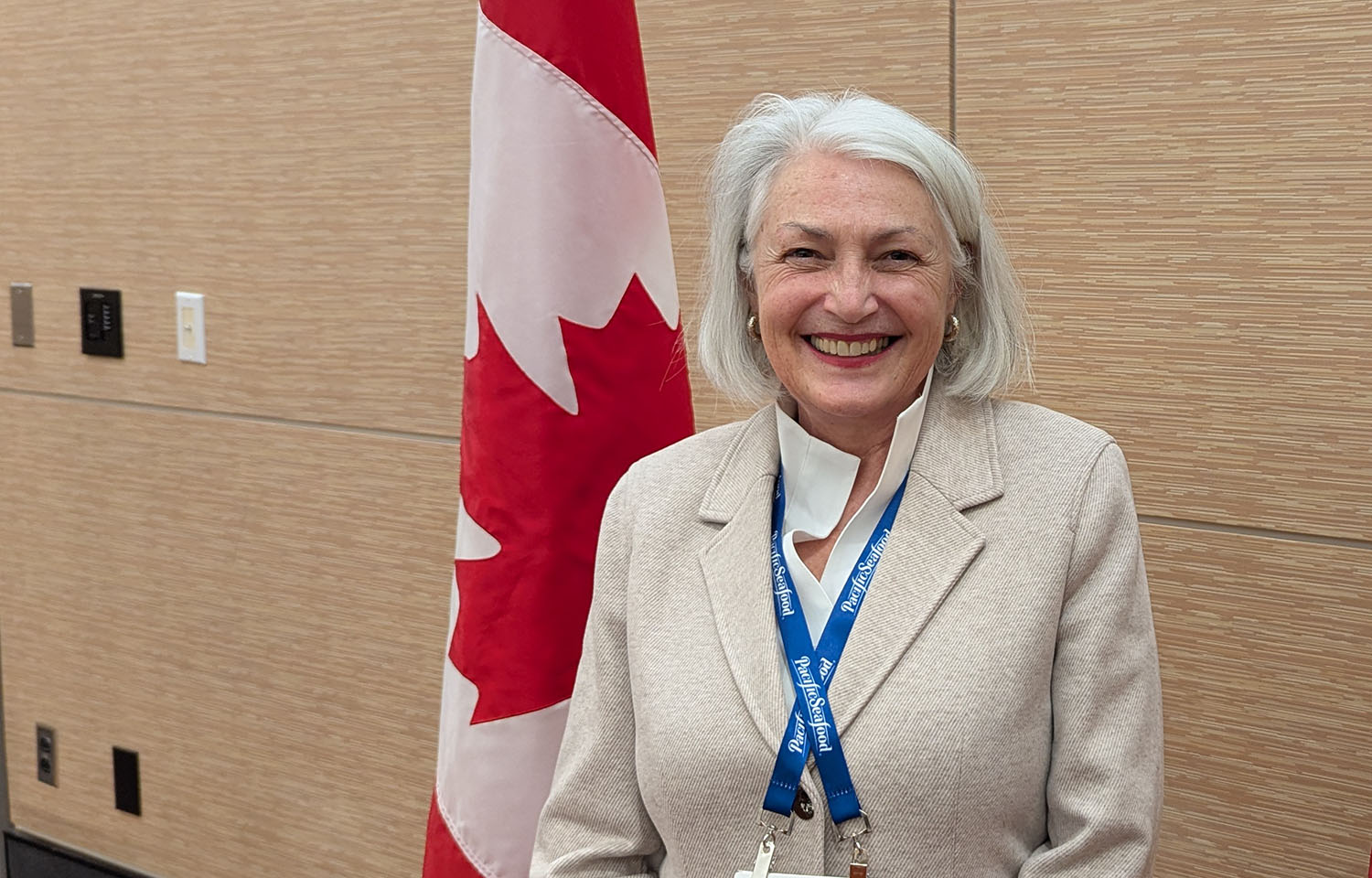
Canada Minister of Fisheries Joanne Thompson told SeafoodSource she is planning to continue supporting the country’s seafood industry through both internal and international policy during her tenure as fisheries minister.
Thompson was sworn in as the fisheries minister of Canada in March 2025, exactly one year before she attended her first Seafood Expo North America (SENA) – this year's edition of which ran from 15 to 17 March in Boston, Massachusetts, U.S.A. Thompson said the importance of the seafood industry to Canada and beyond is obvious the moment you stand at the top of the escalator descending into the event.
“You see the importance of the industry, and this is not the entire industry; it’s a portion that traveled to Boston, but you see how significant it is,” she said. “[Canada is] a significant contributor to the world’s seafood products, and we have phenomenal products. Starting there, let’s look at what it is as government we can do to support all aspects of it.”
Thompson had already announced some of those items of support during SENA, including the renewal of the Fisheries Fund which assists the industry in Canada. That fund, she said, is a tangible method of supporting the industry and has been successful over the last five years. But, the program also needs to evolve to match the needs of the industry.
“It was geared for that time, and we know things have shifted,” Thompson said. “This round of funding, we really wanted to look at it through partnerships, and I’m pleased to say that my counterparts in Quebec and Atlantic Canada really embraced that idea.”
Canada’s seafood industry has had to face the reality of the U.S. suddenly shifting its longstanding trade relationship with Canada, as U.S. President Donald Trump threatened extremely high tariffs on its largest trading partner and neighbor. Thompson said the reality is the seafood industry crosses the borders between the two countries often, and the U.S. is an important partner in Canada’s industry.
“I’m very intentional in my comments since I’ve been here. We are neighbors, we have always traded with each other, and the industry is important. Yes, there’s uncertainty, but my focus is on how we can continue to work together,” Thompson said. “What are the opportunities for us in this moment?”
Outside obstacles like trade, the government is also focused on other headwinds like fuel costs or the impacts of climate change, Thompson said. Constant dialogue on the issues is important to move forward, she added.
She also said that she has experience with what happens when fisheries managers get things wrong. Thompson grew up in Newfoundland, and her grandfather was a fisherman, so she saw the results of when management doesn’t do its job.
“I’ve lived through the cod moratorium. I’ve seen what happens when we don’t get it right,” she said. “I understand what it means to communities, and I know what’s going to happen if we don’t have fisheries connected to those communities because that is what keeps them alive.”
Thompson said there are some issues she’s not willing to comment on yet.
The impending ban of salmon farming in British Columbia is one of those issues, but she said the government is working on something official and hopes to complete it soon.
One thing she did share is that the government is working to make the industry more enticing and viable for younger Canadians.
“We’ve started active engagements, and we really need to pick it up,” Thompson said. “I see it as something that is urgent for me in the coming months and I think for the whole industry in a very short period of time.”
