



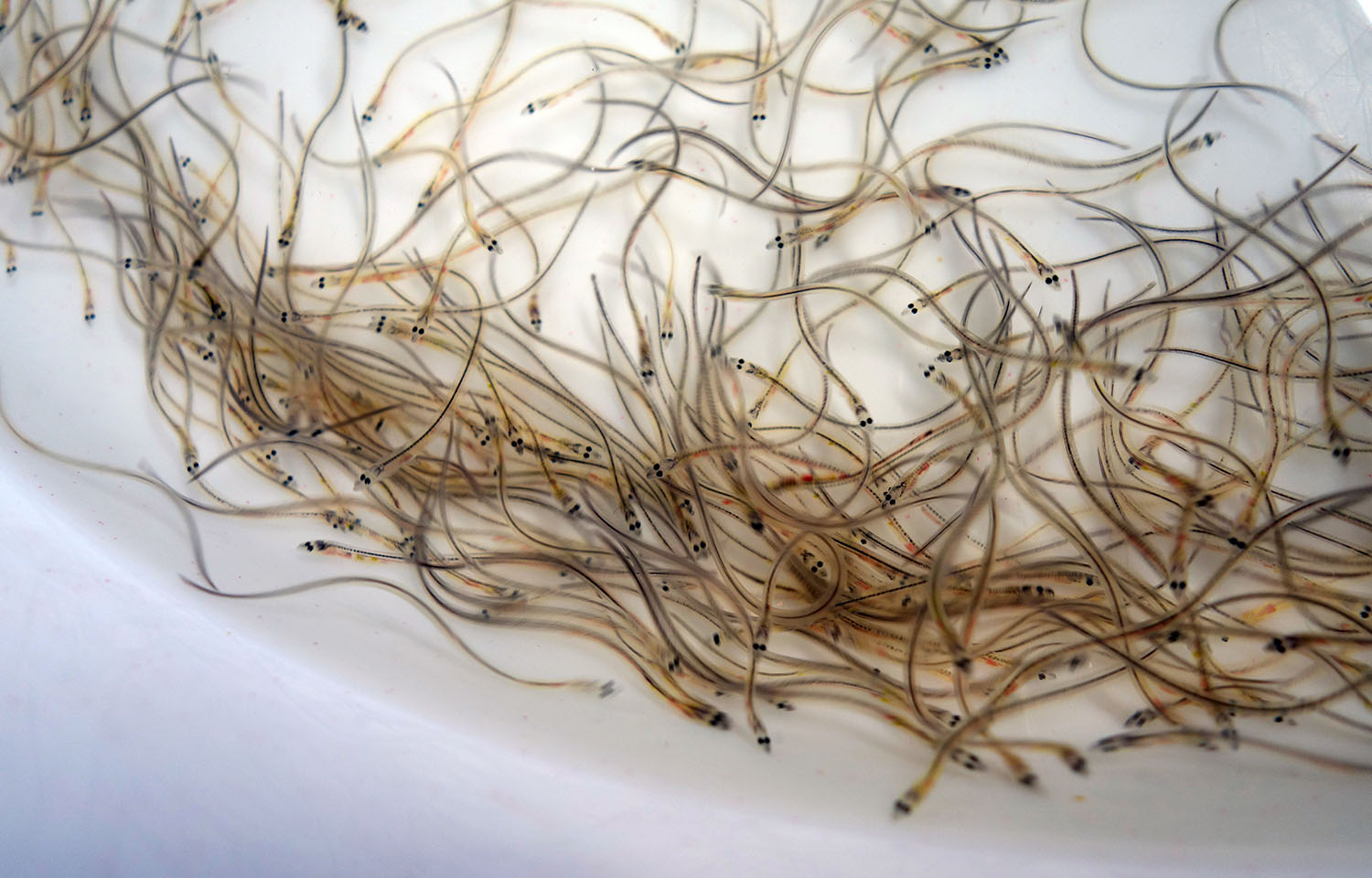
Canada’s Department of Fisheries and Oceans (DFO) is reportedly proposing big changes for its elver fishery after it cancelled the 2024 fishing season.
Canada Department of Fisheries and Oceans Minister Diane Lebouthillier completely cancelled the 2024 elver fishery – which runs in the spring – in March 2024 after the season in 2023 was cut short due to rampant poaching. Media reports in 2023 detailed balaclava-clad men poaching the species and instances of violence as they targeted the valuable species – which were sold for as much as CAD 5,000 (USD 3,500, EUR 3,300) per kilgram in the 2022 season.
The 2024 season was also shaping up to be difficult, as the DFO reported arrests and vessel seizures in March, before an official season would have even opened.
Now, the CBC reports the department is proposing a major shakeup in the fishery that would shift how it hands out quotas.
According to a letter from the DFO sent to members of the fishery on 5 December, which The Canadian Press reported it obtained, the DFO is proposing handing 50 percent of the total allowable catch (TAC) to First Nations fishers, and another 28 percent to a new pilot project that would shift how the quota is handed out.
“The minister of Fisheries and Oceans supports broadening the distribution of benefits of the elver fishery,” Jennifer Ford, the director the federal elver review team for the Canadian Maritimes, wrote in the letter.
Ford wrote the goal is to expand the participation of First Nations in the elver fishery, while also providing licenses to people already involved in the industry.
“When the total allowable catch for a fishery remains stable … quota redistribution is the only way to bring new entrants into the fishery without putting additional pressures on the stock," the letter states.
According to The Canadian Press, the changes mean the nine commercial license holders in the fishery would receive just 22 percent of the TAC, or 2,168 kilograms, with some license holders claiming their business has been slashed by the proposal.
Commercial elver license holder Stanley King told The Canadian Press the proposal essentially takes pieces of his business and gives it to his employees – with some commercial license holders getting hit harder than others.
“Some of our license holders have been cut so much that they will barely have more of the company than their former employees,” he told the publication. “It’s a slap in the face and it’s completely anti-business.”
King told the publication that his business of 20 people would be decimated, with the DFO offering no compensation for the impacts.
“Our business is about 20 people, and what we’ll be left with will be the owners and managers, who will basically have to fish for themselves,” King said. “We won’t be able to afford to hire anyone.”
Michel Samson, a lawyer representing Wind Harbour Fisheries, told The Canadian Press his client would go from a pre-2022 quota of 1,200 kilograms to just 137 kilograms under the new proposal.
“We are at a loss to understand why (the department) has decided to take what has been a successful fishery and somehow completely dismantle it to bring in new entrants,” Samson said.
Fishers have also objected to some of the changes, the CBC reported. Fisher Robert Selig told the CBC he fishes for a commercial license holder and is already satisfied with the working conditions. He said he is more interested in a crackdown on the problems that lead to the last season being cancelled.
"It's nice to actually have some numbers, but we have a long way to go, a long way to go to get this back under control to the point where people are not living in fear," Selig said. "In the last few years doing this, that is what it has been, living in fear. Am I being followed home? Is somebody going to be coming to my house when I'm sleeping at night to try to steal my gear?"
The chaos in Canada’s fishery is contrasted by the fishery next door in the U.S. state of Maine, which has had several years of successful fishing. In 2023, the state’s elver fishery was worth USD 19.5 million (EUR 18.4 million) – making it the second-most valuable behind lobster.
