


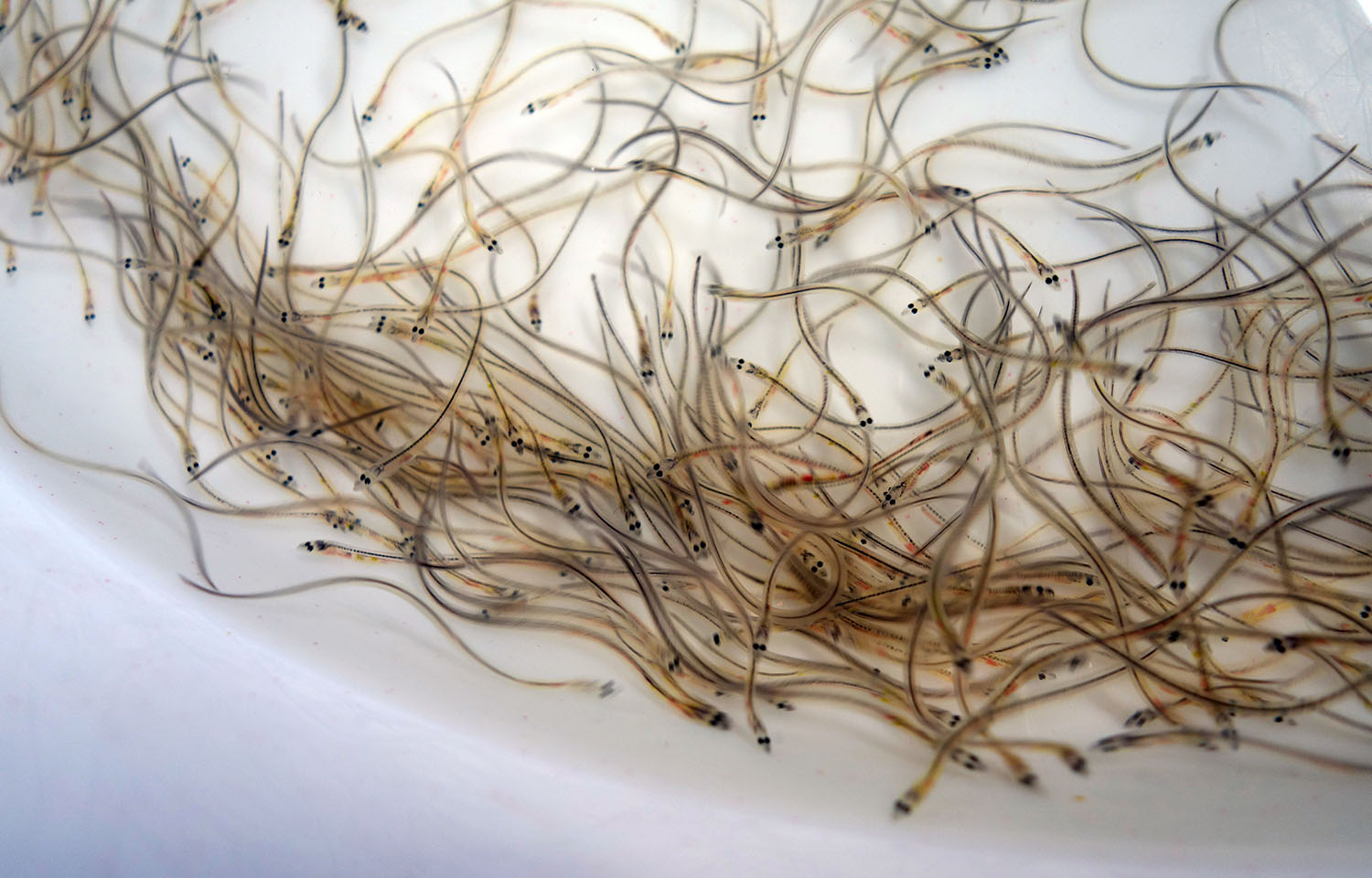
Canada’s Department of Fisheries and Oceans (DFO) has released details of its 2026 elver season management measures, which include a 22 percent increase to the total allowable catch (TAC).
The DFO has increased the TAC across all elver license holders to 12,180 kilograms of elver, which are also referred to as glass eel, up from 9,960 kilograms last year. DFO also said that quota is being distributed among commercial license holders and First Nations groups, with no harvesters seeing any decreases and many seeing an increase.
DFO said those quota allocations include 180 kilograms held in reserve for science to better understand the elver population.
“Potential research agreements with commercial licence holders and First Nations are currently being considered, with the goal of having an agreement in place to support science work during the 2026 fishing season,” DFO said.
The increased TAC comes after a more organized and orderly season occurred in 2025. Canada proposed a suite of changes to its elver fishery in late 2024 after that season was marred by rampant poaching, leading the department to completely shut down the season in spring 2024. However, many of those changes were scrapped after pushback from the industry.
Despite the lack of changes, there was increased compliance with Canada’s standards in 2025, according to the DFO, which said fishery officers will work with harvesters to maintain compliance with the country’s Fisheries Act.
"The elver fishery is important to harvesters and their families in rural, coastal, and Indigenous communities across Nova Scotia and Southwest New Brunswick. Through implementing new tools, and collaboration with harvesters, we have sustainably increased the TAC this year,” Canada Minister of Fisheries Joanne Thompson said. “I’m hopeful that with increased science, through Section 10 of the Fisheries Act, we will increase our knowledge of this species and have a sustainable fishery for generations to come."
