




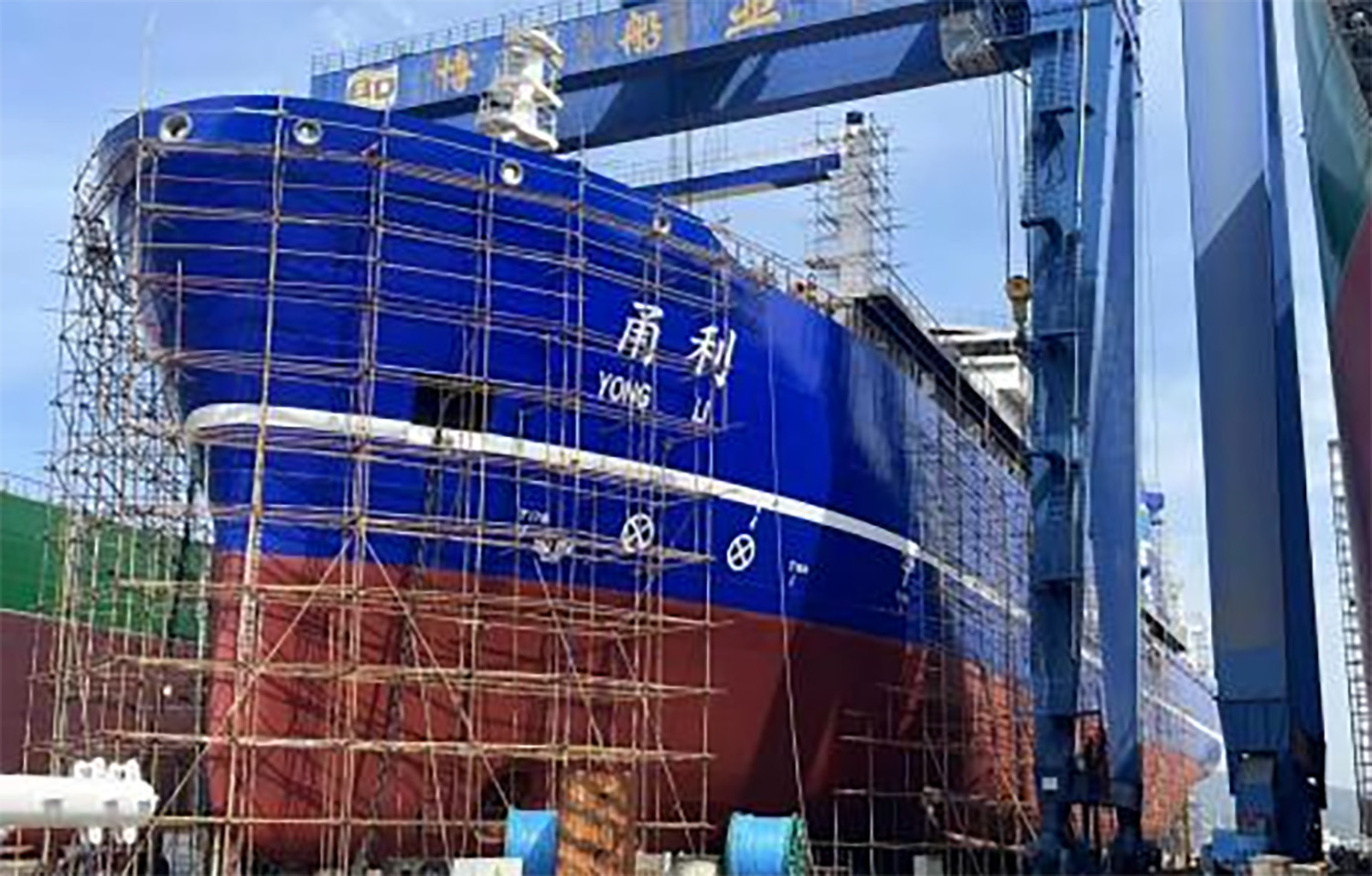
In the latest move to bolster its krill-fishing fleet, China has launched a new vessel off of the Shipu Port in the city of Ningbo.
The Yongli, which is 140 meters long, has a designed daily fishing capacity of 1,000 tons and is set to begin fishing in early 2026. It is the first Antarctic krill-fishing and -processing vessel to launch from the eastern province of Zhejiang.
The vessel also contains an automated krill-processing line that will allow operators to package products onboard for Chinese and export markets.
Zhejiang authorities hailed the launch as proof that China is now self-sufficient in terms of designing and building vessels for Antarctic fishing conditions.
Jiang Caiguo, the CEO of Eurasia Fishery Co., which owns and operates the vessel, added that the new vessel will help both the company and the nation continue to extract krill resources, which he described as a “gold mine.”
The Yongli is just the latest move by China to bolster its krill-fishing fleet, which now has double the capacity of Norway – the next top krill-fishing nation in the world.
According to data from Chilean krill consultancy firm Tharos, China’s krill-fishing fleet has grown to 21,707 metric tons (MT) in carrying capacity. By contrast, the scale of Norway’s krill fleet is 11,388 MT.
Several Chinese cities have identified krill fishing as a strategic industry in which to invest and have provided subsidies to encourage local production in krill fishing and processing.
This rapid expansion comes despite worries about the sustainability of the Antarctic krill fleet at current fishing levels.
Environmental organizations have pushed the Commission for the Conservation of Antarctic Marine Living Resources (CCAMLR), which is the regulatory body that oversees the Antarctic krill fishery, to establish new catch limit rules for krill.
"CCAMLR Member States are not meeting their obligation to protect the marine ecosystems of the Antarctic Peninsula, an area already under stress from rapid global warming,” Antarctic and Southern Ocean Coalition Executive Director Claire Christian said when the most recent krill-fishing season closed early.
The CCAMLR will hold its annual meeting in Hobart, Australia, in October.
