






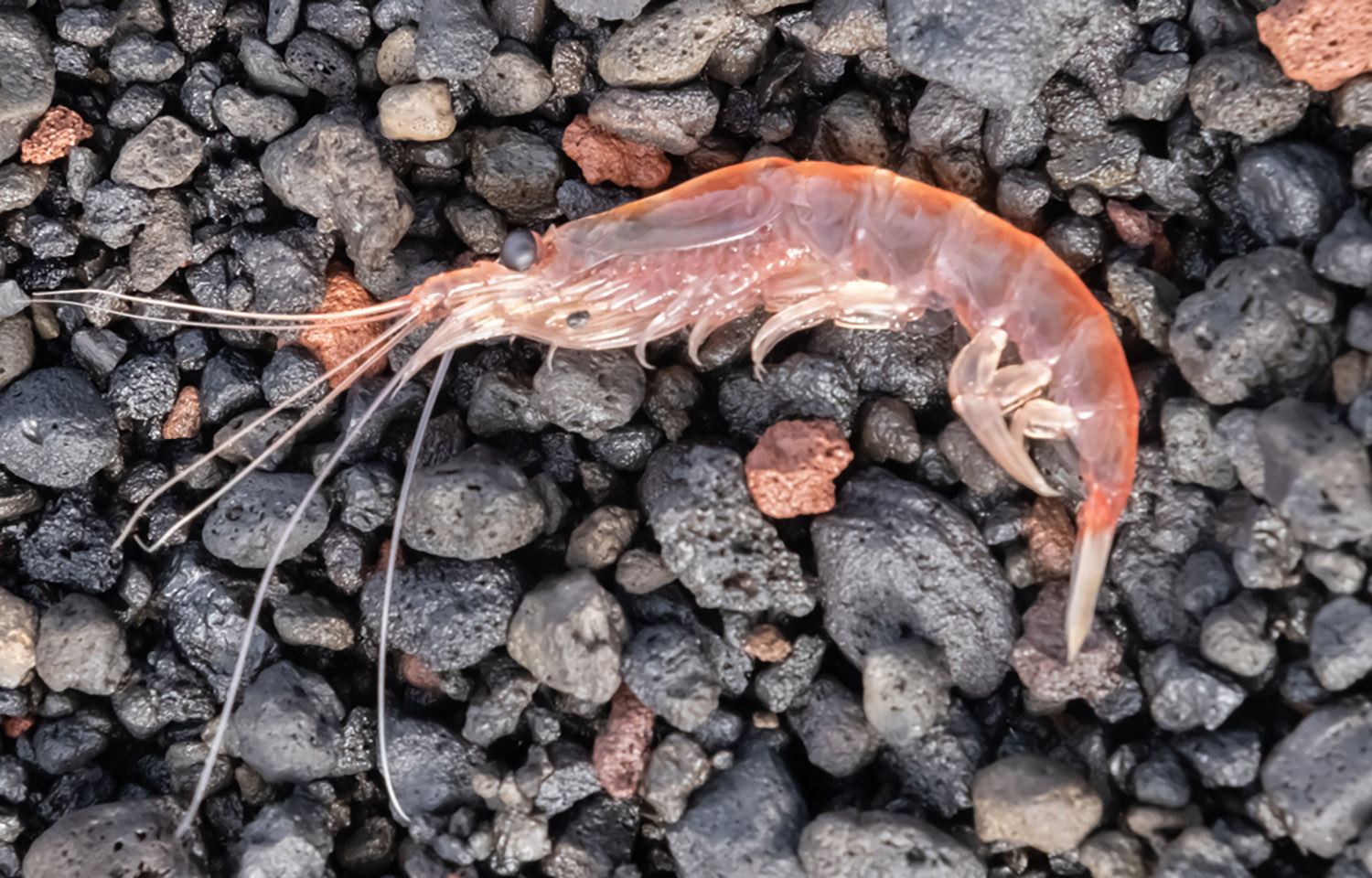
After hitting a stalemate on negotiations in October 2024, members of the Commission for the Conservation of Antarctic Marine Living Resources (CCAMLR) and the fishing industry at large are hoping that they can reach a deal soon on krill-fishing catch limits in the Antarctic.
The October meeting of the CCAMLR – the regulatory body overseeing krill fishing in the Antarctic – ended at an impasse after representatives from China and Russia vetoed a demand to create a new marine protected area and cut krill-fishing levels below 395,000 metric tons (MT) in the key krill-fishing area of the Antarctic – Zone 48.1 – a figure which most members had agreed to.
Pål Skogrand, the vice president for policy and impact at Norway-based Aker QRILL Company, said most CCAMLR members and industry representatives supported the 395,000-MT limit in Zone 48.1, “but some members wanted something more precautionary, and China was not among that minority of members.”
“What was put on the table [at the meeting] was a good proposal which had wide support from scientists, industry, NGOs, and regulators,” he said. “Perhaps this is one step back, which is sometimes needed to make two steps forward.”
The 395,000-MT limit was itself 255 percent higher than current fishing levels in the zone, but krill-fishing companies have stressed that extraction levels are low in the context of the overall scale of the biomass.
“Looking at smaller scales, scientific research has estimated a biomass of around 20 million MT to 25 million MT in 48.1 alone,” Skogrand said. “You will struggle to find any fishery in the world that takes out less than 1 percent [to 2 percent] from the biomass it is targeting.”
The Pew Charitable Trusts cautioned that the longer it takes to implement new conservation measures, the more it is endangering krill stocks and the wildlife which rely on them for food.
In lieu of formalized conservation measures, the industry has been enforcing voluntary measures in Zone 48.1 since 2019, which include no-take zones that keep krill harvesting 30 to 40 kilometers away from breeding penguin colonies.
Pew Southern Ocean Conservation Project Director Andrea Kavanagh described the voluntary guidelines as “a great first step,” but noted that they do not substitute codified regulations.
“Industry’s commitment to voluntarily implement the harmonization scenario will help to avoid further ecological impacts in the Antarctic Peninsula,” she said. “Industry’s additional commitment to the smaller-scale catch limits and seasonal closures will prove the harmonization efforts are effective and that should influence agreement toward the updated regulations next year.”
Nevertheless, fishing companies and nations like China have set ambitious goals to increase krill fishing – goals that may clash with conservation measures.
Oslo, Norway-based krill-fishing and biotech company Aker BioMarine increased its sales in China by 60 percent year over year in the first three quarters of 2024.
China, for its part, has signaled ambitions to increase its presence in the krill fishery.
At a December 2024 meeting of the China Distant-Water Fishing Association’s krill committee, the state-owned Liaoyu Group, which operates a krill vessel, signed a strategic agreement to establish the country's first Antarctic Krill Biomedical Industry Innovation Institute, which would push the health benefits of krill-derived products to the Chinese public.
Liaoyu also recently signed an agreement with Greek-based shipping firm Lavinia Corporation to establish a joint venture aimed at building reefer vessels destined for use in the Antarctic krill fishery.
Dmitri Sclabos, the CEO of Chile-based krill consultancy Tharos, said that more krill products in China doesn’t necessarily mean more krill biomass will be taken out of the sea.
“Fishing operators have fishing licenses that restrict the number of trawlers they can bring to the fishery, and they report annually how much fresh krill will be taken out of the sea. Aker has all its Norwegian-granted licenses already in use, and so far, krill operators comply with that,” he said. “The krill fishery is not the Wild West as some portray it. If more vessels want to enter the fishery, they have to apply for new licenses, granted by CCAMLR to each asking country.”
Still, some conservation nonprofits believe krill fishing as a whole is harming an already fragile ecosystem.
“Most people know sustainability when they see it,” Sea Shepherd Campaign Director Peter Hammarstedt said. “It does not look like a fleet of ships traveling thousands of miles to the bottom of the world to take out the very building block of life in the Antarctic ecosystem for products we simply do not need.”
