




The U.S. Senate Committee on Appropriations has laid out its fisheries and seafood priorities for fiscal year 2026, reporting out several provisions to guide NOAA Fisheries’ activities over the next year.
The U.S. Congress is now deep into its annual budget process, with Senate and house committees and subcommittees working through the Trump administration’s budget requests and drafting the appropriations bills needed to fund the federal government. While lawmakers don’t always successfully pass the full suite of appropriations bills, instead turning to continuing resolutions to avoid a government shutdown, the appropriations process offers lawmakers the most direct opportunity to craft policy for federal agencies.
On 17 July, the Senate Committee on Appropriations announced and passed its appropriations bill funding the Department of Commerce, which presents a substantial departure from U.S. President Donald Trump’s budget request. The Senate version of the bill offers a roughly 6 percent cut to NOAA Fisheries’ budget from 2024 levels; the Trump administration requested a roughly 33 percent cut.
In passing that appropriations bill, the Senate Committee on Appropriations also issued a report offering several directives on U.S. fishing and seafood policy.
Among lawmakers’ chief concerns were seafood trade, where they fear imports are undermining domestic suppliers.
“The Committee remains troubled by the lack of a level playing field for the U.S. seafood industry. The Committee is concerned that recent surges in crawfish and shrimp imports have saturated the U.S. market, significantly impacting domestic producers,” the report noted, directing NOAA Fisheries to ensure U.S. policy does not support imported seafood. “Additionally, the Committee is alarmed by ongoing issues with these imports, including links to illegal, unreported, and unregulated [IUU] fisheries; forced labor; unauthorized antibiotic use; and other fraudulent practices.”
Senators also laid out their concern with NOAA Fisheries’ execution of fisheries surveys.
“The Committee is concerned that [NOAA Fisheries] has not prioritized and maintained the needed level of fisheries survey coverage, despite having received more than the requested funding in previous fiscal years,” the committee said in its report. “The Committee is increasingly concerned that Federal vessel-based fisheries surveys necessary for determining sustainable and optimal harvest rates for commercial fisheries have been cancelled with increasing frequency in recent years, without effective contingency plans for covering the resulting data gaps.”
Lawmakers have frequently chastised the agency for not conducting more surveys; in May 2025, U.S. Senator Dan Sullivan grilled Trump administration officials as to why fisheries surveys weren’t being executed.
“The federal government has to do two things: they need to do robust surveys for accurate stock assessments and timely regulations to open fisheries. That is it. When the federal government does not do that, you screw hard-working fishermen,” Sullivan said. “To be honest, right now, it is not looking good, and I am getting really upset.”
In the appropriations bill report, Senate lawmakers called for a USD 10 million (EUR 8.5 million) increase in funding for fisheries surveys, while directing NOAA Fisheries to conduct at least six surveys for Alaskan bottom trawl surveys and cooperative research and supply four vessels for West Coast groundfish surveys. The legislation also fully funds the Northeast Area Monitoring and Assessment Program [NEAMAP] trawl surveys and the Southeast Area Monitoring and Assessment Program's [SEAMAP] existing surveys, according to the report. Lawmakers also allocated USD 4 million (EUR 3.4 million) for the Fishery Survey Contingency Fund to contract commercial vessels or purchase commercial data to supplement survey efforts and USD 3 million (EUR 2.6 million) for a industry-based survey pilot program.
Senators also directed the agency to begin purchasing more fisheries survey vessels.
The fiscal year 2025 appropriations bill – which was ultimately scrapped in favor of a series of continuing resolutions – included similar language and funding, but allocated an additional USD 5 million (EUR 4.3 million) for fisheries surveys.
The fiscal year 2026 version of the legislation carries over several other provisions from the doomed 2025 bill, including support for North Atlantic Right Whales conservation. The bill provides funding for the adoption of alternative lobster and crabbing gear and the development of whale tracking technology in addition to the USD 51 million (EUR 43 million) dedicated to right whale research, monitoring, and conservation efforts. The legislation also encourages NOAA Fisheries to avoid using “worst case” scenarios in calculating the impact of commercial fisheries on right whale populations – that provision is in direct response to a NOAA Fisheries biological opinion that nearly shuttered the New England lobster fishery, but which was subsequently rejected by the courts.
Also included is USD 2 million (EUR 1.7 million) for Gulf of Maine and Georges Bank American lobster research through Maine Sea Grant and USD 300,000 (EUR 255,406) to support cooperative data collection on American lobster and Jonah crab using modern technology on commercial fishing vessels.
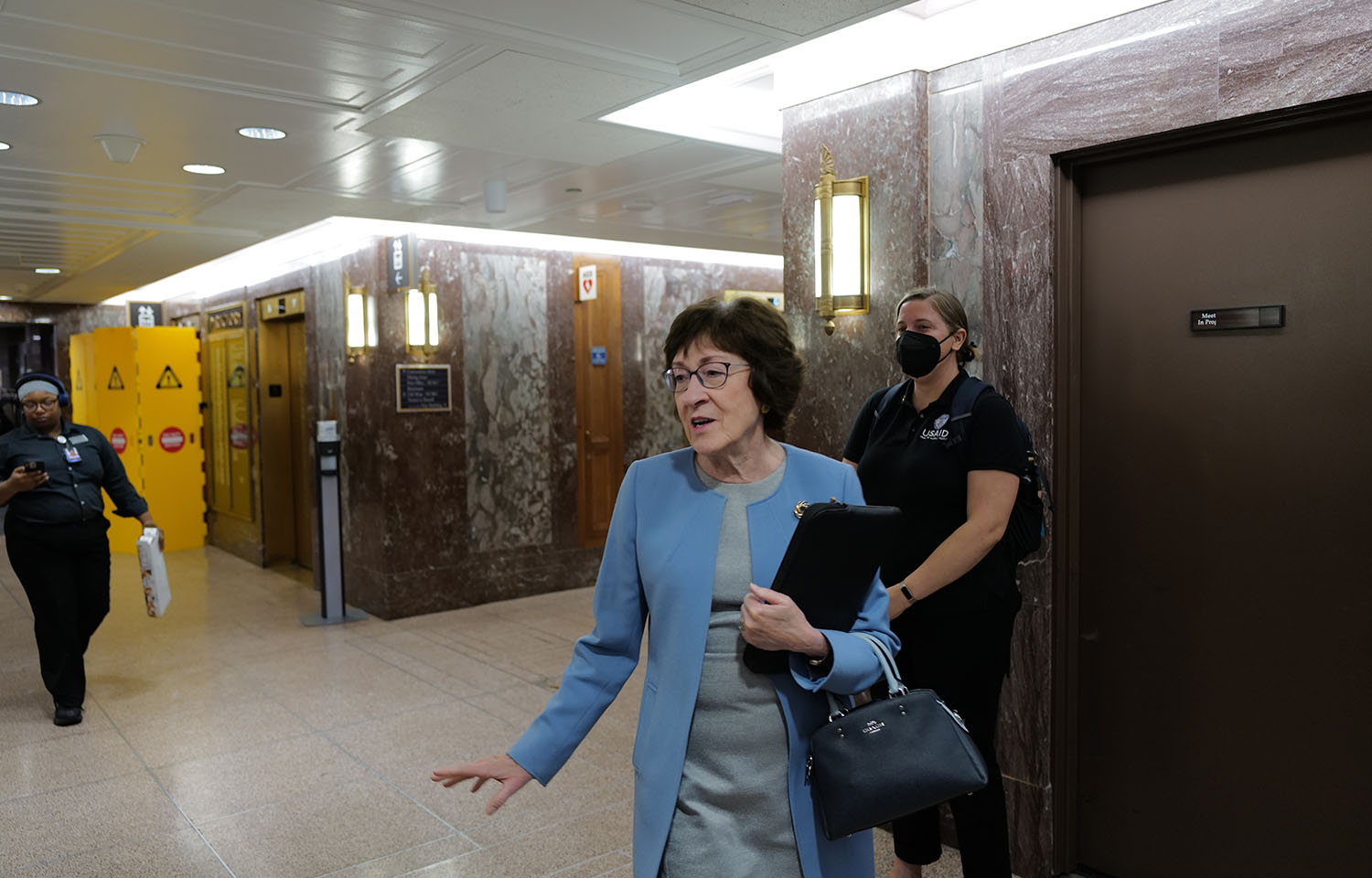
“This funding would support Maine’s lobster industry by improving the incomplete and imprecise science and research upon which the federal government relies. The flawed data being used to inform regulations has created unnecessary, burdensome requirements for Maine lobstermen and women,” Committee Chair U.S. Senator Susan Collins (R-Maine) said in a statement. “As the Chair of the Appropriations Committee, I will continue to advocate for this funding as the appropriations process moves forward.”
In regard to addressing IUU fishing, the legislation provides USD 6.2 million (EUR 5.3 million) for modernizing SIMP, though lawmakers were critical in their assessment of the program to date.
“The Committee remains concerned that the Seafood Import Monitoring Program [SIMP], as currently structured and implemented by NOAA, is insufficient to meaningfully prevent the entry of IUU seafood into the U.S. market. Despite its intended purpose, SIMP has failed to deliver adequate traceability and enforcement outcomes, and widespread concerns remain regarding its limited species coverage, inadequate data verification, and lack of end-to-end supply chain transparency,” the report reads.
The legislation also includes friendly language for those interested in developing offshore aquaculture in the U.S.
“The Committee recognizes the significant potential for development of American offshore aquaculture to increase U.S. production of healthful, sustainable, and affordable seafood, while expanding the value chain to include traditional agricultural producers as well,” the report noted while providing USD 5 million for the Cooperative Institute Fostering Aquaculture Research and Marketing to support aquaculture development.
The Senate legislation will need to be passed by the full body and align with whatever version is passed by the House before being signed into law. With Congress set to enter its summer recess, lawmakers are running short on time to finalize and pass the appropriations bill before the government shutdown deadline at the end of September.
