





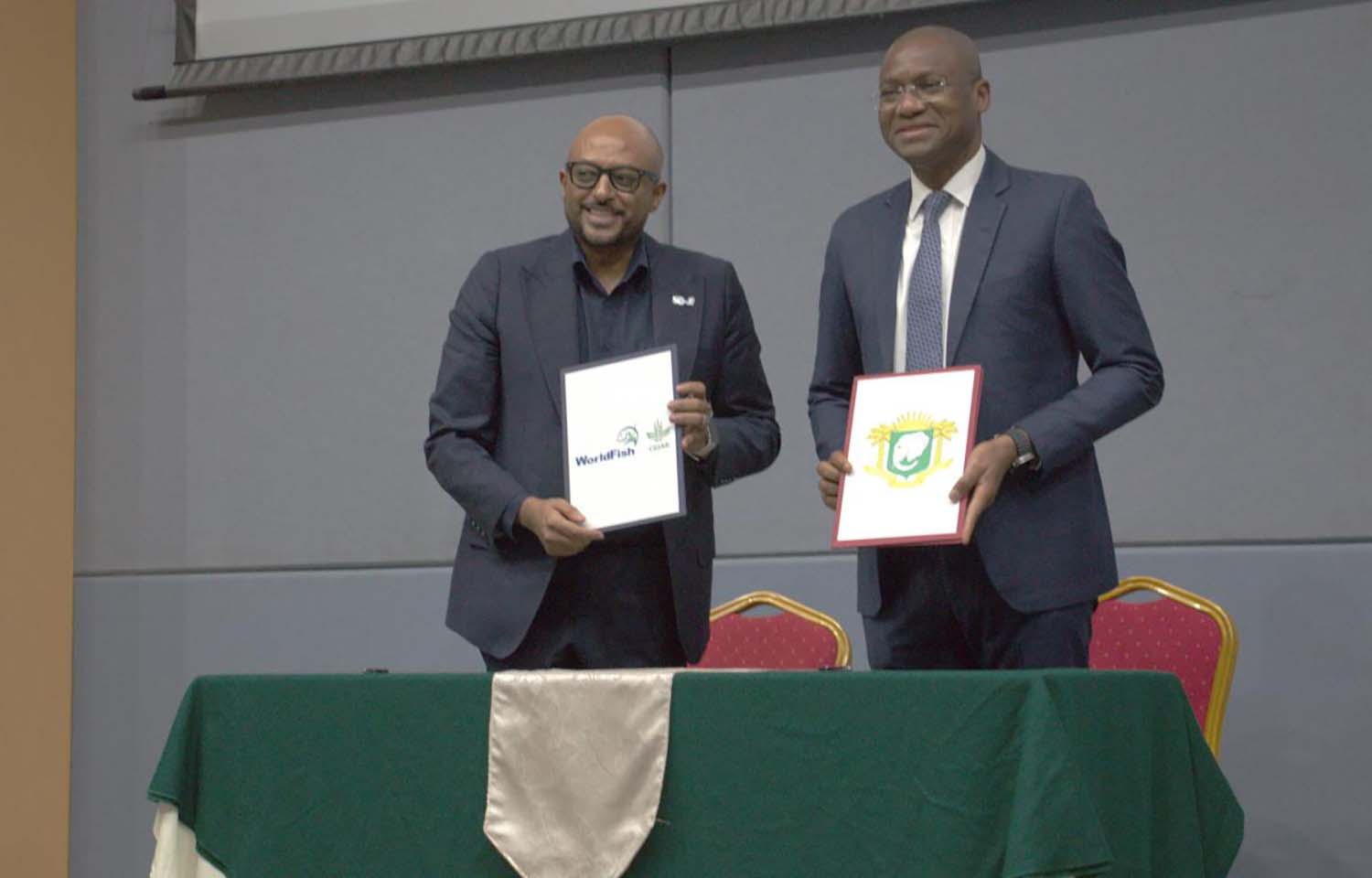
The West African nation of Côte d’Ivoire has agreed to host one of the region's biggest fisheries research and innovation centers in partnership with nonprofit WorldFish.
Under the agreement, Cote d’Ivoire will provide land and USD 3 million (EUR 2.6 million) to finance the construction of the facility, while WorldFish – a Penang, Malaysia-headquartered organization that aims to create resilient and inclusive food systems in order to bolster global food security – will provide scientists and other aquatic experts to work at the center.
Both Côte d’Ivoire and WorldFish said in a joint statement the proposed regional hub will promote the region’s “scientific collaboration, capacity development, and scaling of innovations to strengthen aquatic food systems.”
More specifically, the center will aim to develop and help implement sustainable ways to produce fish in Cote d’Ivoire while simultaneously generating employment opportunities, securing quality nutrition for future generations, and boosting Africa’s role in the sustainability of global fisheries and aquaculture operations.
Côte d’Ivoire Minister of Animal Resources and Fisheries Sidi Toure said that his country’s decision to team up with WorldFish paves the way for the government to continue investing in “science, innovation, and the long-term resilience of our aquatic food systems.”
WorldFish Director General Essam Yassin Mohammed added that the project comes at a critical moment, with science needed more than ever to improve nutrition, support livelihoods, and build resilience in the face of climate and economic shocks, especially in West Africa.
Cote d’Ivoire relies on fish to contribute more than 50 percent of its population’s total animal protein consumption. At the same time, Africa is the only continent projected to experience a decline in per capita consumption of aquatic foods by 2032, mainly due to its population outpacing fish production. With that in mind, WorldFish said the region would need to steadily increase aquatic food output by at least 74 percent by 2050 “to maintain current fish consumption levels.”
“The proposed hub will support broader efforts to strengthen food and nutrition security, drive innovation, and build resilient aquatic food systems across West Africa,” WorldFish said.
Nations across West Africa have plans in place to similarly boost food security through sustainable seafood production.
Neighboring Ghana has appointed a new board of directors for the nation’s Fisheries Commission to ensure better management of the country’s marine resources.
“It is time to delve deeper so that fisheries and aquaculture can significantly contribute to Ghana’s development,” Ghana’s Fisheries and Aquaculture Development Minister Emelia Arthur said. “It demands bold decision-making, data-driven strategies, and a strong commitment to environmental and social responsibility.”
Farther east, Nigeria recently announced construction has begun on the Lagos Aquaculture Center of Excellence. The USD 6.4 million (EUR 5.6 million) facility will include hatcheries, nurseries, grow-out units, processing plants, and a feed mill, all aimed at boosting food security, job creation, and overall seafood output in the region.
