






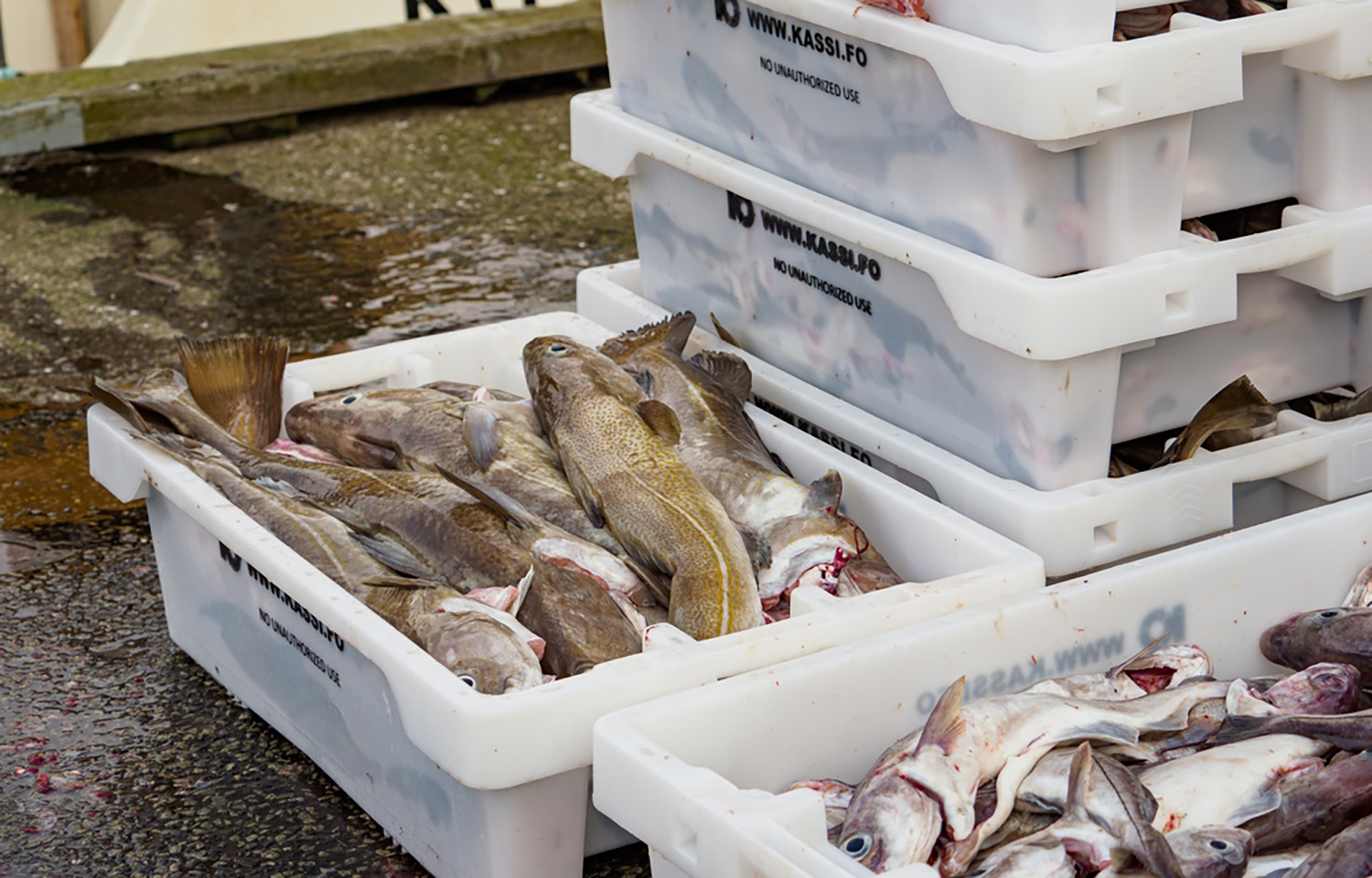
Commercial fish stocks within the Faroese Plateau marine ecosystem are inching back from the brink of disaster.
The Faroese Plateau is a shallow-water marine ecosystem that separates the Faroe Islands from the deeper waters of the Faroese Bank. The ecosystem is a crucial habitat for commercially important stocks like cod, haddock, pollock, and saithe, among other species.
A few of those stocks – cod and pollock – have reached critically low levels in recent years, but experts are cautiously optimistic that they are on a path toward recovery.
According to Eydna í Homrum, the head of the Marine Resources Department at the Faroe Marine Research Institute, Faroese cod stocks recently reached the “B-lim” benchmark, “where you prefer never to see a stock at.” However, she said there are some signs that the cod stock will continue to increase in the next couple of years.
“Cod has gotten above the worst-case scenario,” í Homrum said.
Similarly, pollock populations have grown from dangerously low levels, and haddock is in good shape overall, she added.
“The haddock stock is doing well and has been doing well for a few years now,” í Homrum said. “The pollock stock is not in a great state, but it has been steadily growing for some years.”
The Faroese Marine Institute has recommended a 5 percent year-over-year decrease in fishing effort on the Faroese Plateau for 2026. Compared to a 20 percent reduction in 2024 and a 10 percent reduction in 2025, the measures are not as drastic as in recent years.
Since 1996, fisheries on the Faroese Plateau have been managed by a day-based management system rather than through quotas. Instead of setting a quota for each species, authorities regulate fisheries by controlling the fishing days available to different segments of the fleet.
In 2019, the system changed slightly after a group of industry representatives and researchers developed an updated management plan. According to the new plan, the number of fishing days for the hook-and-line fleet of all sizes is reduced if estimates show either the cod or haddock stock to be below the cautionary “B-trigger” benchmark, while the days for trawlers are lowered if the pollock stock is below that benchmark.
Though the system was updated to adhere more closely to scientific advice, stakeholders have still voiced concerns.
For instance, small-scale fishers have said that day-based management places their industry at an unfair disadvantage.
Finnbjørn Vang, who is the chairman of the Small-Scale Fisheries Union in the Faroes, told SeafoodSource last summer that when stocks show declines, regulators typically reduce fishing days across the entire industry, overlooking the fact that one day of fishing significantly impacts small-scale vessels in particular, which cannot fish in all weather conditions. Simultaneously, the fishing pressure produced by the small fleet is substantially smaller than that of larger longliners or trawlers.
"I refuse to believe that our kind of fisheries destroy any stocks," he said.
Í Homrum said that the day-based system in general has led to plummeting stocks, as vessels can fish as much as possible on the days they are allowed on the water, but also highlighted that environmental factors play a significant role.
Nevertheless, she said that with a system that more closely follows scientific advice and better environmental conditions, as well as a few good age groups of cod coming up, she is hopeful that the stock will continue to recover.
“Now, we are seeing a combination of better circumstances for the stock and fewer fishing days in the system,” she said.
