

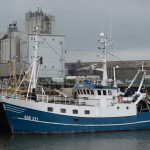

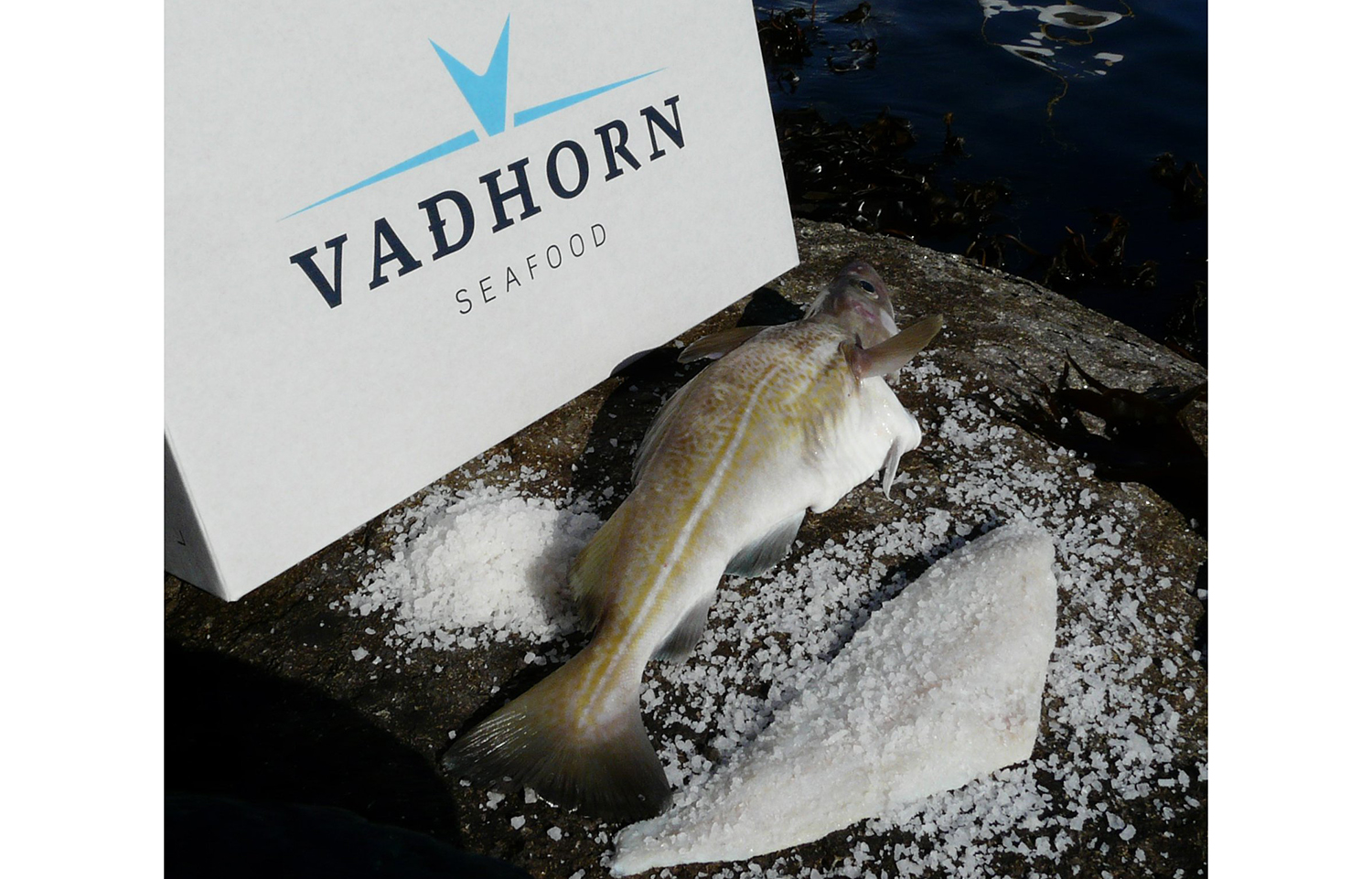
Fishing for cod in the Faroe Bank Channel, an area about 45 miles southwest of Suðuroy, the most southerly island of the Faroe Islands, was banned almost 20 years ago due to overfishing.
As fishing operations shuttered, a Faroese delicacy disappeared with it: bacalao made specifically with Faroe Bank cod.
Nearly 20 years later, stocks in the area have recovered enough to open up some fishing opportunities, and arguably nobody is more ready to take advantage of the moment than Jógvan Gregersen.
Gregersen is the CEO of Faroese fish-processing firm Vaðhorn, and his family has been salting cod in the Faroe Islands for decades. His grandfather started salting fish in the 1950s and founded a company focused on the practice that is still owned by Gregersen's cousins.
With time, Vaðhorn has also developed into a family endeavor. Gregersen’s brother-in-law, Faroese soccer legend Jens Martin Knudsen, holds a majority of the shares in Vaðhorn, and his son, Bergur, also works at the firm.
Vaðhorn has become a specialist in bacalao and uses cod caught in the Faroe Islands or imported from Iceland or Norway for its salted fish products.
However, the firm’s customers have not forgotten about the taste of bacalao made using Faroe Bank cod, even though it was off the market for more than a decade.
"It was practically totally gone from 2008 to 2023, but all of them still remember it," Gregersen told SeafoodSource. "They tell me it has a special taste."
The Faroe Bank Channel contains warm currents that keep the area constantly more tempered than surrounding waters. With time, the unique cod stock living in the bank adapted to these particular circumstances. The fish grows substantially faster than other cod and has a higher fat percentage and denser flesh, making it very valuable commercially compared to similar species.
The special features of the Faroe Bank cod eventually led to its downfall.
Median catch of the fish between 1986 and 2007 totaled 1,700 metric tons (MT) annually, according to data from the International Council for the Exploration of the Sea (ICES), but near the tail end of that period, catches exploded, hitting a peak of 5,600 MT in 2003.
Consequently, the stock collapsed, and all commercial fishing operations targeting the stock were banned in 2008.
"So much was fished that prices tanked, and in the end, nothing was left," he said.
The fact that the stock has now recovered is a success story for regulators and proof that conservation efforts that closely follow scientific advice work, according to Petur Steingrund, a marine biologist at Havstovan – the Faroe Marine Research Institute.
"From what we get in the trawl per hour with the marine institute’s ship, the stock is in as good shape now as it was at the beginning of this century," Steingrund said.
Although the stock is healthy enough for commercial fishing now, he still warns that fisheries need to be cautious.
"The Faroe Bank is a very fragile and warm area. During spawning, the area is between 7.5 and 8.5 degrees Celsius, which is quite hot for cod. That's something that we are wary of all the time, especially in this era of climate change," he said.
Faroese authorities have agreed on taking that cautionary approach and have banned fisheries from operating during the cod’s spawning period – from January to June.
Though Gregersen and his customers are happy any fishing activity is back, unfortunately for Vaðhorn, that period happens to be the best window to fish for Faroe Bank cod.
“We are now fishing in the worst period of the year. It's old wisdom [in the Faroe Islands] that you catch the best cod in the months containing an ‘r,’” Gregersen said, explaining that according to this rule of thumb, the best cod is caught from October to March, with the optimal fish being caught from December to February. "We fish it after spawning when the loin is not there, and that's a pity. The market is willing to pay more for a Faroe Bank cod than anything else, but the fish has to be in prime condition. Last year, we had some complaints about the fish being too thin."
The Faroese licensing system for commercial fishing in its waters is not based on quotas; instead, ships attain a license to fish for a certain number of days when they, in principle, fish as much as they can manage.
Shortly after the Faroe Bank opened back up, Faroese politicians awarded more days to small-scale fishers.
According to Gregersen, this has posed challenges for local processing facilities, as it's not safe for smaller boats to go to the Faroe Bank in the last months of the year due to weather; therefore, they they end up fishing at the worst possible time for the fish.
Gregersen has suggested that some bigger longliners should be allowed to fish at the bank but is not holding his breath that his firm will see optimal Faroe Bank cod any time soon. In the meantime, it will continue to rely on cod from other locations to meet its customers’ bacalao needs.
"We're a bit wary of betting too much on it," Gregersen said.
