






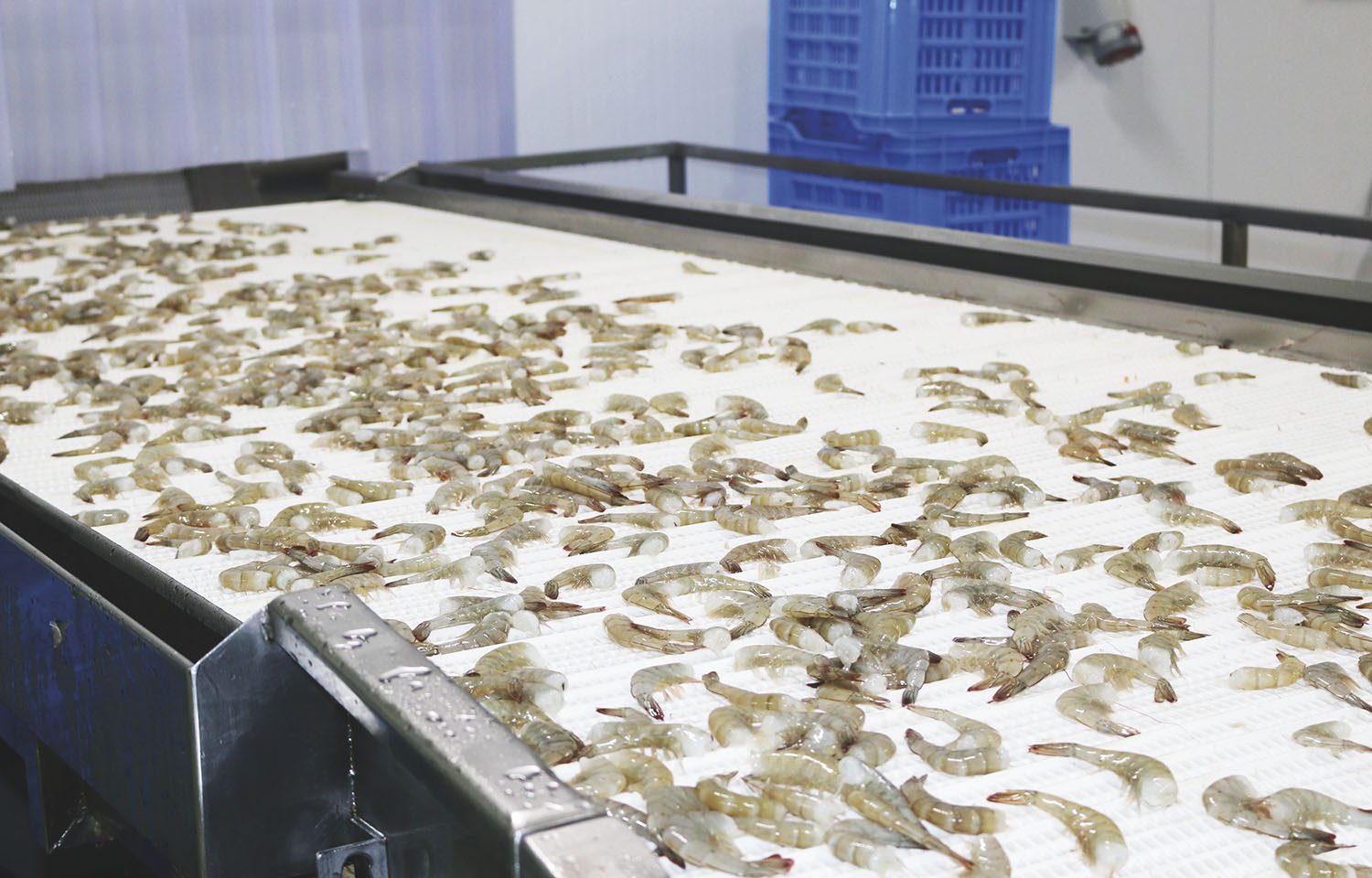
Ecuador’s National Chamber of Aquaculture (CNA) is calling on the government to halt trade talks with Brazil after the latter country suspended imports of shrimp.
On 3 December, Brazil announced during a meeting of its Ministry of Agriculture and its Ministry of Fisheries and Aquaculture that officials decided to suspend imports of shrimp from Ecuador effective 9 December. According to a report by S&P Global, Brazil claimed the decision was based on an inspection made by the Brazilian agriculture ministry of Ecuadorian shrimp facilities – though the ministry did not provide any inspection reports.
CNA Executive President José Antonio Camposano said the move was not unexpected to the industry.
“Brazil is the most protectionist country on the continent, this was coming,” he told Forbes Ecuador. “Historically, it has sought to block the entry of Ecuadorian shrimp with a series of excuses, all illegal and anti-technical, to benefit its local producers.”
This isn’t the first time that Brazil has closed off its markets to Ecuadorian shrimp. In 2018, the country’s supreme court accepted an injunction filed by the Brazilian Shrimp Producer Association to suspend authorization for Ecuadorian shrimp, effectively halting any imports. At the time, Ecuador was considered capable of fulfilling half of Brazil’s supply deficit of shrimp, amounting to roughly 45,000 metric tons (MT), as Brazil’s domestic industry could not meet the country’s demands.
Since then, Ecuador’s exports of shrimp to Brazil had resumed, and according to Camposano were growing, though they still made up just a fraction of the industry – roughly USD 6 million (EUR 5.8 million) in sales a year. That’s a tiny portion of the country’s total exports, with the country exporting over USD 441 million (EUR 428 million) in shrimp in October alone – a down month compared to years prior.
"Ecuador had been growing little by little in sales to Brazil, in terms of volume it is insignificant, but for us all markets are important, as a principle we seek to open more destinations, regardless of whether they buy a lot or a little from us,” Camposano said.
In response to the ban, Camposano told Forbes the CNA is pushing Ecuador’s government to drop out of negotiations to deepen the ACE 59 trade agreement, which would have removed tariff barriers between the two countries.
“Since Brazil was interested in deepening the trade agreement with the intention, for example, of leveling tariffs for its vehicles compared to markets with which we have free trade agreements, such as China and the European Union; they are losing market share,” Camposano said.
Camposano added that the latest suspension is the latest in a string of what he dubbed as “harassment” from Brazil despite the CNA and the shrimp industry agreeing to its demands.
"We have done what Brazil told us. They made a technical visit, which was without any new developments. We participated with the authority, and he did not mention any new developments,” Camposano said. “Now we see how the ministers of Production and Fisheries, with the producers of Brazil, celebrate as if they have qualified for the World Cup, an action that they say is to promote the national industry and the protectionist interest is revealed. The message is that we do not want Ecuadorian shrimp to enter, just as they have not wanted bananas or tuna to enter.”
Shrimp from Ecuador is not the only seafood product that Brazil has erected barriers against. The country has also suspended all tilapia imports from Vietnam, under a similar guise of ensuring that tilapia imports from Vietnam needed to have a health risk analysis performed.
The Vietnam Association of Seafood Exporters and Producers (VASEP) said the suspension would have minimal impact on the industry, but said it feared the move may portend future action against pangasius imports. Vietnam exported USD 113 million (EUR 109 million) worth of pangasius to Brazil in 2023, but those exports slumped in 2024.
