



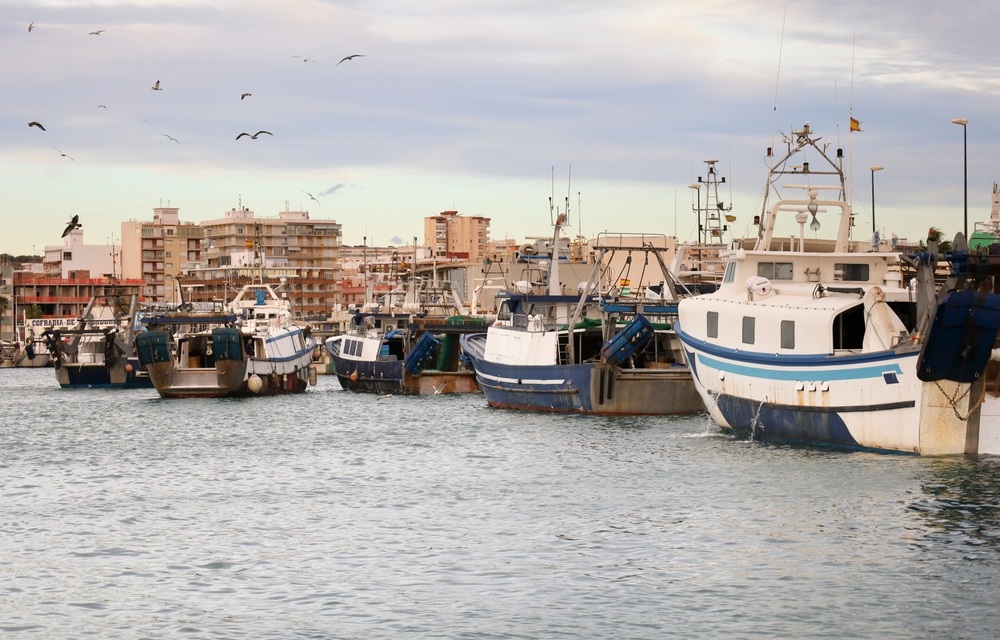
The chair of the European Union’s Fisheries Committee is calling for the use of emergency mechanisms to support commercial fishers in the face of increased fuel prices due to the ongoing war in Iran.
“The current geopolitical context, especially instability in the Middle East and rising oil prices, is having a direct impact on the European fisheries sector. Fuel represents one of the largest operating costs of the fleet, so the continued increase in prices is putting at risk the economic viability of many vessels,” Fisheries Committee Chair Carmen Crespo Díaz said in a release. “If this situation continues, many vessels could be forced to halt their activity, with serious consequences for employment in coastal communities and for the supply of seafood on the European market.”
To alleviate the situation facing Europe’s fishers, Díaz called on the European Parliament to use whatever emergency support mechanisms are at its disposal, mirroring the framework used by the bloc in response to Russia’s war on Ukraine, which also had a major impact on fuel and energy prices. The framework authorized member states to provide financial support to companies in their country affected by the energy crisis.
Díaz also called for releasing money from the European Maritime, Fisheries, and Aquaculture Fund (EMFAF). The fund, which started in 2021 and runs through 2027, typically provides financial support for developing innovative fishing and aquaculture projects and improving sustainability. The fund has a budget of EUR 6.1 billion (USD 7 billion).
Díaz also said that the E.U. could lift restrictions on what support member nations can provide to their domestic fleets.
“It is also proposed to temporarily adapt the state aid rules so that member states can urgently support their fleets. In parallel, exceptional market measures could be activated within the Common Fisheries Policy to mitigate the economic impact of this situation,” Díaz said.
Industry group Europêche also called for action on fuel prices, claiming that fleets “are approaching a critical economic situation.”
“The situation is becoming unsustainable for many fishing operators,” Europêche President Javier Garat said in a release. "If fuel prices remain at current levels, many vessels will be forced to stop operating. This would not only affect the livelihoods of fishermen and coastal communities but could also disrupt the supply of seafood to European markets."
Like Díaz, Europêche suggested using the same framework used to alleviate the impact of the 2022 energy crisis and activating any emergency mechanisms, including those available in EMFAF.
“The European fishing sector remains fully committed to sustainability, decarbonization, food security, and the resilience of coastal communities,” Garat said. “However, the current surge in fuel prices represents an external shock that requires swift and coordinated action at the E.U. level.”
