






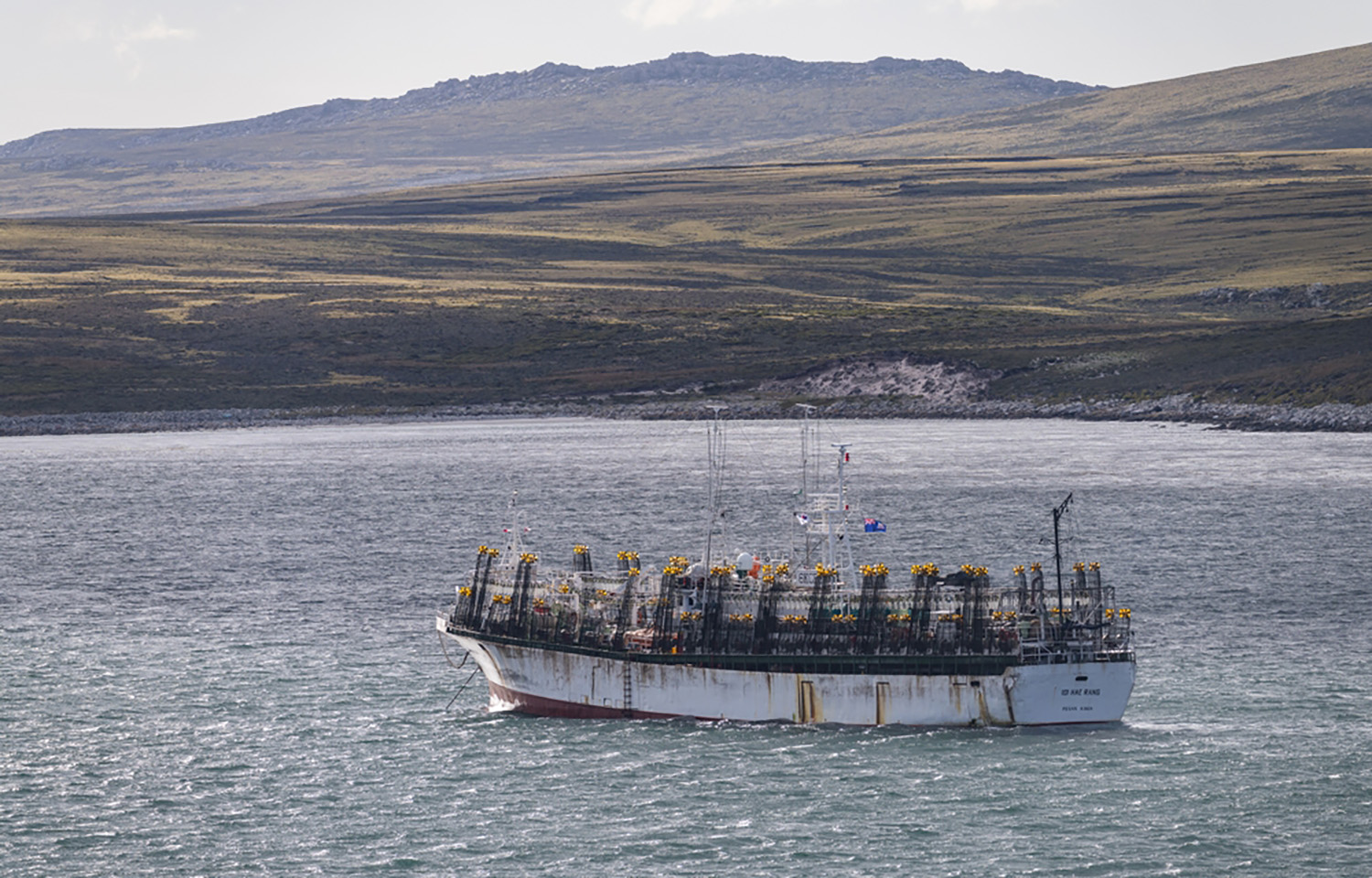
The Falkland Islands Fisheries Department (FIFD) recently canceled fishing activities in the territory’s Patagonian squid (Doryteuthis gahi) fishery for the rest of 2024.
FIFD worked in conjunction with local fishing companies in July 2024 to conduct a preseason survey before deciding whether to launch fishery activities for the second season of the year.
The results of that survey came as a surprise: The lower end of the biomass estimate came in below FIFD’s safe stock replenishment threshold of 10,000 metric tons (MT) – the smallest total since 2008. Considering these results, authorities postponed the launch of the fishing season as a precaution, with another survey scheduled for August.
The next survey, completed mid-August, conclusively found an average biomass below the 10,000 MT limit, and the season was called off to protect the squid population from long-term damage.
This news came one year after authorities brought 2023’s second fishing season to a premature close due to signs of a depleted population.
“The early closure of the second [season] last year and the fact that this year’s second season never opened at all means that we are in uncharted and unprecedented times,” Falkland Islands Fishing Companies Association (FIFCA) Executive Secretary James Bates told SeafoodSource. “The Falklands are absolutely reliant on the fishing industry, which is responsible for [around] 60 percent of the GDP.”
According to data from Science.org, the fishery supplies half of the calamari eaten in Europe, for which more than a dozen vessels set sail from Spain each year to the islands, which are located off the coast of Argentina.
As recently as 2022, the fishery brought in catch totals of more than 100,000 MT of the squid, also known as loligo, worth around USD 350 million (EUR 314 million).
The decimated numbers since then may be due to overfishing or changing currents, Science.org reported. The fishing season that was temporarily called off in 2023 was allowed to open again in January 2024, which may have further affected biomass.
“As disappointing and potentially damaging as it is, the sector is science-led and -based, and it appears that there can be little doubt of the environmental factors behind the government’s decision to make two monumental calls – this year and last,” Bates said. “When it comes to the management of the fishery, FIFCA and the Falkland Islands government have a collaborative approach, and they have been transparent with us enough to share their scientific findings that have led to these decisions being taken.”
The cancelation comes at a difficult time for fishers as they face higher fuel prices and global inflation, combined with continued high borrowing interest rates.
FIFCA Chair Cheryl Roberts touched on these issues in an interview with Mercopress, speaking on behalf of the Loligo Producers Group, in which she mentioned about 20 percent of the fleet is in the process of renewal at a total capital cost of GBP 100 million (USD 134 million, EUR 120 million).
According to Faro de Vigo, the Falklands squid-fishing fleet actually expanded by four vessels over the last six years, with another three in the execution phase in the fleet’s largest rejuvenation process.
Despite the recent growth, fishers are questioning whether Falklands authorities will reduce the cost of fishing licenses, especially considering it applied a 22 percent increase for 2024, bringing it up to EUR 16.6 million (USD 18.5 million).
In the meantime, the fleet has taken to international waters to catch what squid it can and complement the catch with other species such as hake, Faro de Vigo reported.
Bates said his association will continue to coordinate closely with the Falklands government to determine the most prudent steps forward.
“FIFCA and the Falkland Islands government are working jointly to establish the facts and determine any likely future impacts, and [we] hope that this is short-lived,” he said. “More data is being sought and gathered, and with the first loligo season for 2025 not being that far away, it would be fair to say we are obviously nervous about that. FIFCA and the government need to work collaboratively over every aspect of what has happened and what may happen in the future, and the government must demonstrate support for FIFCA in these unknown and challenging times.”
