



The United States Trade Representative (USTR) recently released its first-ever Trade Strategy to Combat Forced Labor, which covers the seafood supply chain and illegal, unreported, and unregulated (IUU) fishing prominently.
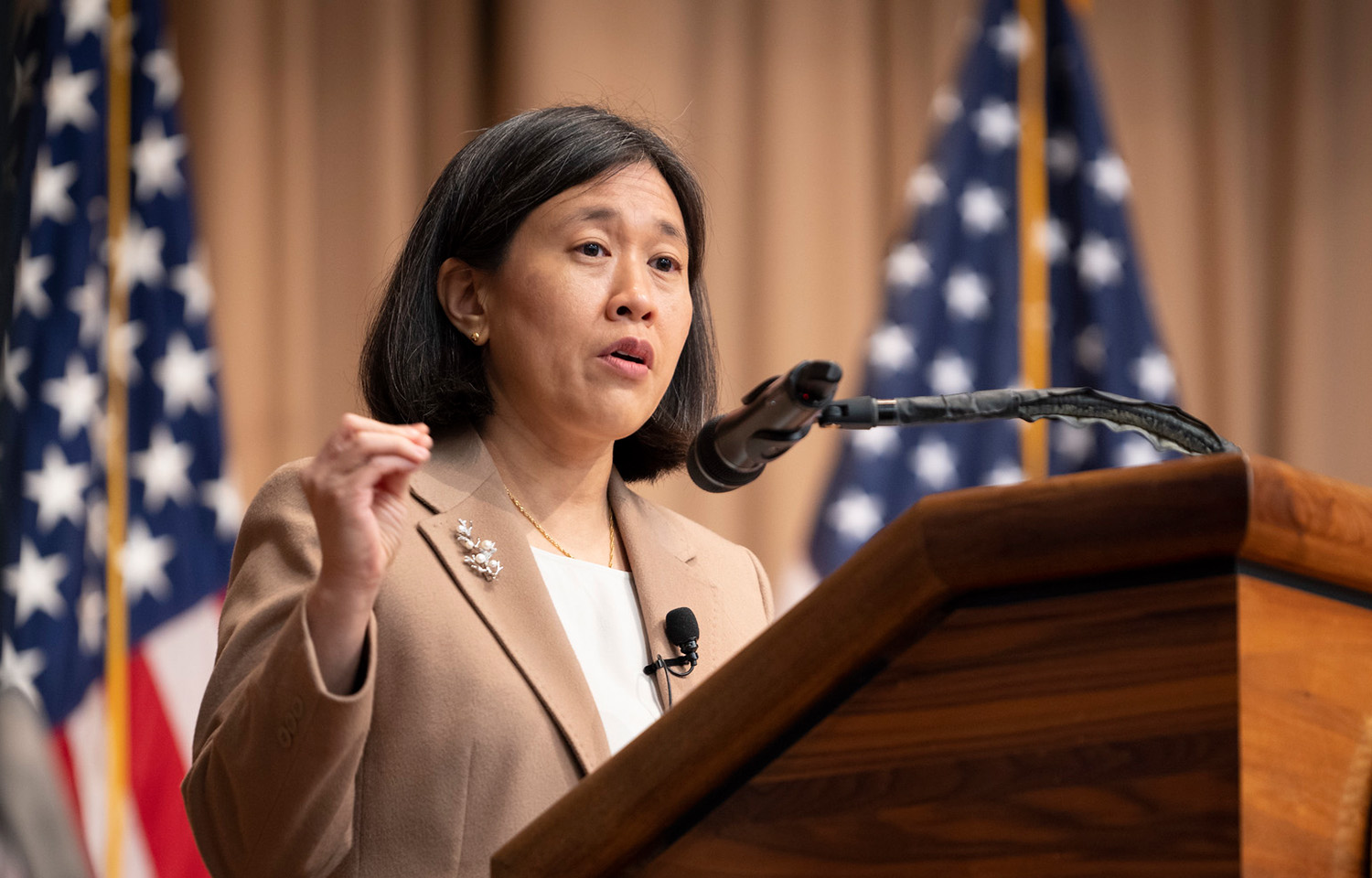
The USTR said the new strategy is the first time the U.S. has ever laid out a comprehensive approach to using trade tools to combat forced labor in supply chains. USTR Ambassador Katherine Tai said the new strategy is intended to use trade as a tool to reduce and eventually end the presence of forced labor in the U.S. supply chain.
“Combatting forced labor has been a centerpiece of the Biden-Harris administration’s worker-centered trade policy,” Tai said. “While there is more work to be done, this strategy is how USTR is driving a race to the top and addressing this form of unfair economic competition that hurts and dehumanizes people all around the world.”
The new strategy prominently mentions seafood and the seafood supply chain. It highlights IUU fishing and said preventing the importation of fish and fish products caught, farmed, or processed with forced labor is a priority for the USTR.
The strategy also highlighted different pieces of legislation the U.S. government has used to combat the presence of seafood caught with IUU and forced labor in the supply chain – including the Maritime SAFE Act, the National Security Memorandum to Combat Illegal, Unreported, and Unregulated Fishing and Associated Labor Abuse, and NOAA’s Collaborative Accelerator for Lawful Maritime Conditions in Seafood (CALM-CS) Public-Private Initiative.
“These tools demonstrate the steadfast commitment of the United States to address the problem of IUU fishing, including by distant-water fishing vessels, and associated labor rights abuses, including the use of forced labor in the seafood supply chain,” the trade strategy states.
The USTR proposed a new strategy back in 2022, and at the time the National Fisheries Institute urged it to support things like the FISH Standard for Crew and utilizing existing forced labor authorities and programs, and to ensure all allegations are rooted in fact and avoid broadly tarnishing the seafood industry.
“Seafood is the most traded of all major proteins, and USTR is the nation’s trade policy leader,” NFI wrote at the time. “As USTR develops its strategy, it is imperative to avoid proposals that interrupt lawful trade and threaten the competitiveness of U.S. producers in the domestic market or in export markets around the world.”
NFI Media and Communications Manager Kayla Bennett the organization continues to work on the industry side to help develop methods of combating forced labor in seafood sup ply chains.
"Inhumane treatment of workers, domestic or overseas, is intolerable. That is why NFI has led numerous industry initiatives to ensure fair worker treatment for all. For instance, NFI helped develop the FISH for Crew Standard, which has been adopted by a growing list of fleets worldwide,” Bennett said. “The bottom line is that real solutions flow from an accurate understanding of the challenge – not hyperbole."
Seafood appearing in the USTR’s new strategy is the latest in a series of signals from the U.S. government indicating it is placing a heightened focus on the seafood supply chain. The U.S. Department of Homeland Security recently added seafood to its list of priorities in the Uyghur Forced Labor Protection Act – the first addition to the list of high-priority sectors under the act since 2022.
That action was just the latest in a series of moves by the U.S. government. In 2021, U.S. Customs and Border Protection began to issue withhold release orders against Taiwanese vessels after saying it received credible information that vessels were involved in the use of forced labor, and in 2020, the U.S. included Taiwan on its “List of Goods Produced by Child Labor or Forced Labor” for the first time mainly related to forced labor in the fishing industry.
As the U.S. began to step up its enforcement of rules combating forced labor, a bombshell report by the Outlaw Ocean Project revealed extensive evidence of Uyghur and forced labor in the seafood supply chain in October 2023. The revelation led to action by dozens of U.S. companies and requests to place Chinese companies under Magnitsky sanctions and continued pushes by NGOs and U.S. government officials to combat forced labor in the seafood labor.
Tai, in a forward to the new strategy, wrote the U.S.’s approach toward free trade was part of the reason forced labor became an issue the government had to tackle across so many departments in the first place.
“For decades, the traditional approach to trade, which prioritized aggressive liberalization and tariff elimination, did generate wealth,” Tai wrote. “At the same time, the approach came with significant costs and side effects. Prosperity without inclusiveness contributed to rising inequality and wealth concentration. The system incentivized countries to compete by maintaining or lowering standards, as companies sought to minimize costs in pursuit of efficiency.”
That pursuit of efficiency and lower costs came at the cost of workers’ rights and increased the likelihood forced labor would show up in U.S. supply chains, Tai wrote.
Tai’s stance echoes that of Katrina Nakamura, an interdisciplinary scientist and the owner of the Sustainability Incubator. In an op-ed she provided to SeafoodSource, Nakamura wrote most of the key factors in discovering forced labor are readily available – namely that looking at the supply chain and estimating costs can be a key indicator of forced labor.
“From a decade of screening seafood supply chains for labor conditions, I can attest that trouble sets in where a business has reduced its labor cost to 5 or less percent of the cost of business, perhaps to offset rising costs like fuel,” she wrote. “Forced and indentured labor occur where producers or distributors are advantage-taking, heavily, to meet orders for an agreed low price.”
