



Recent reports from media outlets, including from the New York Times (NYT), have suggested that Chinese fishing vessels are being mobilized for military exercises, proving that “Beijing can rapidly muster large numbers of boats” to potentially “impose control in contested seas.”
However, seafood and maritime researcher Xuefei Shi said there may be another explanation for the maneuvers of boats in question and claimed the reports may have misinterpreted normal fishing behavior for coordinated exercises.
Shi noted that while “the securitization narrative is compelling,” a closer look “suggests that the interpretation rests less on exceptional vessel behavior than on how single-source automatic identification system data are visualized, contextualized, and manipulated.”
He explained that what looked like strategic movements by fishing trawlers can, in fact, be explained by ecological, regulatory, and cartographical factors, as well as general fishing vessel behavior.
A map produced by Starboard Maritime Intelligence and used in the NYT report relies on “grossly oversized” dots to represent vessels, Shi said.
“When dots are scaled far beyond their physical footprint, they visually fill large maritime spaces, creating an artificial sense of coverage, linearity, and geometric order that does not exist at vessel scale,” he said. “When maritime analyses carry security or policy implications, remote datafication should not substitute for multi-sensor verification and fisheries literacy.”
While some linear clustering is observable from the map, this is “not unusual,” Shi said, “nor evidence of exceptional coordination.” He said to understand them, “one must go back to the fisheries regimes of the East China Sea, agreements between China, Japan, and South Korea, and zoning practices.”
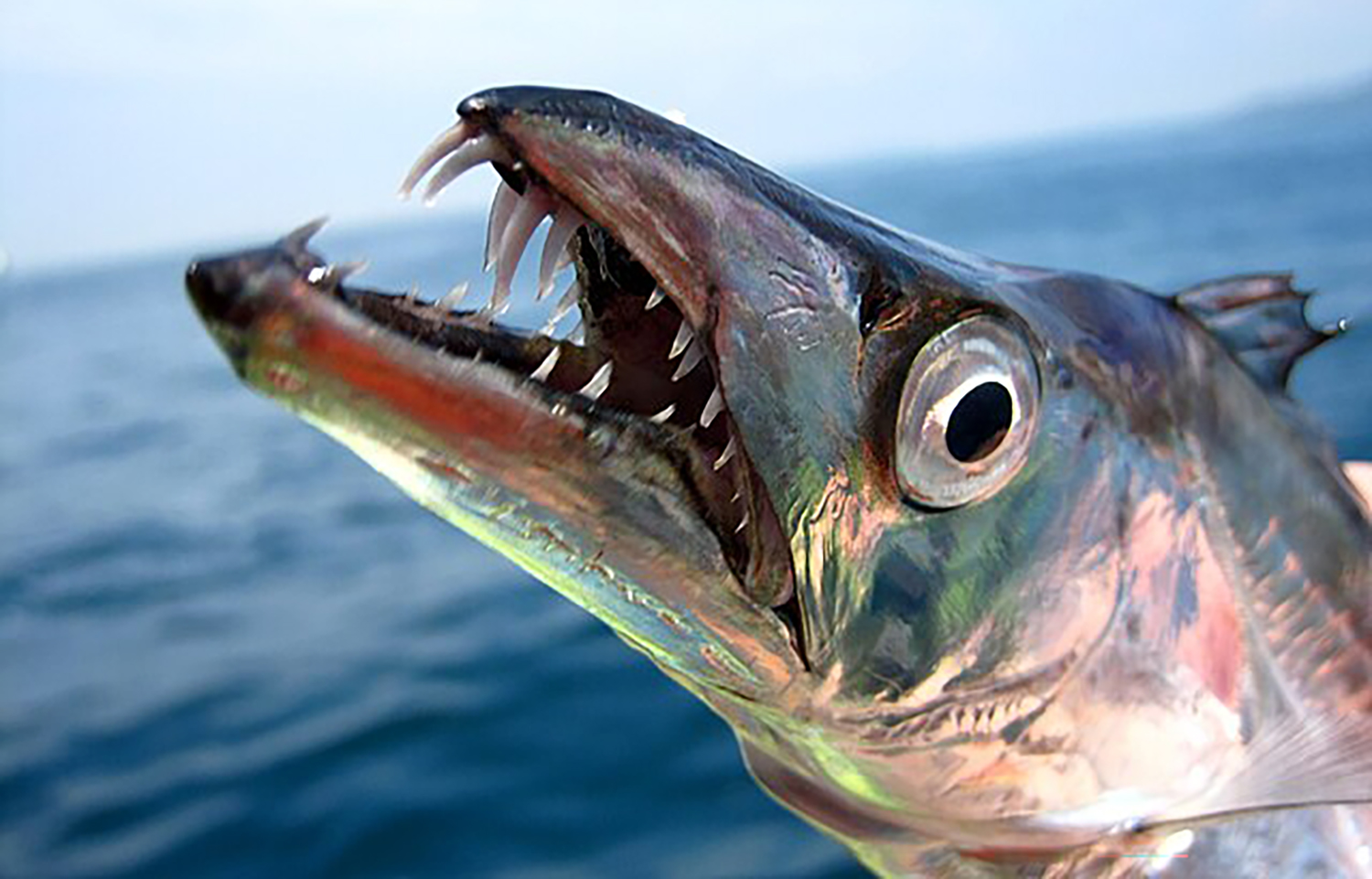
The largest clustering of vessels, Shi said, is located at the northeastern boundary of the Zhoushan fishing zone and is also on the December-to-February migration route of hairtail (Trichiurus lepturus).
“The fact that clustering occurred [there] strongly suggests fishers were responding to recurring hairtail schools,” he said.
Vessels remained clustered and did not cross this line for two reasons, according to Shi: “enforcement from South Korean authorities and Chinese licensing that restricts fishing to the inner Zhoushan zone for certified authentic Zhoushan hairtail.”
Nevertheless, a recent report from U.S. Congress suggested that China has continually used its huge fishing fleet for military purposes, including enforcing territorial claims.
“Since Xi [Jinping] took the helm in 2013, he has carried the Maritime Great Power agenda into [China’s] wider statecraft – launching the ‘Blue Economy’ and ‘Ecological Civilization’ campaigns to designate millions of square kilometers as ‘blue territory,’ embedding the strategy in the Maritime Silk Road and the ‘Maritime Community of Shared Future’ and centralizing major maritime agencies under party and military control to coordinate economic and coercive power at sea,” the report said.
