






Chinese distant-water fishing vessels off the coast of Chile have generated concern among local fishermen, who have taken to the streets to protest their presence in and around the nation’s waters.
Chilean authorities – including the nation’s Navy and the National Fisheries and Aquaculture Service (Sernapesca) – have stated they maintain active, permanent surveillance to control maritime traffic in its national waters, ensuring compliance with national and international regulations; however, local fishermen assert that a Chinese fleet of about 50 vessels are regularly taking part in illegal, unreported, and unregulated (IUU) fishing, particularly of cuttlefish – a key resource for national artisanal fishers.
The fleet has docked along the Chilean coast under the pretense of maintenance, restocking, and refueling, but when entering national waters, they actually engage in IUU activities, local fishers have asserted.
The situation generates “tremendous uncertainty,” Hugo Poblete, president of the Federation of Artisanal Fishermen of Narau Bay of Quintero and Puchuncaví, told Radio Bío Bío.
“There have been no cuttlefish for the last three months, and we believe that this [presence of the Chinese fleet] may be a factor. There are more than 50 vessels fishing at 200 miles – a swarm that does not let the resource enter the coasts,” he said.
Alberto Olivares, president of the Federation of Fishermen of Iquique, also expressed concern about the practices of the Chinese fleet.
“They are real termites that destroy everything and devastate the entire ecosystem,” he told Radio Bío Bío. “They have been denounced for crossing [the exclusive economic zones of] other countries, and we can’t be sure that they are not doing it here.”
Olivares added that artisanal fishermen have said they have observed suspicious behavior of some vessels in the Chinese fleet when they are within the 200-mile exclusive economic zone (EEZ) of Chile, especially at night.
“They turn on all their lights and look like Christmas trees. The cuttlefish are attracted by the luminosity, so they could be fishing within Chilean territory," he said.
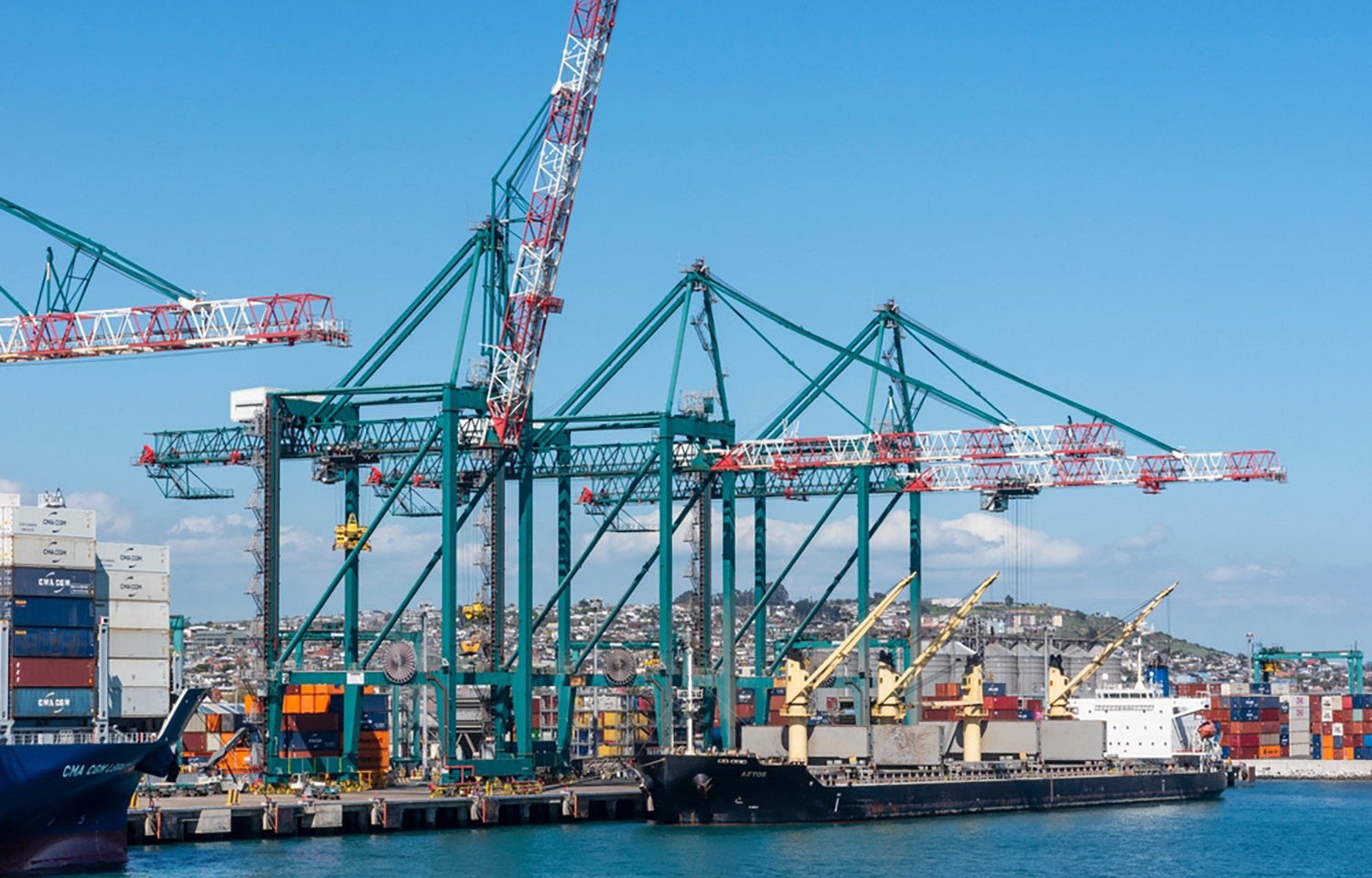
As a result of the alleged intrusion, artisanal fishermen throughout the country announced a national day of mobilization to demand greater maritime surveillance and inspection and the review of permits granted to foreign vessels. Some of those protests turned violent, including demonstrators setting material ablaze to set up barricades and block access to Chile’s largest port of San Antonio.
“We are defending the Chilean sea and our livelihood. We cannot allow international fleets to devastate our resources while the authority looks the other way,” an artisanal fishing sector spokesman said during the protest.
Argentinian environmental NGO Circulo de Políticas Ambientales (CPA) has previously claimed that Chinese fishing vessels which have engaged in IUU fishing are increasingly being serviced at Chilean ports. Using data from Global Fishing Watch and IUU data firm Skylight, the NGO said that Chile was the only country in South America that has seen an increase in the number of these vessels serviced over the past year.
“The Chinese fishing fleet that Chile is supporting is a destructive, unregulated fishing fleet. They are vessels that not only catch squid, but it has been documented how they intentionally catch endangered species, such as sharks, sea lions, dolphins, etc.,” CPA Ocean Policy Coordinator Milko Schvartzman told SeafoodSource. “I have analyzed how some of the vessels that Chile receives have deactivated their AIS satellite transmitters for many days, and others have a history of [causing human] death on board and abuse of human rights. They fish on the outer edge of Chile's EEZ, preying on migratory resources and competing unfairly with Chilean fishermen themselves.”
Considering this record, Schvartzman has questioned Chile’s bid to be the host country for the secretariat of the Biodiversity Beyond National Jurisdiction (BBNJ) Agreement, calling the move “a great scandal.”
Also known as the High Seas Treaty, the BBNJ aims to regulate and protect marine biodiversity in areas and spaces that are outside national jurisdictions. The BBNJ Agreement was successfully ratified on 19 September, when the treaty reached and surpassed the milestone of 60 state ratifications needed to trigger its entry into force – which will take place on 17 January 2026.
Similarly, fishers such as Olivares have questioned Chile’s lack of effective oversight.
“Sernapesca does not have the logistics to control these fleets, and the Navy can not do it 24 hours a day. That is why we ask for greater monitoring and for ships to be escorted when they enter and leave national ports,” Olivares said.
Sernapesca maintains that it has implemented and enforced proper maritime traffic controls.
“All ships that call at our ports are inspected – both in transit to the ports and at the time of calling – where an inspection is carried out on board in coordination with other organizations such as Customs, Health, [Chile’s Agricultural and Livestock Service] SAG, [the investigative police force] PDI, and the Maritime Authority to verify different aspects,” acting National Director of Sernapesca Esteban Donoso said. “In particular, we verify navigation tracks, the correct transmission of instruments, and holds to verify the fishing conditions that they have declared. They have all gone through and must go through this inspection.”
In addition, the Monitoring and Analysis Center of the Directorate of Security and Maritime Operations of the Navy (Dirsomar) analyzes the movement of these ships in real time, according to Dirsomar Director Rear Admiral Litoral Sigfrido Ramírez.
“We have no evidence that fishing operations have been carried out within the [Chilean] EEZ,” he said.
Sernapesca said it has received 157 requests for calls at national ports as of 30 September this year, of which 139 have been authorized and another 18 have been rejected for not presenting all the requested information. Of the authorized calls, it said all vessels had been subjected to inspections on board, with no regulatory non-compliance found to date.
