






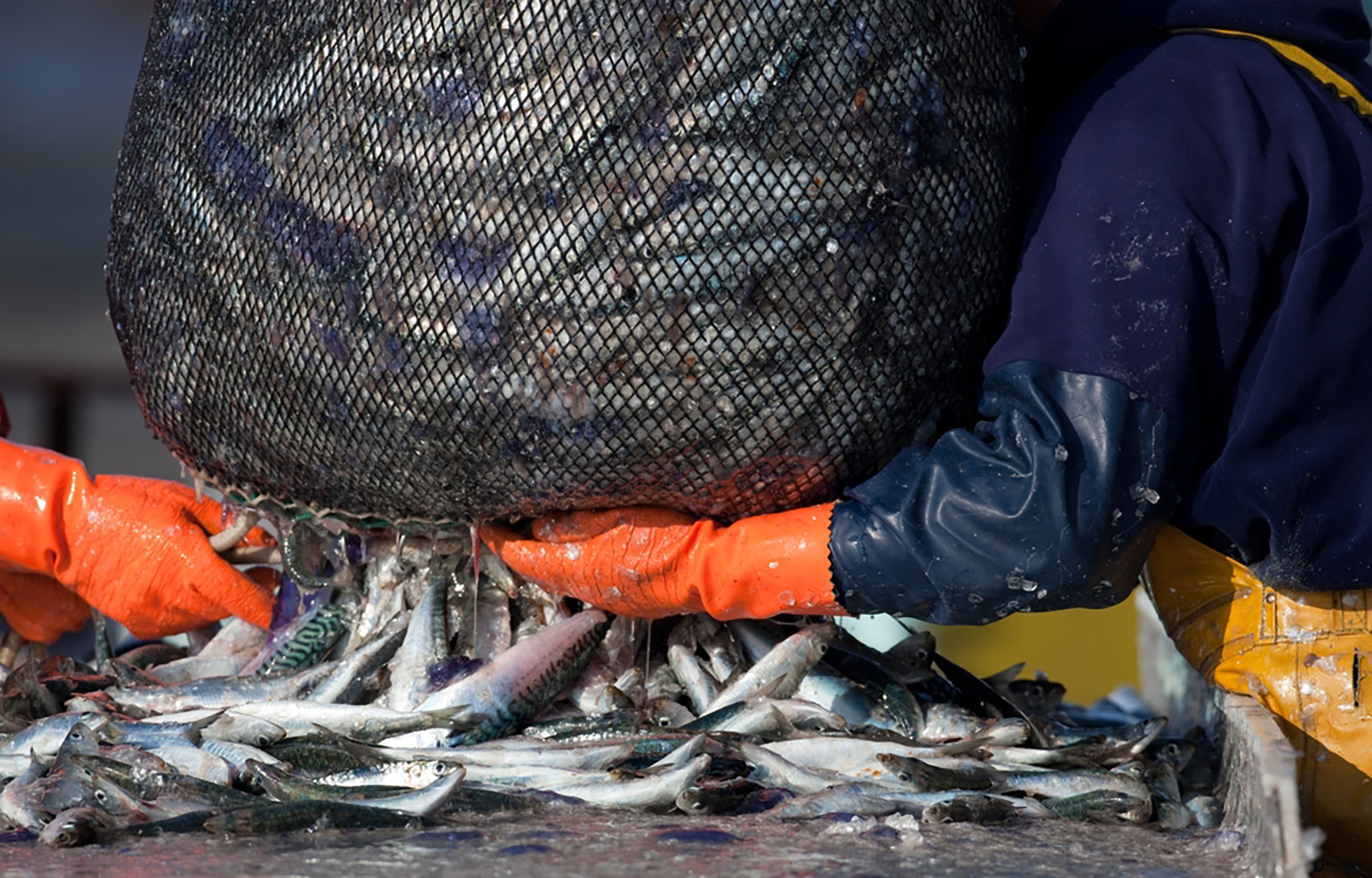
Ireland has traditionally relied heavily on African markets for its pelagic exports, but the nation may be shifting its strategy in a search for markets that buy more premium products, especially as its quotas for the species have shrunk post-Brexit.
According to data released by the Clonakilty, Ireland-based Sea Fisheries Protection Authority (SFPA), outside of the E.U., Nigeria was the top buyer of Irish seafood by volume in 2023, buying over 17,500 metric tons (MT) of seafood, mostly comprising mackerel and whiting.
As a whole, Africa bought 45 percent of Irish mackerel, horse mackerel, blue whiting, and herring exports by value and 54 percent by volume last year.
Irish Fish Producers Organization CEO Aodh O’Donnell said Ireland has supplied the African market with high-quality protein for over four decades, particularly sending smaller-grade fish.
“The premium markets have a preference for medium and large fish. Therefore, select smaller product grades are sold to markets in East and West Africa that have a strong demand for fish protein,” he told SeafoodSource. “In these markets, Irish exporters successfully compete with pelagic firms headquartered in countries such as the Netherlands, Norway, and the U.K.”
However, conditions that have emerged post-Brexit have made shipping a large percentage of Irish catch to Africa a difficult proposition. Ireland’s quotas for pelagic species have shrunk in the wake of Brexit, as E.U. nations and other players like Norway have swooped in to take larger shares.
“Despite having some of the richest fishing grounds in Europe, Irish boats have consistently been given lower quotas of fish than those from other European countries in Irish waters,” Irish South and West Fish Producers Organization CEO Patrick Murphy said in July in the wake of European elections.
E.U. funds given to Ireland to compensate for this loss in quota have largely been spent on creating more value-added products from its lower pelagic catch, according to Bord Iascaigh Mhara (BIM), an Irish state agency tasked with developing Ireland’s seafood sector.
“Pelagic processors have made the largest investments nationally,” BIM told SeafoodSource. “This funding included investment of over EUR 9 million [USD 10 million] in a bespoke value-added plant that can process over 14 million MT of mackerel daily to produce a range of value-added fillet products on a year-round basis. This is the first large-scale investment in a highly automated mackerel-filleting plant of this type across Europe.”
BIM said the move is being made to largely target Asian and European markets, which typically buy more premium products than Africa.
O’Donnell echoed BIM’s assessment, saying the industry’s focus “is on diversification and premiumization of products with premium markets supplied on a B2B basis, such as in Japan and South Korea.”
Pelagic processors aren’t done innovating either, and have plans to draw on a new round of E.U. funding through the European Maritime Fisheries and Aquaculture Fund (EMFAF) to “further invest in technologies that will allow them extract more value through developing higher-value products aimed at the Asian and European markets,” according to BIM, which administers EMFAF funding in Ireland.
Even as Ireland looks to other markets, Africa’s population is projected to explode in the coming year. The continent’s population has expanded from 283 million in 1960 to more than 1.5 billion in 2024 and is projected to increase by 950 million by 2050, touching 2.5 billion over the next quarter-century, according to the U.N.’s Economic Commission for Africa.
The Ivory Coast – one of the countries with the fastest-growing populations in Africa – was the third-ranked market for Irish seafood exports outside of the E.U. in 2023. The west African country bought just over 5,200 MT, up from the 4,076 MT purchased in 2022.
Other key African buyers include the Democratic Republic of the Congo, Ghana, Liberia, and Cameroon, as well as Sierra Leone and Benin.
Many African countries are aiming to lessen their reliance on external markets for seafood supply, mainly through aquaculture, which would help mitigate the blow from a shift in Irish exports.
“Countries like Egypt, Nigeria, and Madagascar have already seen significant growth in aquaculture, serving as beacons of potential for others. Additionally, regional initiatives like the African Continental Free Trade Area (AfCFTA) are paving the way for more seamless intra-African trade and business operations,” WorldFish Director General Essam Yassin Mohammed told SeafoodSource last year.
Many of these operations still face hurdles, though, such as a lack of resources, and in the meantime, Africa remains a heavy importer to meet domestic seafood demand.
