






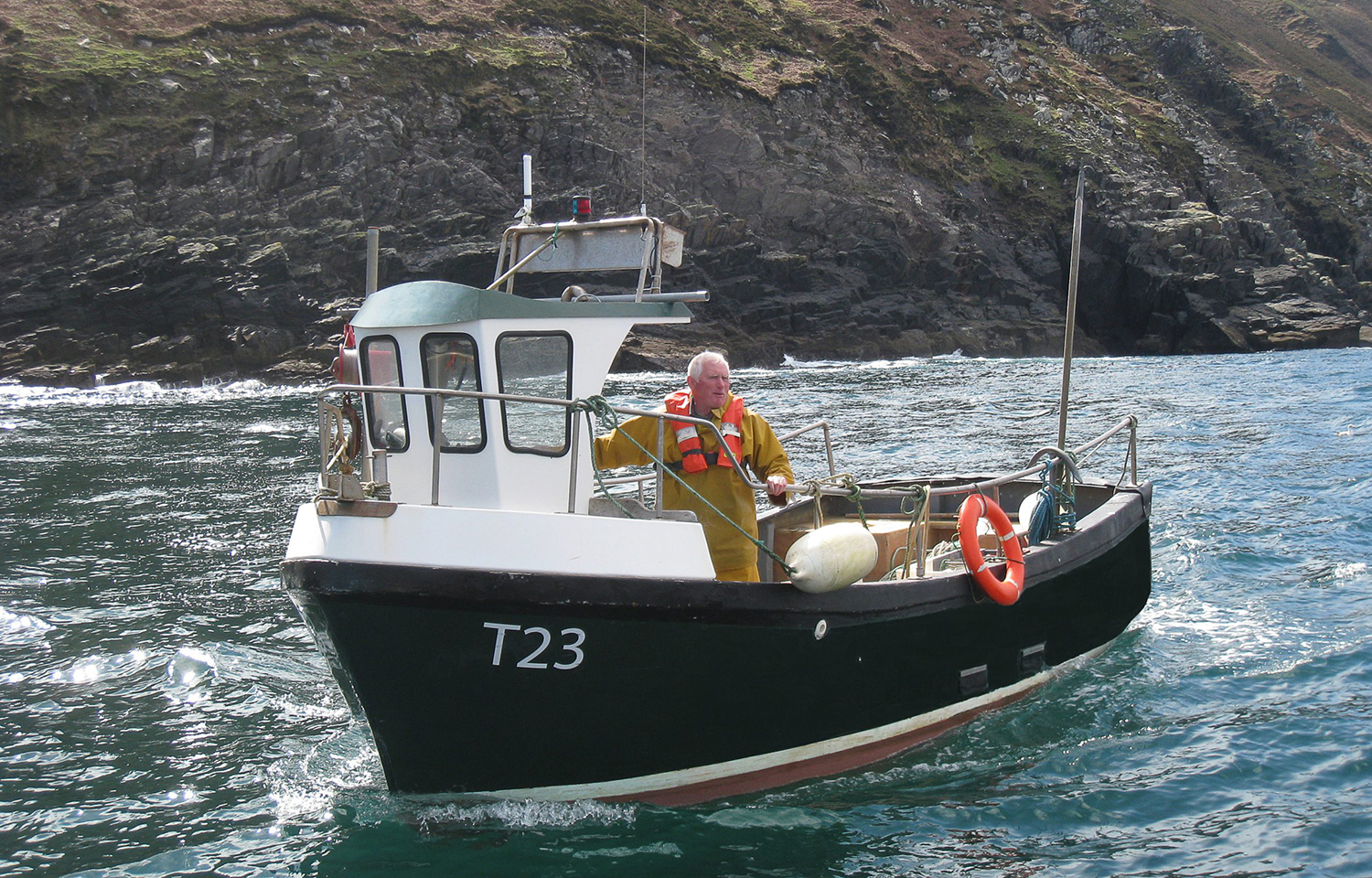
Ireland’s inshore fishing industry recently met with a government task force to request income support.
In the meeting, the National Inshore Fishermen’s Association (NIFA) proposed the Irish government pay its members an annual basic income payment and set up a climate change compensation fund – both backdated to 2020.
The organization cited reduced fishing days due to climate change, as well as pressures on the sector such as rising costs for fuel, insurance, maintenance, and bait, as reasons for the request.
“We are not looking for a wad of cash,” Eamon Dixon, a director within NIFA, told SeafoodSource. “We’re seeking a minimum wage for a couple of months – predominantly the winter months.”
Dixon said he believes his members are entitled to support, especially as other parts of the Irish fishing industry have been able to benefit from support schemes. The inshore sector, meanwhile, has been largely excluded, as its entitlement to quota was not recognized within previous schemes.
NIFA said this highlights the need for a more balanced and equitable approach to supports across all fleet segments.
“Pelagic fishers have done well from compensation packages,” Dixon said. “Those payments were made to ensure the pelagic vessel operators were able to reconstruct their business. We got none of those payments because, historically, we weren’t using up quota."
While some other sectors have received benefits, Dixon said some of his members are set to exit the sector due to financial hardship.
“In the next couple of weeks, something will have to be put on the table,” he said.
According to Dixon, there has been broad support for an income stabilization framework, with politicians representing coastal communities having been particularly supportive.
He also said support has come from E.U. Commissioner for Fisheries Costas Kadis, who told the NIFA that funds apportioned to Ireland through the bloc’s Common Fisheries Policy could be directed toward income support measures.
