




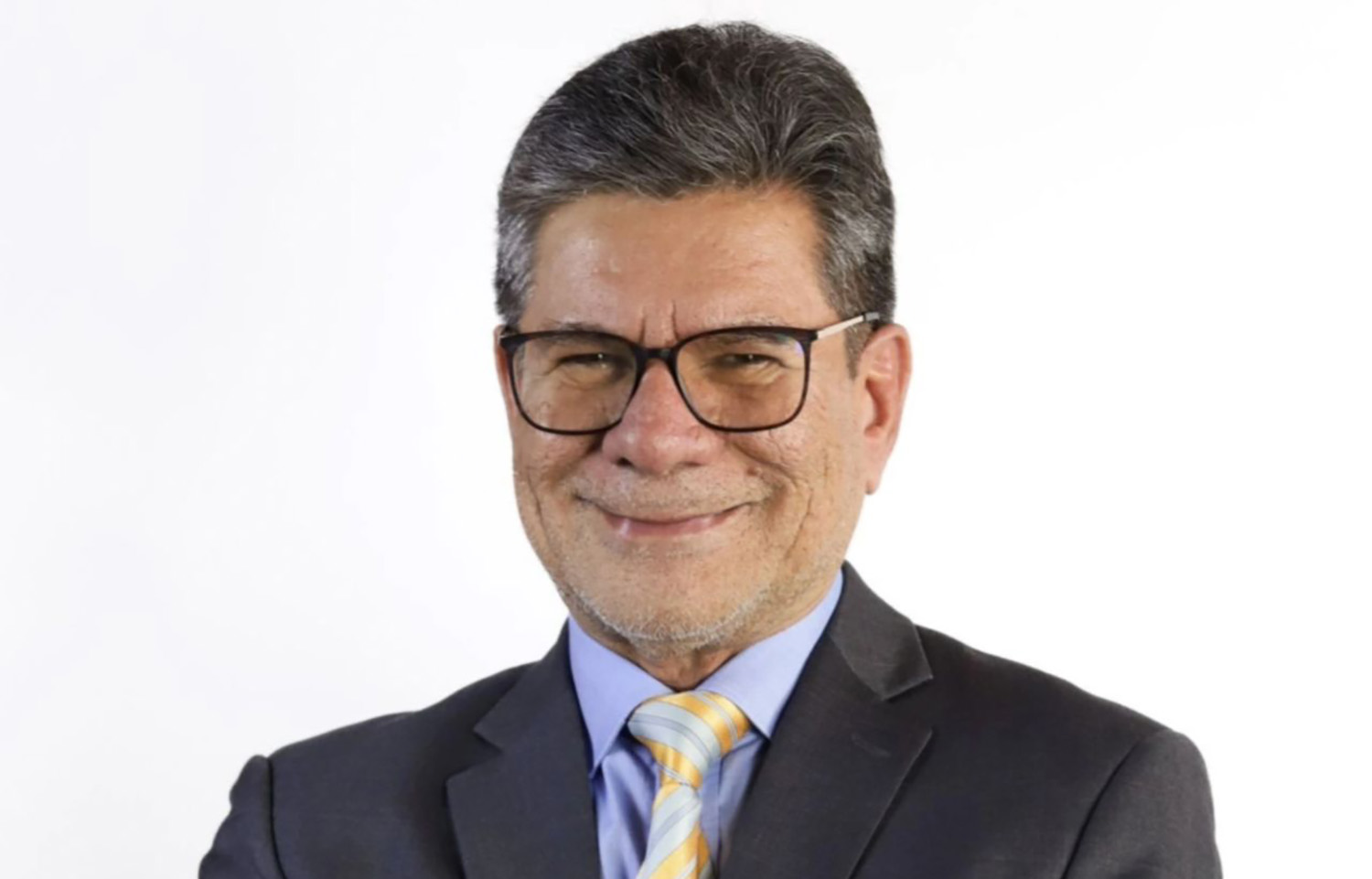
The last four years of Chilean policymaking have been very negative for the country’s aquaculture sector, according to Aquaculture Innovation Club Executive Director Adolfo Alvial.
“The government moderated its stance when they began to understand the activity better, but the damage was already done; oversight that [was] beyond reasonable had already been established in the first two years of government, with signals that the market took into account,” Alvial told SeafoodSource. “A government that does not favor industry development creates a bad scenario for investment. Regulatory uncertainty, which has not been resolved, was also a disincentive to investment. That is why, in terms of industrial potential, these last four years have been lost.”
Since he assumed office in 2022, Chile President Gabriel Boric has openly questioned the environmental sustainability of the country’s salmon-farming industry; he went as far as saying he was considering a moratorium on the farmed salmon sector that would halt expansion in the country. The sector then faced increased regulatory pressure, particularly after a series of scandals that included salmon-farming firms underreporting environmental damage and salmon mortalities.
Industry observers claim that salmon farming is now the most audited industry in Chile. For instance, while there were six government inspections of salmon-farming operations in 2020, this ramped up to 1,802 in 2023. That year’s audits resulted in just 1.8 percent of the cases receiving a sanction, bringing salmon farming well below the nation’s overall industrial average. That information, along with the fact that salmon farming can represent more than a quarter of GDP in regions of Southern Chile, led the government to tone down its critique.
Even as vocal criticism began to ease, some regulations established under Boric’s oversight were made under false pretenses and have had lasting consequences, Alvial said.
“This government echoed many disinformation campaigns from environmental organizations, and so they tried to implement rules which completely undermined any possibility of aquaculture development,” he said. “If people don't innovate, there is no investment. If the country gives in to pressure [and implements] bad regulations and bad management, we’re failing to realize our potential growth and we’re ceding ground to international competition. We’ve wasted away as a country, and in that sense, these four years have been very negative.”
Chile's salmon industry registered exports of USD 6.55 billion (EUR 5.63 billion) in 2025 – a 3 percent increase from 2024. Last year, Chile and Norway accounted for 76.9 percent of the world's salmon production, with respective shares of 30.5 percent and 46.4 percent, according to figures from seafood market intelligence firm Kontali. While Norway increased its harvest by 12 percent from 2024, Chile saw 14 percent growth; however, over the last five years, Chile has seen an average harvest growth of 2 percent per year while Norway has boasted 4 percent annual growth.
The Chilean Aquaculture Innovation Club is a nonprofit headquartered in Puerto Varas, Chile, with over 30 member companies that provide aquaculture services, products, and equipment developed in Chile that can be adapted for use in other countries.
Those members possess expertise on science, technology, and innovation in the aquaculture sector and have voiced concerns regarding government policies they deem may be restrictive or are insufficiently clear from a technical point of view, according to Alvial.
One such area where the club felt that the government came up short under Boric’s watch was its failure to introduce a new aquaculture law that would have separated the sector’s current governance from the fishing industry. Despite significant momentum and a government commitment to present an aquaculture bill to congress, that initiative never came about and the issue was dropped.
“Our point of view is that it was wrong to go ahead with the discussion of the new law, without the participating parties first agreeing on the use we want to give aquaculture in Chile,” Alvial said. “If you have people participating in this dialogue looking to make the industry stagnate, or even don’t want aquaculture to continue, that’s nonsense, and they shouldn’t be at the table. It would be useless to continue discussing a law that lacks a basic consensus like that. The only thing we asked for those discussion groups was to have a basic agreement on what we want to do with aquaculture.”
The innovation club remains convinced of Chile’s need to have a separate aquaculture law, Alvial said, adding that he was hopeful that such initiatives may soon come to pass now that the nation has elected hard-right José Antonio Kast – who is seen as more industry-friendly – as its next president.
Kast, who will assume the role in March, has previously criticized state bureaucracy affecting the sector and proposed “substantial deregulation” while also lashing out at the highly controversial Lafkenche Law – originally introduced to consider the territorial rights of Indigenous people in Chile, which he said “started with a legitimate purpose [but] has been distorted to the point of becoming a tool of political blackmail” to stagnate salmon industry development.
“We hope that the [incoming] president will take the flag that he told us he was going to take for the sustainable growth of the industry. Growth cannot be at the expense of the environment or the communities, but that does not mean you should have extreme environmentalism or an extreme Indigenous issue, either. You can’t curb an activity that has so much potential, generates work, and drives development in the regions where it takes place, especially in the southern zone,” Alvial said. “The sector needs to be unblocked as quickly as possible, particularly everything that has to do with the issue of concessions and relocations [from outside of national parks], which is urgent.”
Along with Chile’s two main salmon-farming associations SalmonChile and the Chilean Salmon Council – both of which Alvial said the innovation club enjoys a good working relationship with – Alvial’s club will be working to coordinate with the incoming government and advancing the sector’s 50-year plan to help drive sector development.
“Little by little, the associations have come to the realization that the club has been gaining importance. The companies we represent are very important to the resilience of the industry,” he said. “With all these often-sinister messages floating about regarding the salmon industry, we have been developing technology within our own country that precisely seeks to avoid environmental impacts and solve the health and welfare issues of fish. Strategically, we offer a friendly face, and I think the associations have also understood this.”
