


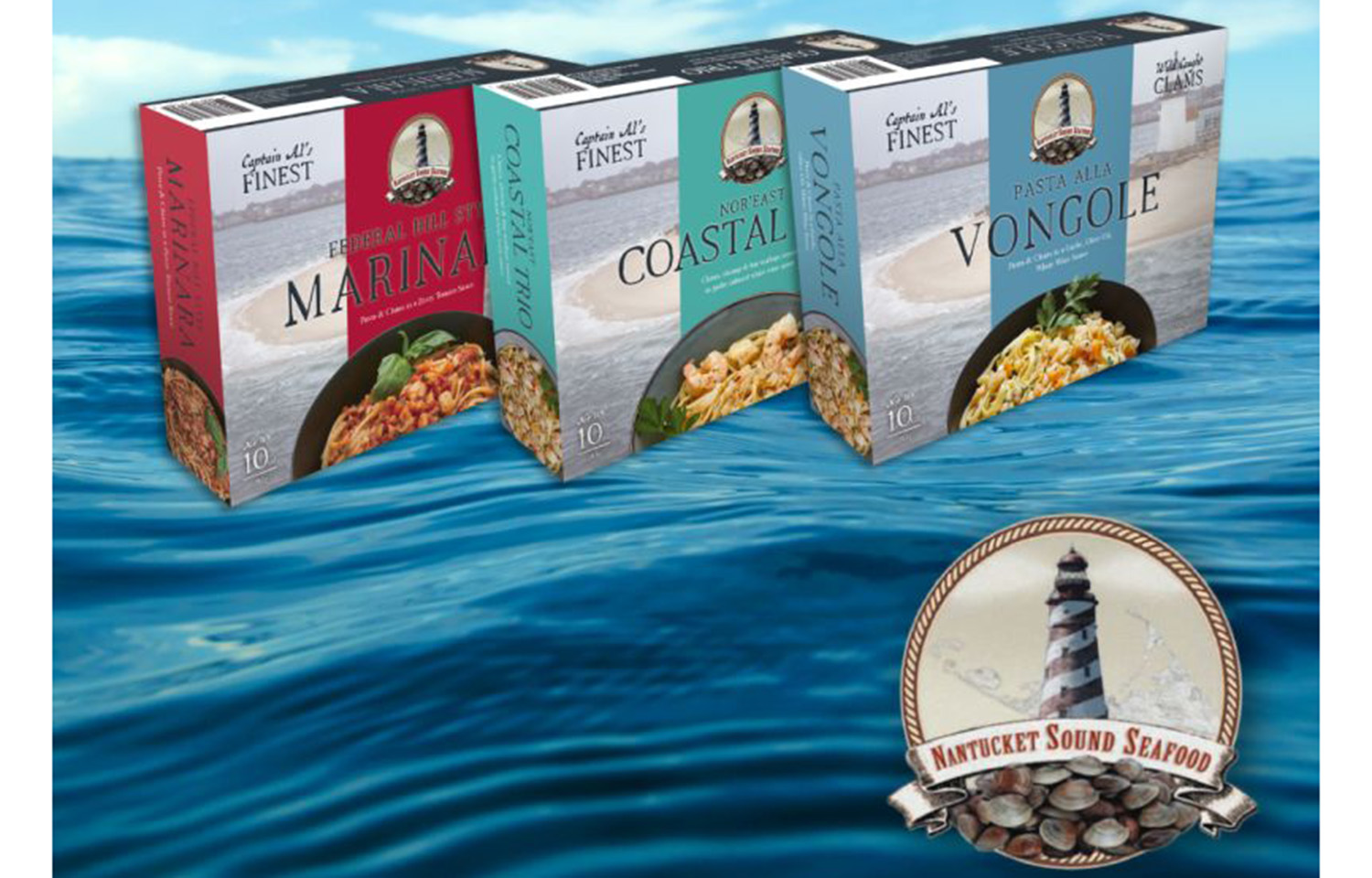
Captain Al Rencurrel of Fall River, Massachusetts, U.S.A.-based Nantucket Sound Seafood has been in the seafood business for over 40 years, yet he and his company are not afraid to try something new.
Nantucket Sound Seafood produces a line of frozen products featuring clams and clam meat, launched by Rencurrel three years ago after he realized that in his decades of fishing for clams, he rarely saw any products featuring the species in the frozen aisles of supermarkets.
“You don’t see anything in the frozen department with clams and clam meat, so we decided to come up with something,” Rencurrel said.
Rencurrel said the initial idea turned into a bigger project than originally planned, as his company – which previously harvested multiple shellfish species to sell to markets, restaurants, and distributors – had never done anything like it before.
“It started with us thinking it was going to be an easy go, and it turned into a bumpy road because we had never done this before,” he said.
Rencurrel said the company also had to go through multiple co-packers, which was made even more complicated as the Covid-19 pandemic and post-pandemic period meant labor was tight and most weren’t taking on any new clients.
Despite the difficulties, the company launched its frozen products, which feature a white sauce over spaghetti with clam meat, as well as a “Federal Hill” style dish with red sauce over clam meat. Recently, the firm also launched a dish they call the trio with shrimp, bay scallops, and clams tossed in a garlic-infused white wine sauce.
“I think that’s going to be our number-one seller, but we’ll see – anything can happen,” Rencurrel said.
Rencurrel said those products have rapidly gained market share in the New England region of the U.S., and the “trio” product was recently picked up by local retailer Market Basket.
“They just ordered a big order for us, and they’re going to start putting it in stores within the next couple of weeks we hope,” Rencurrel said. “We do have our [products] in the smaller supermarkets, but we’re trying to get them into the larger supermarkets and start moving more product and getting a bigger bang for our buck as far as the clam meat goes.”
Rencurrel said as the product gets more popular, however, a big issue is looming: The supply of clams in the area could quickly become more scarce.
The U.S. Science Center for Marine Fisheries declared Atlantic surf clams had a “robust” population in 2023 and that it was unlikely to be overfished. However, despite the population's health, wide historical fishing areas are closed to surf clam harvesting out of concern for other species.
In April 2018, the New England Fishery Management Council (NEFMC) implemented boundaries in the Nantucket Shoals and then, in late 2018, voted to restrict access to certain areas to “research only” fishing. Clam fishers in the region pushed back against the decision but are still dealing with area closures.
“It’s been harder and harder to get the product going through the plant,” Rencurrel said.
Rencurrel explained that he’s met with officials involved with the NEFMC and argued that a lot of the boats that were closed off from fishing areas are focusing primarily in state-managed waters off the coast and that at least part of the Nantucket Shoals should be reopened.
“To be honest with you, it was a wrongful closing. It was a political closing,” Rencurrel said.
Rencurrel said the fishery being completely closed goes against the original principles of the Magnuson-Stevens Act, which aims to manage fisheries sustainably rather than close them entirely. He also said fishery managers need to sort out the issues, especially as climate change makes those fisheries' survival even more complicated to ensure.
He said the scientific reports that have found New England’s waters are warming faster than anywhere in the world and surf clams and ocean quahogs are starting to move out into deeper, colder water are largely proving correct from his perspective.
“I’m finding that true, and I’m also finding the yields in shallow water are terrible,” he said. “The resource is definitely dwindling.”
Rencurrel said he’s managed to find clams in over 160 feet of depth, when previously he’d never fished in over 100 feet of water. Keeping Nantucket Shoals closed means some of those deeper waters aren’t accessible, closing off where most of the resource appears to be moving to.
Rencurrel said he’s working to try and get the habitat management area opened so that his burgeoning frozen clam business isn’t hampered by a limited resource that was closed to fishing for reasons unrelated to the sustainability of the species. That work has included attempts to acquire exempted fishing permits with increased reporting requirements to show that the clams are there in big numbers.
“I’m hoping that I can just keep pushing and pushing and driving and paying the money for the attorneys,” Rencurrel said.
