





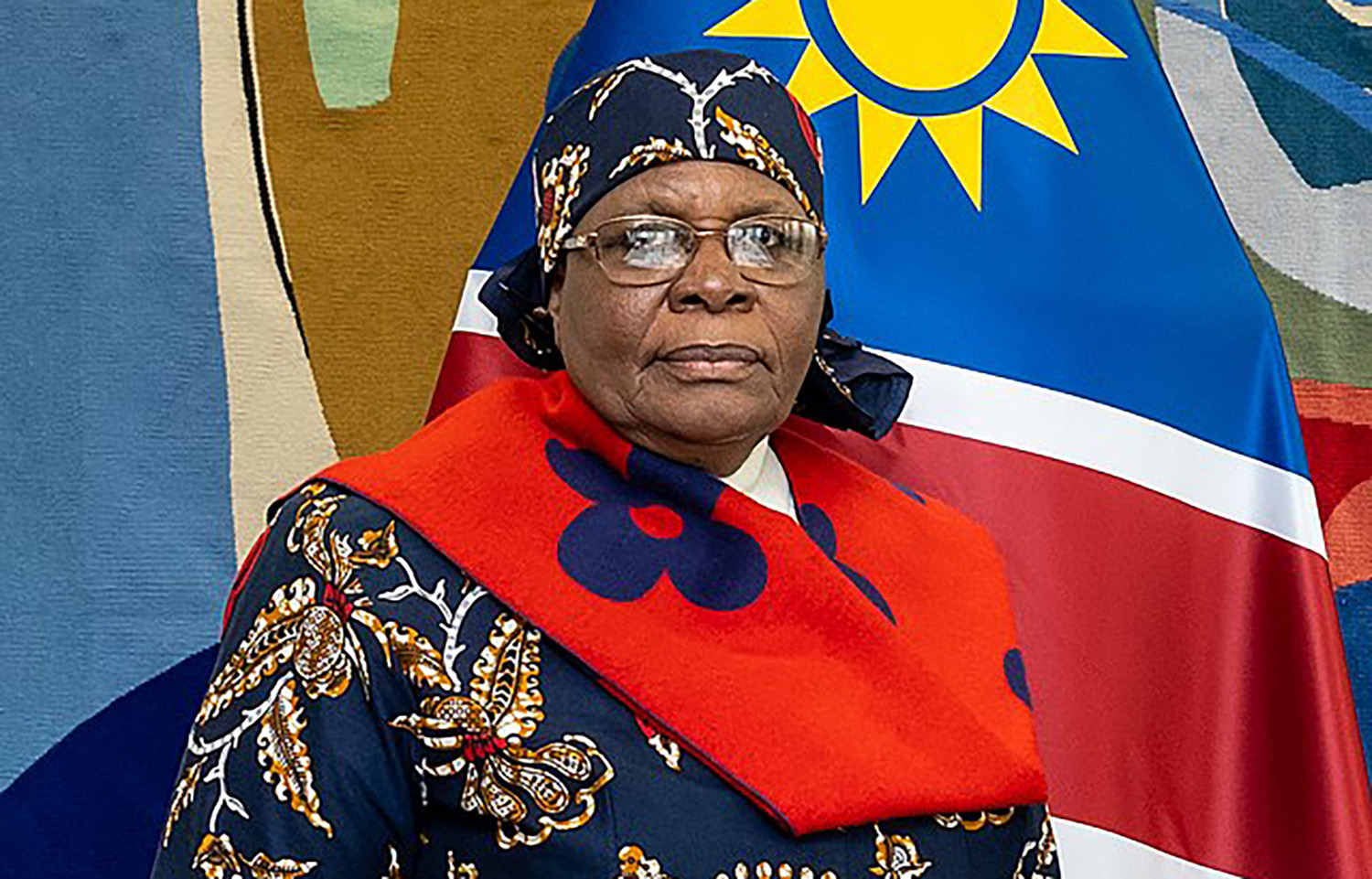
Netumbo Nandi-Ndaitwah was recently elected president of Namibia after making several promises during her campaign to bolster the nation’s fishing industry.
Nandi-Ndaitwah will succeed Nangolo Mbumba, becoming Namibia’s fifth president and the country’s first female to hold the position.
The road to victory for Nandi-Ndaitwah was paved with numerous commitments to the Namibian fishing industry, including a pledge to effectively manage and maintain the country’s fish populations, which account for around 20 percent of the country’s export earnings.
The incoming president’s party, the Southwest Africa People’s Organization (SWAPO), has also pledged to “develop value-addition processing facilities, support value-added activities to enhance the economic value of fish products, and ensure affordability through local production and value chain development” within the next five years, which is the length of a Namibian presidential term.
SWAPO has also committed to investing in training for professionals up and down the country’s seafood value chain and opening more opportunities for Namibian-owned and -operated fishing vessels, especially within the country’s marine fisheries.
Notably, SWAPO and its leadership has vowed to ensure equitable allocation of fisheries resources, particularly via the nation’s fishing quota-allocation process.
Though the promises may seem to signal positive news for the nation’s fishers, politicians throughout the country’s short history – including several within the SWAPO party – have made similar commitments with mixed results.
SWAPO’s pledge to share fisheries resources more equitably and place more control of the fishing industry into the hands of locals isn't new, as the strategy has been a stated goal since 1991 when experts from Iceland and New Zealand supported the establishment of the country’s fishing quota system.
The policy, however, has been criticized for a lack of transparency, especially when it comes to disclosing the beneficiaries of the quotas.
Previous governments have been accused of favoring SWAPO insiders and party supporters in the awarding of fish quotas, with some beneficiaries allegedly acting as fronts for foreign companies who then can access fish resources at discounted prices that are supposed to solely be reserved for local firms.
This issue with the system led to one of the biggest corruption schemes in Namibia’s independent history: the Fishrot scandal.
The scandal involved senior politicians from Nandi-Ndaitwah’s party and well-connected businesspeople, who were accused of seizing control of fishing quotas held by the national fishing corporation of Namibia, Fishcor, which they then allegedly diverted to Iceland’s biggest seafood company, Samherji, in exchange for bribes.
Namibia’s Financial Intelligence Center flagged USD 650 million (EUR 619.2 million) in unexplained transactions related to Samherji’s alleged actions in the scandal.
Although Samherji, which announced the withdrawal of its operations from Namibia in January 2020, apologized for the hurt the scandal may have caused, the company refused to take responsibility for it in a June 2021 statement.
“Samherji firmly rejects the allegations of bribery but accepts the criticism that in the circumstances, it was necessary to pay more attention to how payments were made, who they were made to and on what basis, who had the authority to give instructions about them, and where they should be received,” the Icelandic firm’s statement said.
The firm has maintained that stance to the present day.
Besides Samherji, another instance of the quota system failing entailed NovaNam, a subsidiary of Spain-based Pescanova, which was reported in 2014 to have defrauded the Namibian government out of NAD 1.2 billion (USD 67.7 million, EUR 64.5 million) in fishing quota fees over a 14-year period. The company allegedly accessed hake quotas at discounted prices through a company owned by a Namibian national.
Though the same ruling party maintaining power could lead to similar unfulfilled promises, the U.S.’s International Trade Administration (ITA) said it is more optimistic that the new government can properly manage Namibia’s fishing industry, stating that SWAPO-led governments have been “largely successful in sustainably managing [Namibia’s] fisheries.”
“The Fishrot scandal … had significant distortionary effects on Namibia’s entire fishing sector and could [overall] lead to major reforms,” ITA said.
