



The Fish, Food, and Allied Workers Union (FFAW), which represents fishers in the Canadian province of Newfoundland and Labrador, is criticizing the forecasting model the country’s Department of Fisheries and Oceans (DFO) is using for capelin.
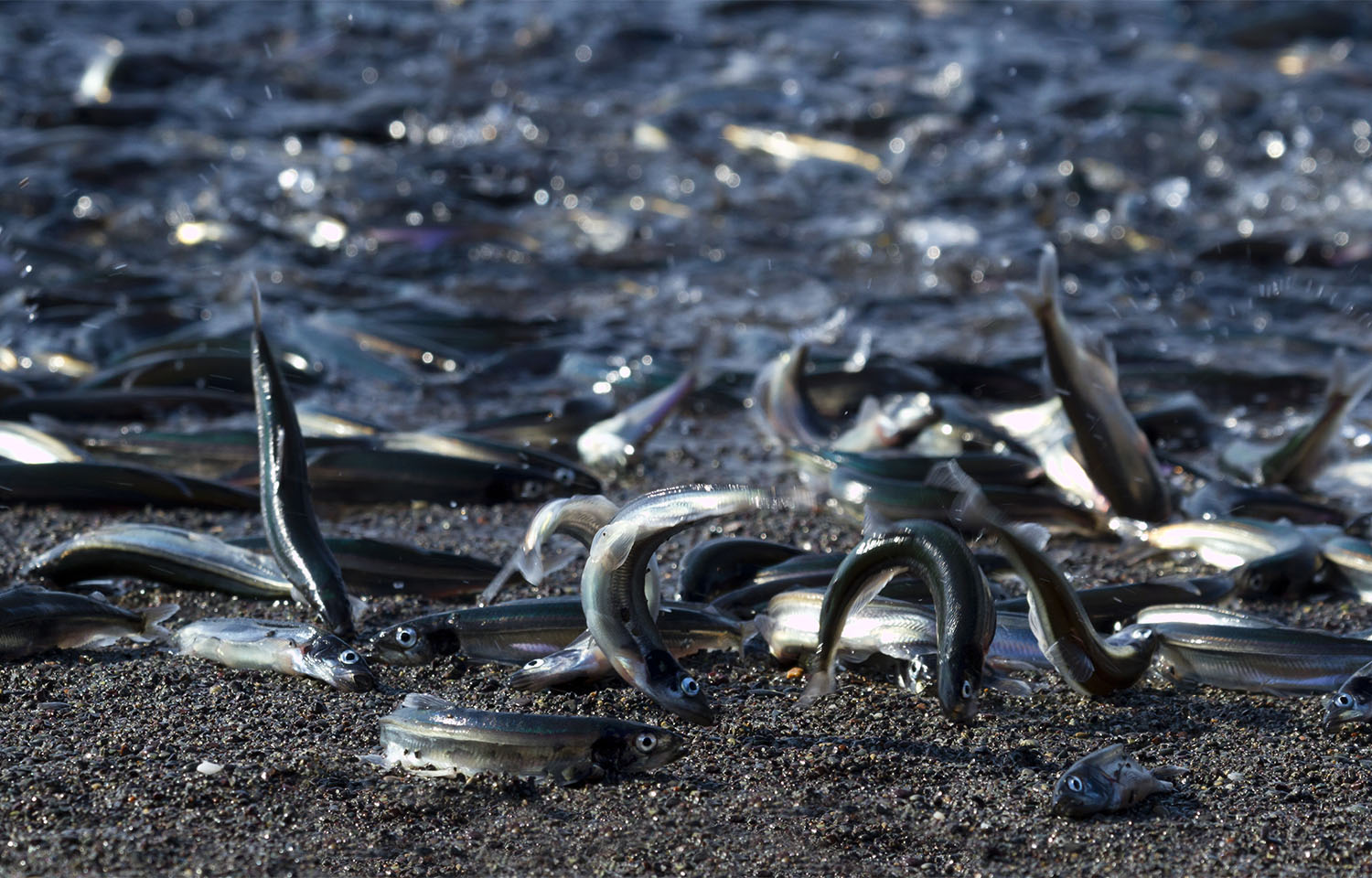
The DFO recently released a forecast for capelin in the 2J3KL fishing area, and at a technical briefing on 11 March described the species has having a positive trend in the area. The acoustic survey estimate shows roughly 766,000 metric tons (MT) of the species in the water.
“FFAW-Unifor is encouraged by the positive outlook for 2J3KL capelin coming out of the Department of Fisheries and Oceans’ latest stock assessment, with favorable environmental conditions, more capelin showing up in the stomachs of predators, earlier spawning timing, and increasing numbers of age three fish in the spawning stock biomass,” the union said. “Those improvements line up with what fish harvesters have been seeing on the water and with the year-over-year increases observed in DFO’s acoustic surveys.”
However, the FFAW also criticized the forecasting model the DFO is using based on that positive acoustic survey. According to the union, in 2024 the forecasting model project capelin biomass at 330,000 MT, while the acoustic survey came in at 647,000 MT. Then in 2025, the model predicted the population would drop to 214,000 MT – yet the acoustic surveys showed an increase to 766,000 MT, more than three times what the model forecast.
That has the FFAW questioning whether the model needs a second look.
“The repeated gap between projections and survey results has raised questions about the scientific basis for continuing to rely on the current model,” FFAW said.
The criticism comes as union members await a decision on what the total allowable catch (TAC) will be for the fishing season. In 2025, the 2J3KL region had a TAC of 14,533 MT, and the FFAW is hoping those will increase as the acoustic surveys improve.
“It was great to see DFO’s acoustic survey reflect what harvesters have been seeing: year-over-year increases in capelin biomass,” Fish Harvester Ivan Batten said in a FFAW release. “I hope the improvements we’re seeing in the acoustic survey – and certainly not the projection model – are what guide management decisions going forward.”
