

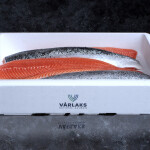




Norway’s seafood exports hit a new value record in 2025 despite a challenging year in which the seafood industry had to contend with multiple headwinds.
According to data collected by the Norwegian Seafood Council (NSC), Norway exported 2.8 million metric tons (MT) of seafood worth NOK 181.5 billion (USD 18 billion, EUR 15.4 billion) in 2025, an increase of NOK 6.4 billion (USD 637 million, EUR 544 million), or 4 percent, over the value it exported in 2024 – which was also a record year for the country.
“2025 was a demanding year for seafood, with lower quotas and catches at record prices for all our most important wild-caught species,” Norwegian Seafood Council CEO Christian Chramer said. “The year was also characterized by strong volume growth for salmon. Despite a significantly lower salmon price, it was a record year for Norwegian seafood exports in terms of value.”
Norway’s seafood exports hit a new record despite multiple months where the total value dropped, including August, October, and November. Plummeting salmon prices also led its exports to drop in value in May, which at the time was the first time since June 2024 the country hadn’t posted year-over-year increases in value.
Despite the down months, the year overall managed to remain strong despite what Minister of Fisheries and Ocean Policy Marianne Sivertsen Næss called “turmoil in world trade.”
“It says a lot about the seafood industry's strong international competitiveness,” she said. “The government is committed to strengthening market access for the seafood industry and will continue to prioritize this work in the new year.”
The NSC said tariffs implemented by the U.S. created “noise and unrest” and ultimately began to have a negative impact in the latter half of 2025.
“The U.S.'s new tariffs created a lot of noise and turmoil for Norwegian seafood exports. From being a market with record growth and an almost insatiable appetite for salmon and crab from Norway in the first half of 2025, U.S. trade throughout the year was characterized by tariffs, a weaker dollar, and weaker development," Chramer said.
In the first half of 2025, the U.S. saw big growth in export values, but by Q4 2025, that growth had shifted to contraction. Despite that, the year overall ended with the U.S. market growing by 19 percent, reaching NOK 15.8 billion (USD 1.5 billion, EUR 1.3 billion), making it the second-largest market for Norwegian seafood by value.
Chramer said the U.S. is still a big potential market for Norway as the world’s largest market for salmon consumption.
“It is very important for Norwegian seafood, and the potential for further growth remains high," he said.
As growth in the U.S. slowed, growth in China accelerated. China bought NOK 12.3 billion (USD 1.2 billion, EUR 1 billion) worth of Norwegian seafood in 2025, an increase of 31 percent over 2024. By value alone, it saw the largest growth of any country.
“Last year, the volume of salmon to China was twice as high as the year before. This is due to strong growth in demand, falling prices, and the fact that the Chinese no longer just buy large salmon over 6 kilograms but also smaller sizes," Chramer said.
Across all exports, aquaculture continued to be the dominant driver of Norway’s seafood export value, accounting for 73 percent of total seafood export value.
The majority of that aquaculture value comes from salmon, which made up NOK 124.7 billion (USD 12.4 billion, EUR 10.6 billion) worth of Norway’s seafood export value in 2025, a slight increase of 2 percent by value year over year. By volume, Norway exported 1.41 million metric tons (MT) of salmon.
“Favorable production conditions, including high sea temperatures, resulted in strong growth in production in 2025,” NSC Seafood Analyst Paul T. Aandahl said. “In addition to the increase in total volume, the average size of the fish also increased. This resulted in a shift in exports toward markets that want large fish.”
The second-most valuable species for Norway in 2025 was cod, despite drops in export volume for fresh and frozen cod. Norway exported 36,704 of fresh cod in 2025, a drop of 9 percent by volume. That cod was worth NOK 2.8 billion (USD 278 million, EUR 238 million), an increase of 11 percent over the prior year.
NSC said lower landings contributed to the lower volumes landed, which NSC Seafood Analyst Eivind Hestvik Brækkan said caused challenges for the country’s processing industry.
“It is not uncommon for exports of fresh wild cod to fall more than landings when quotas are reduced. This is due to a large Norwegian processing industry that needs fresh raw materials for production. 2025 was characterized by a land-based industry in Norway that fought an increasingly tough battle for raw materials at ever higher prices,” Brækkan said. “This resulted in a larger proportion of the fresh wild cod going to domestic production of salted fish, clipfish, and stockfish.”
That reduced wild catch also increased the importance of Norway’s growing cod-farming industry. Fresh farmed cod export volumes reached 15,493 MT in 2025, an increase of 30 percent, and the export value hit NOK 1.1 billion (USD 109 million, EUR 93 million), an increase of 50 percent. Farmed cod also accounted for 38 percent of all fresh cod exports in the year, the largest share of exports ever for the industry.
Frozen cod exports also shifted, dropping 22 percent in volume to 37,462 MT but increasing 5 percent in value to NOK 3.2 billion (USD 318 million, EUR 272 million). A key figure for frozen cod exports was the growth of the market in Vietnam, which jumped in value by 38 percent.
“The main reason for Vietnam's strong performance in 2025 is the U.S. tariffs against China. Periods of very high tariffs on imports from China contributed to Vietnam becoming a more competitive processing market for the Americans,” Brækkan said.
Across every species, snow crab stood out with the highest growth in value terms of any species exported by Norway. The country exported 7,610 MT of snow crab in 2025, an increase of 19 percent. That snow crab achieved a value of NOK 1.6 billion (USD 159 million, EUR 136 million), a massive increase of 127 percent compared to 2024 and a record for the species.
NSC Head of Shellfish Josefine Voraa said low U.S. stocks of snow crab in February and May and seasonal uncertainty about tariffs had importers securing stock early, meaning most of that increase in volume came at the start of 2025.
“Following the introduction of customs duties in the U.S. and the start of the Canadian season, prices for Norwegian snow crab fell and Norwegian competitiveness was weakened throughout the year,” Voraa said.
