




Global salmon and shrimp farmers continue to face several challenges, but a normalization in worldwide fishmeal and fish oil supply is likely to ease some of their costs, according to the latest industry report from Utrecht, Netherlands-based financial services company Rabobank.
Compiled by Rabobank Senior Global Seafood Specialist Gorjan Nikolik, the “Global Aquaculture Update 2H 2024” report, subtitled “A silver lining emerges as demand improves and costs normalize,” said that while biological issues continue to persist for many farmers, feed costs should start to come down in line with recovering fishmeal supply.
“This will mostly be evident in shrimp and probably first in Ecuador, where cost prices are passed on fast, and later in Asia, where commodity costs take a bit longer to pass through by the feed industry,” Nikolik said.
Rabobank expects there to be a much more consistent supply of fishmeal in the closing six months of 2024. La Niña weather patterns are bringing cooler waters to the Pacific Ocean, signaling the right conditions to ensure a solid second Peruvian anchoveta fishing season – set to get underway in November.
Peru’s anchoveta fishery – the world’s largest by output – made a strong recovery in the first season of 2024 after a year-long El Niño season brought severe challenges in 2023, greatly reducing biomass and, therefore, Peruvian fishmeal and fish oil production.
The report suggests 2024’s second season will be as strong as the first and that this should allow fishmeal prices to continue course correcting. However, it added that it still remains relatively expensive compared to soybean meal.
China, which is the world’s largest buyer of fishmeal, is rebuilding its inventory in response to improved Peruvian supply.
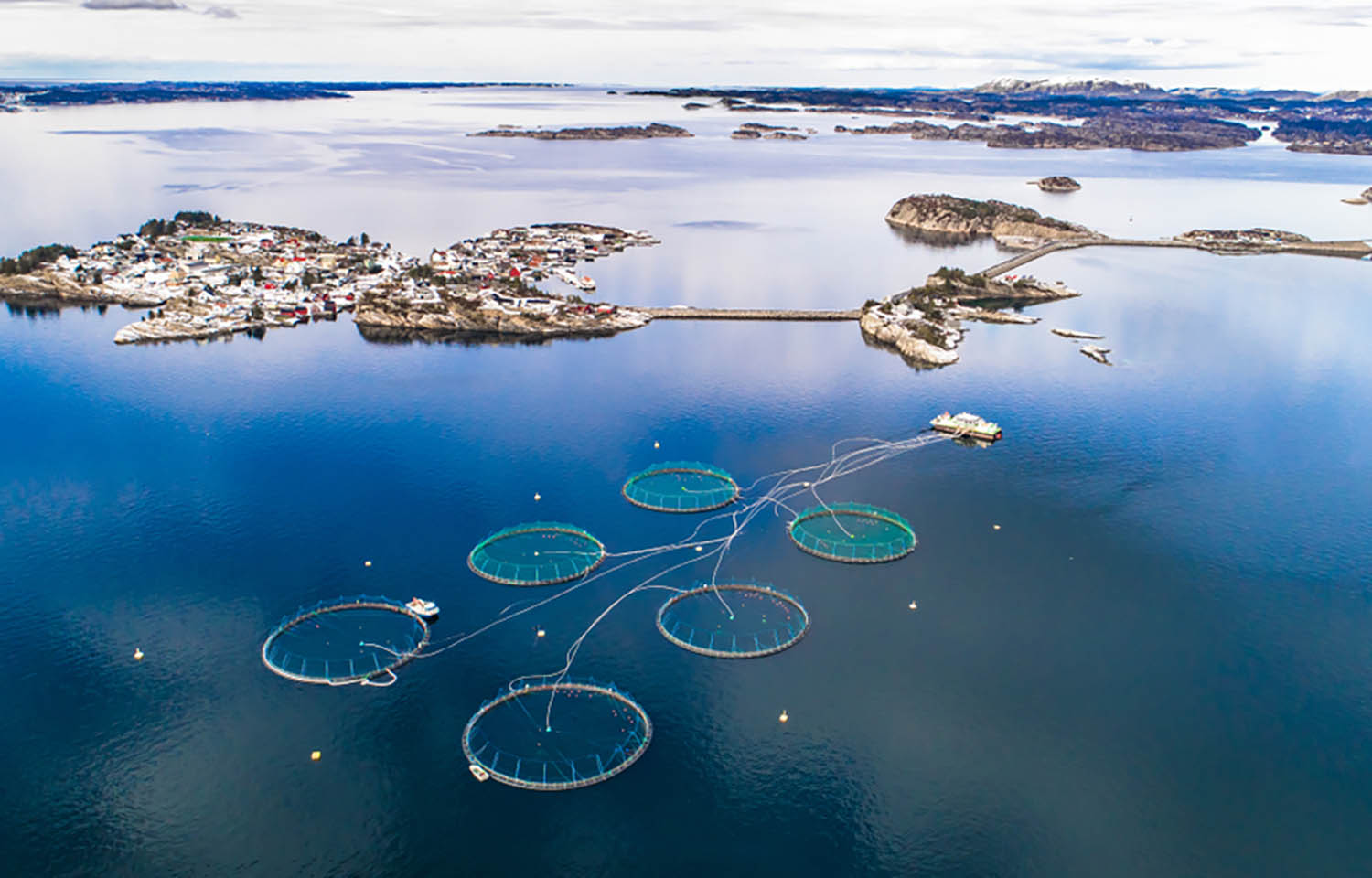
Regarding salmon farming, the first half of 2024 was “more challenging than expected,” with “unprecedented biological challenges.”
Among these, Norway saw the quality of its fish impacted by winter wound bacterium, where in some weeks 40 percent of its supply was downgraded in quality. Chile’s supply growth was hindered by algae blooms and uncertain government legislation.
“In the case of Norway, a lot of efforts are currently being made to find solutions, and probably as a group, there will be an effect; we will only know when temperatures fall again. It should be noted that at least biologically, Scotland and Canada are doing much better but after two challenging years,” Nikolik said.
In the second half of this year, Atlantic salmon supply is expected to return to a growth trajectory, with the hope that seasonally warmer temperatures in Norway and cooler temperatures in Chile will limit winter wounds and algae blooms, respectively.
The “main bright spot” for the salmon industry is the recent success of land-based flow-through technology.
“This will continue to capture headlines in H2 2024 but will not impact the overall tight supply market conditions in the near term,” the report states.
Nevertheless, there are still no structural solutions to the biological challenges seen in 2023 and the first half of 2024.
“For now, I would say salmon farming is not delivering supply growth in line with demand. This has not been the case since the end of 2021, and there is no indication that even 2025 will be any different,” Nikolik said.
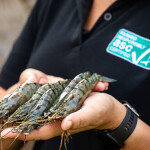
Rabobank anticipates “mixed recovery,” for the shrimp industry, with prices in Western markets increasing from record lows seen in the first six months of this year and lower feed costs helping producers gradually regain profitability.
The global shrimp industry is “tentatively exiting one of the worst periods in its history,” the report said, whereby low prices unseen for at least a decade, combined with high costs brought by 2023’s El Niño-induced fishmeal shortage, made it unprofitable.
Despite the positive signs, uncertainty still remains for the shrimp industry, the report said.
A lot of H2 2024’s predicted price recovery hinges on uncertain Chinese demand. Additionally, supply growth from producing nations like Ecuador and India could erode prices again.
Overall, though, Rabobank is expecting there to be “mild growth” in farmed shrimp supply through to the end of this year, driven by Ecuador, India, and Vietnam.
“In shrimp, it is a supply/demand balance situation. Demand is rising, driven by the West, but remains uncertain due to China. However, supply growth which has been too strong for some time, after only a brief pause, is again accelerating. This could bring about another oversupply situation in H2 and bring prices back down,” Nikolik said. “For shrimp, the industry usually matches demand growth very closely as it is a much more elastic supply curve, but here since the end of 2021, we have been well above demand growth. It seems due to Ecuador and, to some extent, China, the industry keeps growing above demand growth keeping prices low.”
