



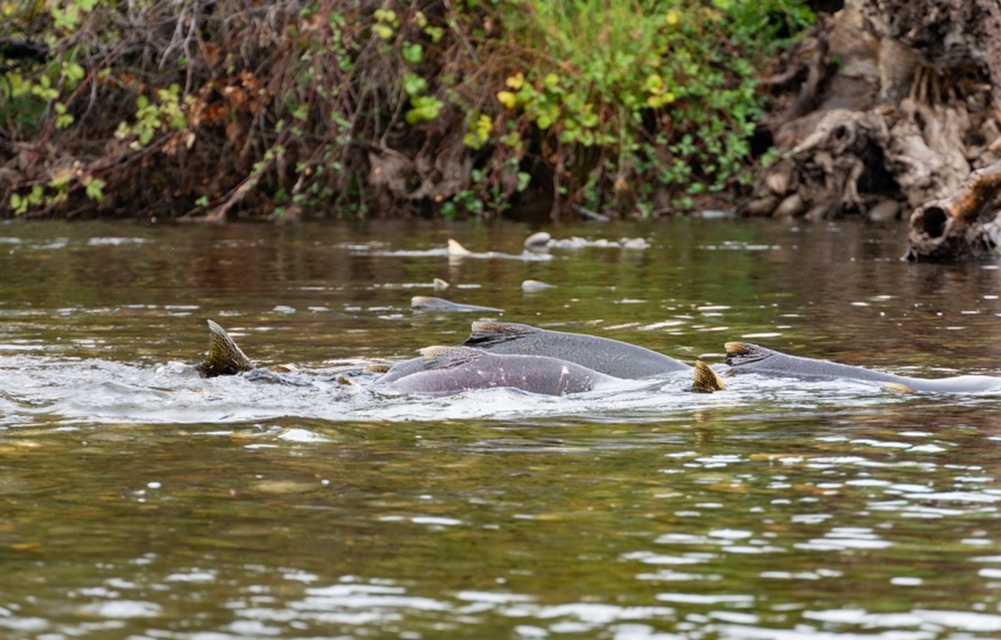
Commercial salmon trawlers may be allowed to harvest fish in California for the first time in more than three years, although opportunities will remain limited as regulators work to enable stock recovery on the West Coast.
“Increased forecasts this year, particularly of Klamath and Sacramento River fall Chinook, created opportunities to expand fishing options compared with recent years,” PFMC Executive Director Merrick Burden said in the release. “The Council’s proposals aim to provide meaningful fishing opportunities while ensuring careful management of salmon populations.”
The Pacific Fishery Management Council (PFMC) recommended closing the fishery in 2023 due to big drops in the salmon stock, and NOAA Fisheries ultimately followed the advice. Though there has been some progress in salmon recovery in the intervening years, regulators repeatedly determined that the species needed more time to recover.
Now, after three years of a closed fishery, the PFMC is considering a limited reopening.
On 9 March, PFMC released the options it is considering for managing the 2026 West Coast commercial salmon seasons.
“Working closely with our advisors, the Council developed options for commercial, recreational, and Tribal fisheries that aim to maintain a careful balance across fisheries along the coast,” PFMC Chair Pete Hassemer said in a release. “This year brought encouraging signs for both salmon and fishing communities, and we look forward to hearing feedback from the public as we move toward finalizing the 2026 season.”
The council has put forward three options for the commercial troll fishery. The first option would consist of intermittent openers in Monterey from May through August, open periods in San Francisco in September, and openers for Fort Bragg in August.
A second option would allow commercial fishing in San Francisco and Monterey in May, June, and August and September openers from just North of San Francisco south to Pigeon Point. The third option – and the most limited – would open fishing in the California Klamath Management Zone from May through August. However, the fishery would be closed anytime a monthly quota was exceeded.
All three options would include a 24-hour reporting requirement to monitor catch levels throughout the season.
The council is expected to take final action on the California commercial fishing season at its 8-12 April meeting and issue a recommendation no later than 16 May.
